Court overturns 4 million fine following an inspection of ‘Tekhno Yizhak’

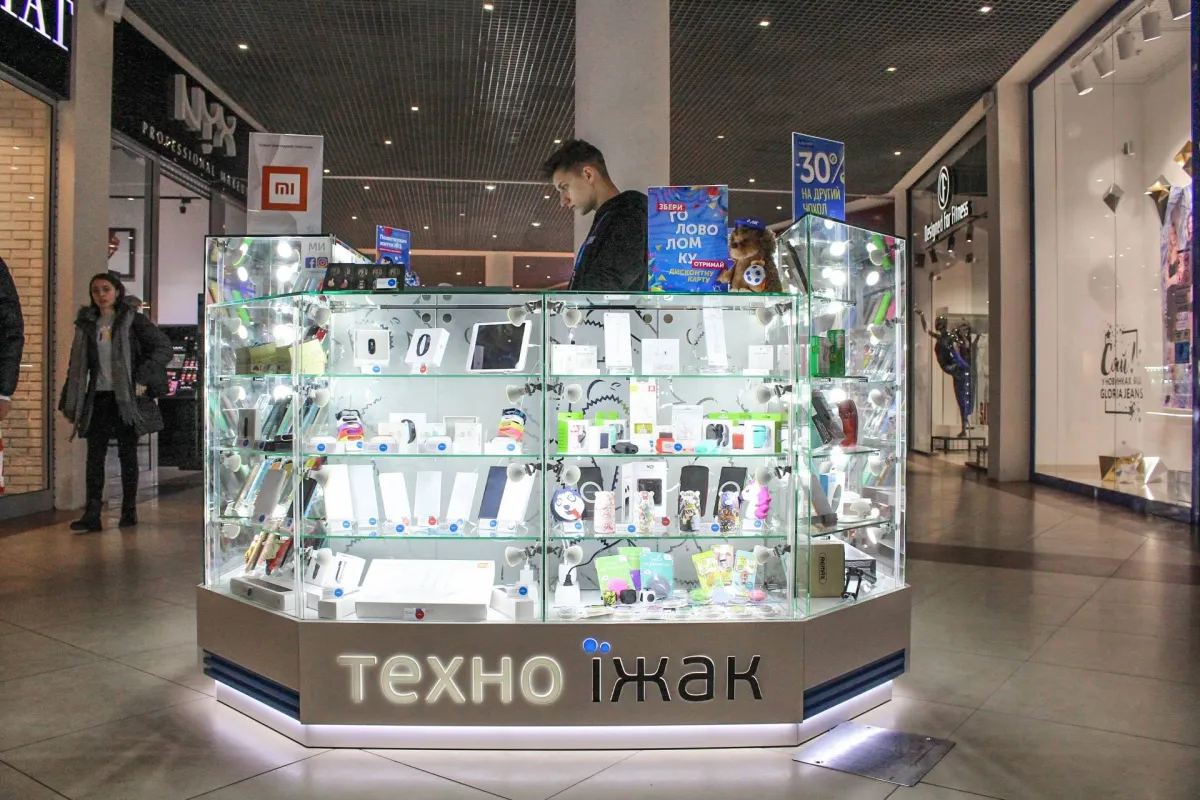
This is set out in the court’s decision of 9 July 2026 in case No. 520/13986/25.
The basis for the tax audit was an electronic complaint received by the Main Directorate of the State Tax Service in the Odesa region on 20 December 2024. It was registered as anonymous.
The author, who identified himself as ‘Evgen Dubovuk’, claimed that ‘Tekhno Yizhak’ shops allegedly do not always issue fiscal receipts. The report mentioned three retail outlets in Odesa: at 32 Hretska Street, in the City Centre shopping centre at 2 Nebesna Sotnia Avenue, and in the ‘Ostrov’ shopping centre at 2 Novoshchipnyi Riad Street.
The court found that the complaint did not contain full details of the author, their place of residence, the specific times of the purchases, a list of goods, or a description of specific instances where the customer was not issued a receipt.
Tax officials were also unable to use their own information system to identify the traders or companies operating at the addresses in question. This was stated in an internal memo from the State Tax Service, drawn up on 23 December 2024.
Despite the lack of information on the business entities, on the very same day the Odesa Regional Tax Service issued Order No. 13303-p to carry out an on-site inspection of the ‘Tekhno Yizhak’ shop at 32 Hretska Street.
The entrepreneur was not named in the order
Neither the order nor the four inspection notices specified the surname, first name, patronymic or tax number of the business owner who was to be inspected. The documents were drawn up solely in relation to the retail premises at the specific address.
The inspection began on 24 December 2024. The inspection notices were handed to the shop’s staff on 24 and 25 December.
The State Tax Service documents stated that the audit covered the period of activity from 23 December 2021. However, sole trader Volodymyr Slynko was only registered on 22 November 2024 — one month before the audit began.
According to information from public registers, the entrepreneur’s main activity is the retail sale of computers, peripheral equipment and software in specialist shops. He is also registered as a single-tax payer in the second group.
How the 4 million hryvnia fine came about
Following the audit, the tax authorities drew up a report dated 1 January 2025. The inspectors stated that proper stock records were not being kept at the place of business and that there were no documents enabling the identification of suppliers, recipients, quantities, value and origin of the goods.
The value of the goods listed in the stock take report amounted to 4,038,423 hryvnias. The case file mentions Apple AirPods among the technically complex goods.
The business owner insisted that on 27 December 2024, he had submitted documents relating to stock records to the tax authorities. These included a stock-taking form, delivery notes for the transfer of goods between the warehouse and the shop, and an inventory list.
The tax authorities considered these documents insufficient, as they did not include source documents confirming receipt of goods from suppliers. The State Tax Service emphasised that such documents should have been available at the shop at the start of the audit.
As the business owner was registered for tax purposes in Kharkiv, the Odesa office forwarded the audit materials there. On 21 January 2025, the Main Directorate of the State Tax Service in the Kharkiv region issued a fine equal to the full value of the goods specified in the inventory list — 4,038,423 hryvnias.
Why the court did not examine the documents relating to the goods
The court established that a written complaint from a buyer may constitute grounds for a factual audit in accordance with paragraph 80.2.3 of the Tax Code of Ukraine. However, such a complaint must be drawn up in accordance with the law and contain sufficient information regarding the alleged violation.
In this case, the court was unable to confirm that ‘Evgen Dubovuk’ is a real person. The request also lacked specific details linking the alleged breaches specifically to the activities of Mr Slynka’s sole trader business following its registration on 22 November 2024.
The court identified the absence of the entrepreneur’s details in the audit order as a separate breach. The tax authority had, in effect, ordered an audit of the premises without first establishing which entrepreneur was operating there.
Furthermore, representatives of the Odesa and Kharkiv tax authorities failed to provide the court with evidence that the premises at 32 Hretska Street did indeed belong to the ‘Tekhno Yizhak’ chain. This was the name used for the shop in the State Tax Service’s application and order; however, there was no documentary evidence of this connection in the case file.
Due to these violations, the court applied the ‘fruit of the poisonous tree’ doctrine. This provides that evidence obtained as a result of an unlawful procedure cannot be used to substantiate subsequent decisions.
The inspection report was deemed improper and inadmissible as evidence. Consequently, the court did not proceed to determine definitively whether the documents provided by the entrepreneur regarding the origin and stock records of the goods complied with the law.
Consequently, the ruling does not mean that the court confirmed that the stock records had been kept properly. The fine was quashed due to the unlawful procedure by which the audit was ordered, the results of which could not be used to hold the entrepreneur liable.
The entrepreneur initially lost the case
The legal dispute has been ongoing since 2025. During the first hearing, on 12 September 2025, the Kharkiv District Administrative Court refused the entrepreneur’s request to have the fine set aside.
On 6 January 2026, the Second Administrative Court of Appeal upheld this decision. The courts had then deemed the consumer’s complaint to be sufficient grounds for an inspection, and the provision of the shop’s name and address to be sufficient to identify the premises subject to inspection.
The business owner lodged a cassation appeal. On 16 April 2026, the Administrative Court of Cassation, sitting within the Supreme Court, quashed the decisions of the courts of first instance and appeal and remitted the case for a fresh hearing.
The Supreme Court ruled that the dispute concerning the fine of 4 million hryvnias could not be considered under the simplified procedure without summoning the parties. Consequently, the entrepreneur was unable to provide oral explanations or participate fully in the examination of the evidence.
During the retrial, the case was heard under the standard procedure with the participation of representatives of the entrepreneur and the Kharkiv and Odesa tax authorities. On this occasion, the court upheld the claim and quashed the tax assessment notice.
The decision may still be appealed
The decision of the Kharkiv District Administrative Court dated 9 July is not yet final. The tax authority may lodge an appeal with the Second Administrative Court of Appeal within 30 days of the full text of the decision being drawn up.
The entrepreneur’s representative has also filed a claim for reimbursement of legal costs. The sole trader is seeking to recover 18,168 hryvnias in court fees for the appeal, 24,224 hryvnias in fees for the cassation appeal, and 60,000 hryvnias in legal aid costs from the Kharkiv Regional Tax Service.
The total amount of compensation claimed is 102,392 hryvnias. The hearing on this matter is scheduled for 23 July 2026. The court has not yet issued a ruling on the reimbursement of these costs.
Follow us on Telegram.