Commander of the United Kingdom Space Command: "Russians are constantly jamming our satellites"

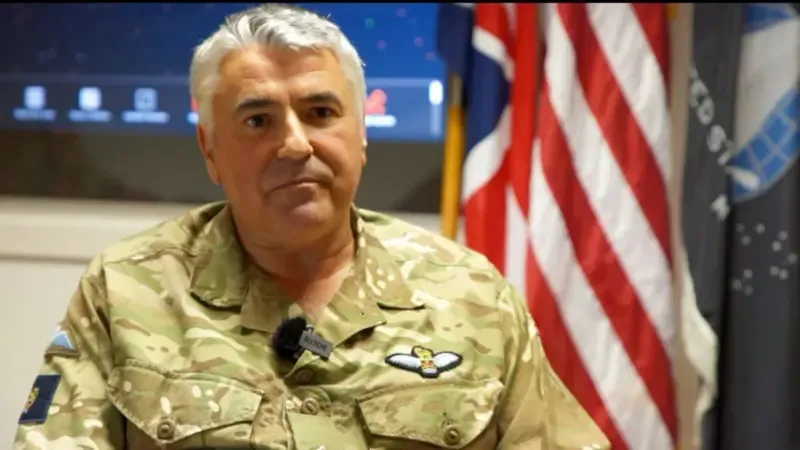
According to the head of the United Kingdom Space Command, Russian satellites have been monitoring British military satellites, reports ThePublic.info , citing an interview with BBC with Major General Paul Tedman.
Last month, German Defense Minister Boris Pistorius stated that Russia was also monitoring satellites used by their military.
General Tedman detailed how Russia is doing the same with the United Kingdom.
"They were interested in what we are doing, flying relatively close," he said.
"They have payloads on board, they can see our satellites, they try to gather information from them."
The head of the Space Command said that British military satellites were equipped with jamming countermeasures, but added: "We see how Russians quite consistently jam our satellites." When asked how often, he replied: "Weekly."
According to him, this was deliberate, and activity increased after Russia's full-scale invasion of Ukraine.
The UK has dozens of specialized military satellites in orbit, providing communication and surveillance.
The US, China, and Russia have over a hundred. The combined Russian and Chinese satellite fleet has increased by 70% over the past decade.
General Tedman said that Russia and China have already tested anti-satellite weapons. Both the UK and the US have publicly warned that the Russian Federation is developing capabilities to place nuclear weapons in space.
Although the US considers China the main threat, General Tedman views Russia as a more immediate danger: "I would say that the Chinese have much more complex capabilities, but the Russians have more desire to use their counter-space systems."
He noted that he is "really concerned" about what is happening in space — not only threats but also the increasing congestion there. Currently, about 45,000 objects are in orbit, including around 9,000 satellites. This year, another 300 rockets will be launched into space.
The general spoke during a visit to the Failingdales Air Base in North Yorkshire. Here is the British-American ballistic missile early warning system, which has been operational since 1963.
Now, the three famous large radiator shrouds, also called "golf balls," from the Cold War era, have been replaced by a 30-meter pyramid housing thousands of antennas. It looks as if a spaceship has landed on the heather moors of North Yorkshire, surrounded by sheep, an electrified fence around the perimeter, and barbed wire.
The system provides 360-degree coverage from the Arctic to North Africa and from the Mediterranean to the Atlantic. Its radar can track objects the size of a can at a distance of 4,800 km in space. Inside are heavy doors and airlocks. This indicates that the structure could become a target for an adversary. In the operations room, British servicemen monitor the situation around the clock.
The second squadron of the Royal Air Force's space warning system told the BBC how they detect missile launches.
The systems are connected to other American satellites and sensors, allowing them to detect launches anywhere in the world.
General Tedman calls space a "team sport," but in reality, the UK is heavily dependent on the US. American contractors support the operation of the radar at Failingdales.
The duty officer says: "We would know that the UK is under threat, probably within a minute." But much less is said about the UK's ability to intercept ballistic missiles.
This is partly because the country has very few means of missile defense. The UK government promises to increase investments in both space and missile defense. It is also taking measures to protect its satellites. The government announced testing sensors to detect laser threats in space.
Both China and Russia have already developed lasers that can be used to blind and disrupt enemy satellites.
General Tedman said: "We have committed to investing a billion pounds in integrated air and missile defense, and I would be surprised if there wasn't a space aspect to how we plan to protect Great Britain from threats very similar to (American) the 'Star Wars'."
He was referring to President Donald Trump's plan to build an air shield around the US against any missile attacks.
However, the UK risks falling behind in this race. Currently, it spends about 1% of its defense budget on space. In contrast, France spends about 3%, and the US – 5%.
General Tedman would like space to be prioritized. He says that about 450 billion pounds of the UK economy depend on space. It is also the "nervous system" increasingly relied upon by the British armed forces — from navigation to high-precision strikes.
Before we leave the Failingdales Air Base, there is one more reminder of why space is so important. We are warned that we will have to leave the operations room if a real incident occurs. While we are filming, another notification of a missile launch comes in, and we are quickly escorted out.
They monitor the launch of short-range ballistic missiles almost daily. In this situation, they do not specify where the missiles are coming from, but it is no secret that Russia regularly launches them at Ukraine. In 2024, over 4,000 rockets have been launched worldwide. Soviet Russia was the reason why Failingdales was first created during the Cold War era. And the threat has not disappeared.