The Islamic Revolutionary Guard Corps has strengthened its influence in Iran following the death of Ali Khamenei

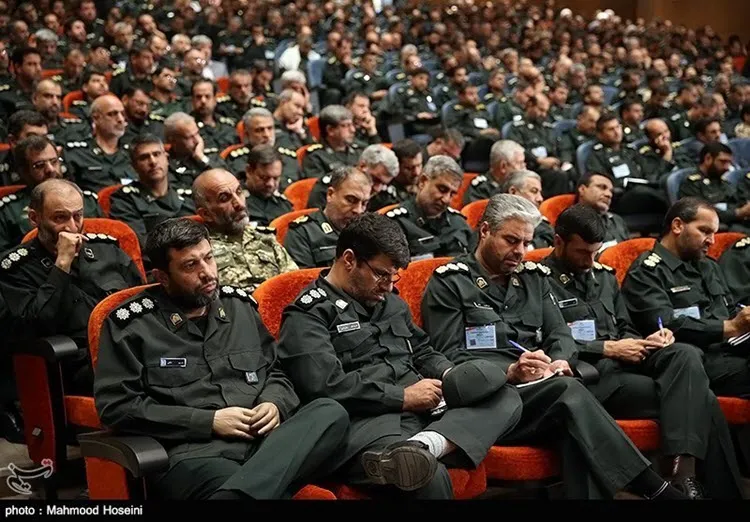
Following the establishment of the Islamic Republic in 1979, power in Iran was centred around the Supreme Leader, who had the final say on key state matters. However, the death of Ayatollah Ali Khamenei on the first day of the war and the promotion of his wounded son, Mojtaba, have altered this model, according to Reuters.
According to people familiar with internal processes, Mojtaba Khamenei formally remains at the top of the system, but his role is largely limited to rubber-stamping decisions made by military commanders.
In the context of the war, power has become concentrated within a small circle linked to the Supreme National Security Council, the office of the Supreme Leader and the Islamic Revolutionary Guard Corps, which now determines both military strategy and political decisions.
A senior Pakistani government official briefed on the negotiations between Iran and the US noted that decision-making in Tehran is slowed down by the lack of a unified command structure. According to him, a response is sometimes prepared over two or three days.
Analysts believe that the main obstacle to reaching an agreement is not internal disputes, but the differences between Washington’s position and the hardline stance taken by the Islamic Revolutionary Guard Corps.
In negotiations with the US, Iran is represented by Foreign Minister Abbas Arakchi, who has been joined by Parliament Speaker Mohammad Bagher Ghalibaf, a former IRGC commander. At the same time, IRGC Commander Ahmad Vahidi is widely regarded as the key figure in practice.
Since being wounded, Mojtaba Khamenei has not appeared in public and communicates through intermediaries or limited audio links.
On Monday, Iran presented the US with a new proposal, which envisages phased negotiations with the nuclear issue being deferred until the end of the war and the resolution of disputes regarding shipping. Washington insists on discussing the nuclear programme from the outset.
Expert Alan Air noted that neither side is prepared to make concessions, as this could be perceived as a sign of weakness.
According to analysts, Mojtaba Khamenei formally remains the supreme authority, but decisions are taken collectively within security institutions, primarily the Supreme National Security Council.
During the war, the influence of hardline politicians, notably Saeed Jalili, has grown, yet they lack sufficient institutional capacity to determine the outcomes of decisions.
Sources note that Mojtaba’s rise was made possible by the support of the Islamic Revolutionary Guard Corps, which sidelined the pragmatists and tightened its own grip on power. The growing influence of the military points to a tougher foreign policy and tighter internal control.
Analysts point out that there is a shift in power from the clergy to the security forces. “We have moved from divine authority to force,” said former US negotiator Aaron David Miller.
Despite pressure from the US and Israel, Iran shows no signs of division or compromise. According to experts, a consensus has emerged within the country to avoid a full-scale war, preserve levers of influence and strengthen its position once the conflict ends.