The Ministry of Defence intends to centralise the procurement of ground-based equipment for the Armed Forces of Ukraine

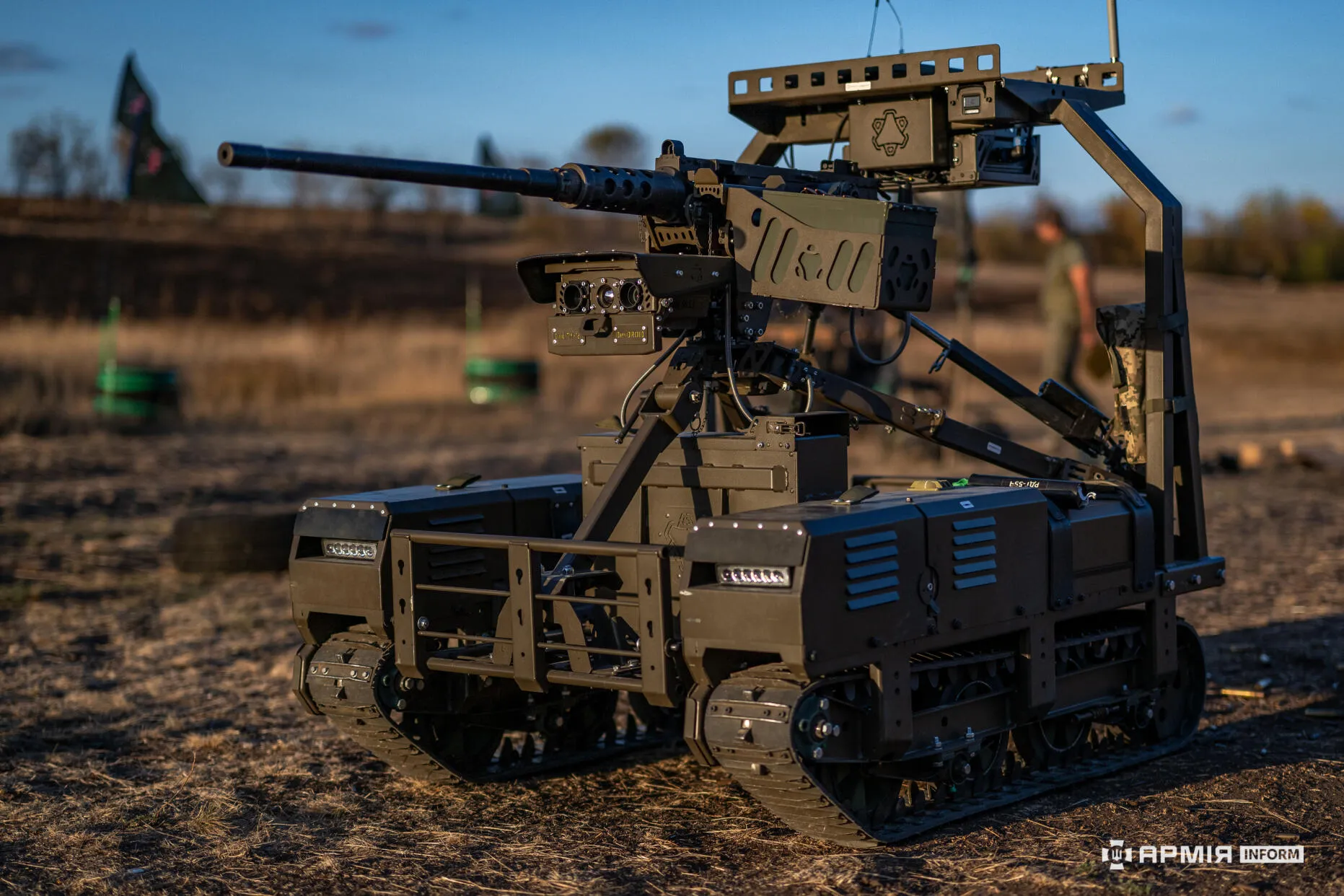
Serhiy “Flash” Beskrestnov spoke about this in an interview with ArmyInform.
The Ministry of Defence must ensure that the army has sufficient ground-based robotic systems, and that the robots themselves are of high quality and reliable.
This was stated by Sergey “Flash” Beskrestnov, a renowned expert in military radio technology and adviser to the Ukrainian Minister of Defence.
According to him, the Armed Forces of Ukraine are an “internal client” that needs to be supplied with high-quality solutions in large quantities.
“In this regard, the Ministry of Defence’s main task is to ensure that there are enough robots in the army and that they are of high quality and reliability. We see that the Armed Forces of Ukraine are our internal client, and we need to supply them with good and reliable solutions, and most importantly – in large quantities,” said Beskrestnov.
The NRC wants to procure centrally
Beskrestnov explained that currently, brigades and corps make purchases using subsidies, as well as purchases on behalf of the Ministry of Defence.
According to him, the approach is for brigades to be able to spend subsidies on other necessary items, whilst ground-based robotic systems would be supplied to the Armed Forces centrally.
“We are trying to ensure that brigades can use the subsidies to purchase other items they need. Meanwhile, URCs would be supplied to the Armed Forces centrally,” said the adviser to the Minister of Defence.
He added that the robots are quite expensive, so the plan is to contract and procure them at the Ministry of Defence’s expense.
“In other words, we need to supply the Armed Forces with a good and reliable solution in large quantities,” emphasised Beskrestnov.
Why the army needs ground robots
According to Serhiy “Flash”, ground-based robotic systems can perform many tasks on the battlefield. These include logistics, evacuating the wounded, storming positions, laying mines, mine clearance, and mobile electronic warfare assets.
He noted that there are already many examples of the successful use of RRCs by the Ukrainian military. In particular, there have been instances where positions were held by robots, as well as cases where robots took people prisoner.
Separately, Beskrestnov drew attention to the evacuation of the wounded. With the help of UGVs, soldiers can be transported out of the danger zone without exposing other military personnel to additional risk.
Logistics is also one of the key areas of application for ground robots. According to the expert, there is no need to put people at risk to deliver ammunition or supplies to a position if robots can do the job.
What needs to change in UGV production
Beskrestnov noted that Ukraine already has many manufacturers and teams offering various platforms. These include high-speed robots, systems with enhanced cross-country capability, small and large models, and wheeled and tracked solutions.
At the same time, for serial supply to the Armed Forces of Ukraine, he said, several models that are already operating reliably should be selected.
The expert emphasised that the market must remain competitive, as the military needs different types of ground robots. Some can carry a single mine, others several. Some systems are needed for reconnaissance, others for logistics or evacuation.
According to Beskrestnov, it is precisely the teams with real production capacity that will ultimately become the main suppliers of high-quality UGVs in the required quantities.
Issues to consider
The Defence Minister’s adviser also explained why the initial interest in ground robots had partly waned. Among the reasons, he cited insufficient training of military personnel, the poor quality of some robots, and a lack of technical support, repair facilities and spare parts.
According to him, a robot is a machine that can break down and requires maintenance. Therefore, manufacturers must provide technical support and a repair facility, or train units to maintain such systems themselves.
Beskrestnov noted that the situation is now changing. Better-trained units, in particular the ‘Charter’ Corps, the Third Army Corps and other brigades, have demonstrated successful use of UGVs. As a result, commanders have realised that ground robots are genuinely useful and necessary.
He also emphasised that communications remain the most complex issue for the development of UAVs. Long-range control and resistance to electronic warfare (EW) countermeasures are the key technological challenges.
Why this is important for the front line
Beskrestnov stressed that ground robots cannot completely replace humans. They need to be controlled, maintained, supported and repaired.
At the same time, UGVs can take the brunt of the attack and operate where the risk to military personnel is highest.
According to the expert, if the loss of a ground robot can save a human life, it is better to lose the robotic system. He noted that even the loss of 10 or 100 ground robotic systems could be justified if the combat mission is accomplished without human casualties.
Beskrestnov added that Ukraine’s mobilisation resources are limited, so people must be protected. He described the use of ground-based robotic systems as one of the most promising and realistic solutions.
As reported by ThePublic, Yuriy Gudymenko, head of the NGO “Ukrainian Association Mriya” and head of the Public Anti-Corruption Council at the Ministry of Defence, stated that for demobilisation in the Ukrainian Defence Forces, it is necessary either to robotise the army more actively or to find more people for service.
Follow us on Telegram