The monsters from the mist are back: how the film Silent Hill: Return was made

This material is based on an interview with Anna Dzhemlik by Suspilne Kultura and is dedicated to the making of the film Silent Hill: Return, the new instalment in the cult horror franchise, which will be released in Ukrainian cinemas on 22 January.
The film grew not only out of the popularity of the video game Silent Hill 2, which received a large-scale remake in the autumn of 2024, but also out of a deeper demand from the audience for complex, psychological stories in the horror genre. It is an independent cinematic work that deals with themes of loss, guilt, trauma, and the inner hell of a person.
Mythological basis and psychological focus
The plot is based on a reinterpretation of the ancient myth of Orpheus and Eurydice. The main character, James, travels to the fog-shrouded town of Silent Hill to bring back his beloved, but this journey gradually turns into a journey into his own consciousness.
The film deliberately shifts the emphasis from external horror to internal horror. Silent Hill appears not only as a physical place, but as a reflection of the protagonist's psychological state. The city reacts to his fears, memories and guilt, forming a personal version of hell.
Why is it possible to return now?
Director Christophe Gans, who shot the first Silent Hill in 2006, returned to the franchise when several factors coincided:
-
a technological breakthrough in visual effects and digital filming;
-
growing interest in psychological, "slow" horror;
-
the audience's readiness for complex, multi-layered narratives.
Interestingly, the film and the remake of the game Silent Hill 2 were developed in parallel — a rare case of synchronous development of a single story across different media. The game's developers were actively involved in the process, including composer Akira Yamaoka, who shaped the franchise's sound identity.
Actors and multi-layered characters
The lead role of James was played by British actor Jeremy Irvine, known for his dramatic and musical projects. His character exists simultaneously in several dimensions: as an ordinary man in mourning, as a hero fighting monsters, and as the conditional creator of the world in which he himself wanders.
The character of Mary, played by Hannah Emily Anderson, occupies a special place in the film. The actress was given several incarnations of one heroine — different images of Mary that exist in James's mind. This allowed the theme of fragmented memory and psychological split to be revealed through acting, rather than just through special effects.
Filming process and locations
Principal photography lasted 50 days and took place in several countries:
-
PFI studio in Belgrade;
-
natural locations in the Dinaric Alps in Serbia;
-
Penzing Studio in Munich;
-
areas near Lake Walchen.
This geographical scope allowed for the creation of the multidimensional space of Silent Hill — a city that exists in several realities at once.
Monsters as living plastic
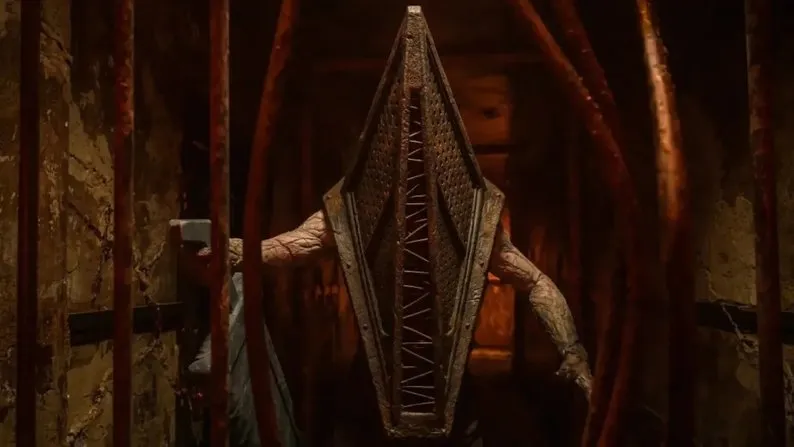
One of the director's fundamental ideas was to reject purely digital monsters. All the monsters in the film are dancers and acrobats in complex costumes created by Millenium FX. This approach ensured unnatural, disturbing plasticity of movement that cannot be fully reproduced by computer graphics.
The costumes were designed as complete images that both restrict and shape the performers' movements. This is what gave the monsters a sense of physical presence and bodily horror.
Sets as a multidimensional world
The production designers created sets that exist in several versions at once. The same space can have:
-
a normal, "real" appearance;
-
a hazy, transitional form;
-
a rusty, industrial version symbolising hell.
The transition between these dimensions is achieved by combining real sets and modern digital technologies, which allows the materiality of the world to be preserved.
The evolution of horror
The filmmakers emphasise that Silent Hill: Revelation is a response to how the perception of the genre has changed over the past 20 years. Modern horror works not only with fear, but also with anxiety, uncertainty and psychological tension.
The town of Silent Hill in the new film is a mirror that forces the protagonist and the viewer to look at their own fears, traumas and dark sides of their personalities.
Silent Hill: The Return, Silent Hill 2, Christoph Hans, psychological horror, Suspilne Culture, cinema