NATO is bolstering its defences on the island of Gotland in response to threats from Russia

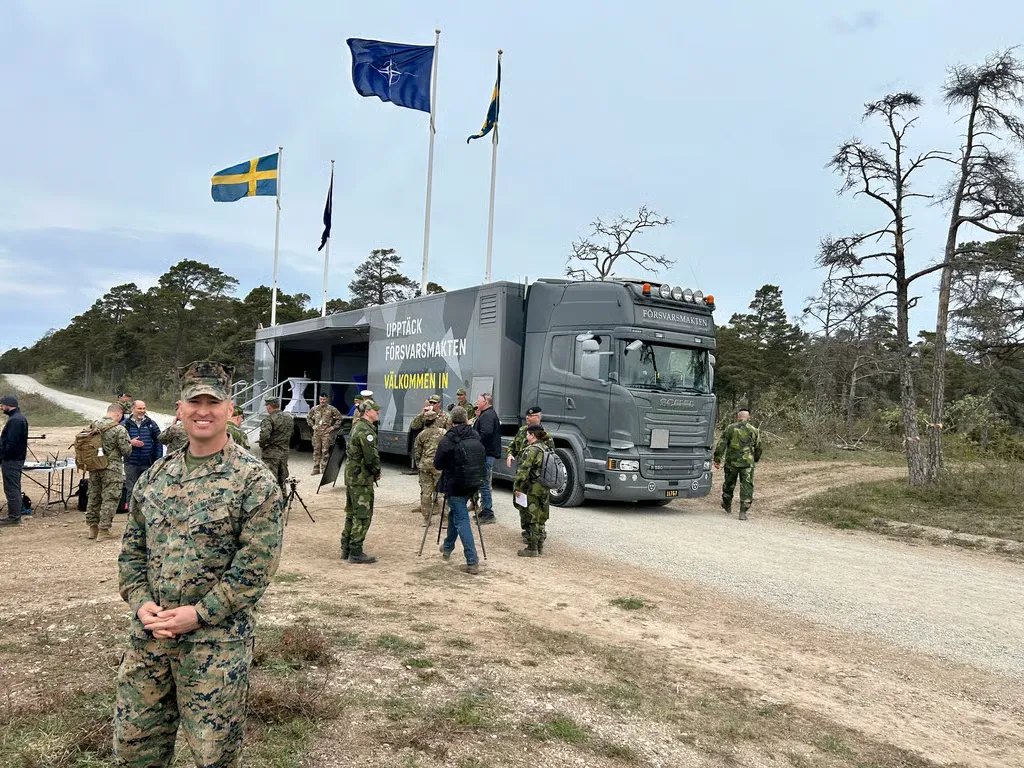
NATO is stepping up efforts to fortify the Swedish island of Gotland, which is increasingly viewed in military planning as one of the Alliance’s most important yet most vulnerable areas in the Baltic Sea, reports Politico.
Gotland is located approximately 300 kilometres from Kaliningrad in Russia. Against a backdrop of concerns over potential Russian aggression, hybrid attacks and uncertainty regarding the future US involvement in European security, Sweden and its allies are bolstering the island’s defences.
Last week, Sweden completed its first NATO-coordinated exercises on Gotland since joining the Alliance in 2024. Around 18,000 military personnel from 13 countries took part in the manoeuvres.
The Commander-in-Chief of the Swedish Armed Forces, Mikael Klasson, stated that a Russian attack could happen at any time.
The exercises also highlighted a number of challenges. The United States scaled back its participation in the manoeuvres, whilst Ukrainian troops taking part in the training demonstrated the capabilities of modern drone warfare by swiftly destroying a Swedish armoured unit during one of the scenarios.
Anna Wislander, Director for Northern Europe at the Atlantic Council, noted that there has recently been an increase in Russian activity, including cable damage, drone flights and incidents of espionage.
According to her, uncertainty regarding the level of US support for Europe could create additional risks.
The strategic importance of Gotland
Gotland is of vital importance for control of the Baltic Sea. Niklas Granholm, Deputy Director of the Swedish Defence Research Agency, noted that control of the island makes it possible to monitor a significant portion of events in the region.
Due to its location, Gotland has been informally dubbed the ‘unsinkable aircraft carrier’. According to Granholm, fighter jets based on the island can reach any Baltic capital within minutes.
He also noted that if Russia were to deploy air defence systems on the island, Moscow could restrict supplies to the Baltic states and Finland. At the same time, NATO’s control over Gotland allows it to limit Russia’s access to the Baltic Sea and to use long-range assets to defend the region.
In response to these threats, Sweden is actively rebuilding its military presence on the island, which is home to around 60,000 people. Over €200 million has already been allocated to modernising the infrastructure. Air defence systems have also been restored, and a regiment has been formed, equipped with CV90 armoured vehicles and Leopard 2 tanks.
Andreas Gustafsson, the regiment commander on Gotland, has stated that over the course of the year, at least a further 1,000 troops are to join the 4,500 already stationed on the island on a rotational basis.
He also expressed hope that long-range artillery units would be deployed to the island in the near future. Furthermore, from 2028, Gotland is set to receive new IRIS-T medium-range air defence systems.
Hybrid threats and NATO’s role
In addition to the risk of a direct military attack, attention is being paid to hybrid threats on the island.
Over the past 18 months, Gotland has seen an accident involving a critical water pump following an act of sabotage, damage to an undersea fibre-optic cable, and regular instances of radio jamming that have disrupted the operations of aircraft and emergency services.
Mikael Klasson stated that he was seriously concerned by such actions and emphasised that Russian military doctrine involves seeking out vulnerabilities and exploiting weaknesses.
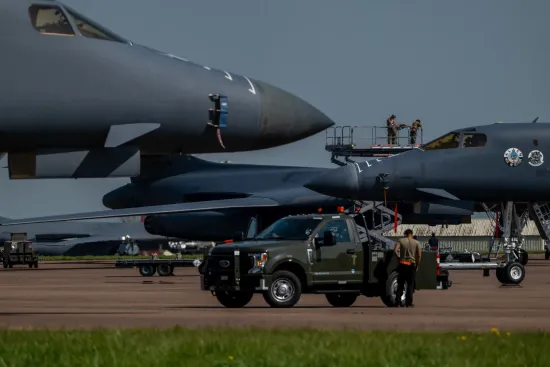
The exercises on the island were aimed at testing cooperation between allies. They involved military personnel from Canada, Denmark, the UK, the US, Norway and the Netherlands, as well as Finnish F-18 fighter jets.
Rear Admiral Frédéric de Roupilly, NATO’s Deputy Chief of Staff for Planning at the Alliance’s Joint Command in Virginia, stated that military planning had been revised following Sweden’s accession to NATO.
Lessons from the war in Ukraine
During the exercises, particular attention was paid to unmanned systems.
A 24-year-old Ukrainian drone operator with the call sign Tarik said that during one of the scenarios, the Ukrainian military forced the Swedish side to restart part of the exercises three times after using drones against a simulated mechanised assault.
“We had a scenario involving an attack by up to 20 tanks in a mechanised assault. I simply launched the drone, spotted them all, and they became easy targets,” he said.
Regiment commander Andreas Gustafsson noted that one of the main takeaways for him was the need to train much more actively using drones.
At the same time, US representatives emphasise that military cooperation between the allies remains strong. US Marine Corps Battalion Commander Lieutenant Colonel Travis Chamberlain stated that American and Swedish military personnel worked effectively together during the exercises.
Anna Wislander noted that Sweden spends 2.5% of its GDP on defence and has a well-developed defence industry, so it does not rely solely on the US for the defence of Gotland. At the same time, the country requires American weapon systems, in particular Patriot PAC-3 missiles, as well as logistical support.
Some NATO representatives believe that the Alliance could do more to strengthen the island’s security, in particular by considering the deployment of permanent long-range air defence systems on Gotland.
Mikael Klasson stressed that the allies must not wait for the Russian armed forces to rebuild further, but must maintain constant readiness for potential threats.