The NATO summit in Ankara cemented the new role of Europe and Ukraine within the Alliance’s security framework

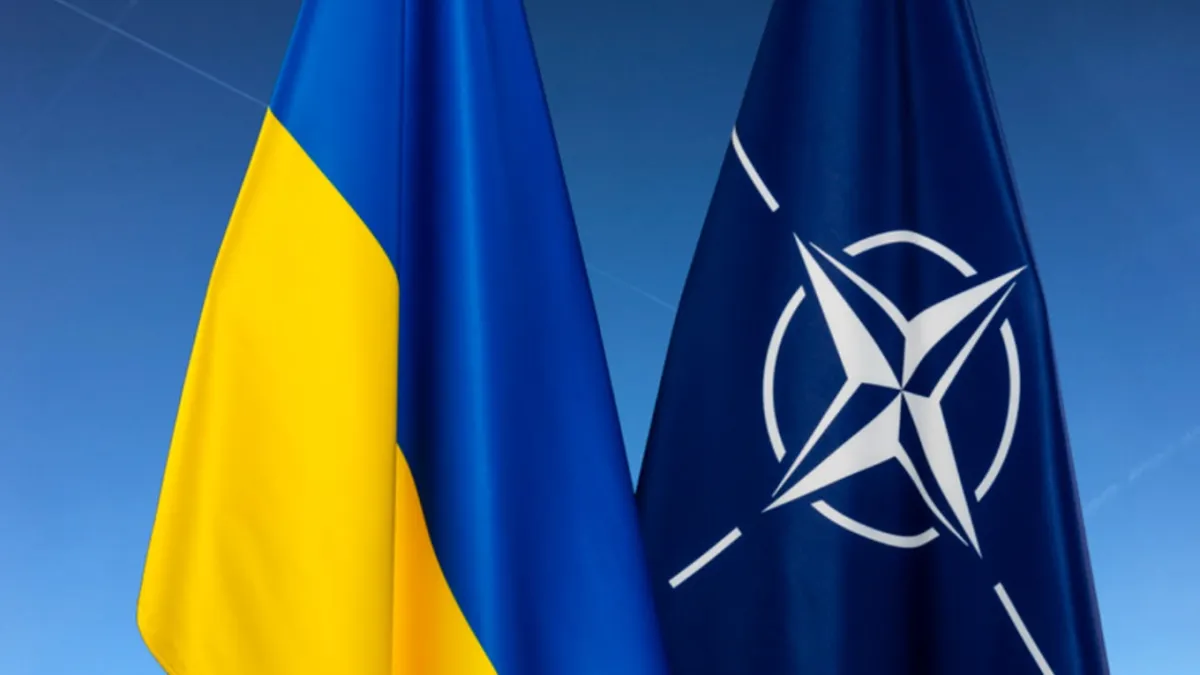
The NATO summit, which took place on 7 and 8 July in Ankara, focused on the transition from political commitments to the practical strengthening of the Alliance’s defence capabilities. One of the main topics of the meeting was the redistribution of responsibilities among allies and the strengthening of European countries’ role in ensuring their own security, reports DW.
The first day of the summit began with the NATO Defence Industry Forum, which focused on the development of military technologies and manufacturing capabilities. Participants presented projects on expanding strategic transport aviation, the procurement of new Triton reconnaissance drones, the development of a new generation of AWACS aircraft, the development of missile defence systems, space surveillance and the large-scale implementation of unmanned technologies.
At NATO headquarters, this phase of the Alliance’s development is referred to as ‘NATO 3.0’. Whilst after the end of the Cold War the organisation focused primarily on operations outside its territory, Russia’s war against Ukraine has shifted the priority back to the collective defence of Europe.
NATO Secretary-General Mark Rutte stated that the Alliance has shifted its focus from setting objectives to achieving concrete results. According to him, this requires accelerating arms production, removing bureaucratic obstacles, enhancing resilience and introducing innovations more swiftly.
During the forum, the allies signed contracts with defence industry firms worth over 50 billion dollars. Particular attention was paid to the development of unmanned technologies. NATO presented the Drone Edge initiative, designed to accelerate the integration and scaling up of drones within the armed forces of Alliance countries. According to Mark Rutte, the allies plan to invest $40 billion in unmanned systems over the next five years.
One of the summit’s key outcomes was a re-evaluation of Ukraine’s role in the European security architecture.
During a meeting with Ukrainian President Volodymyr Zelenskyy, Mark Rutte highlighted the significance of Ukraine’s experience of modern warfare. He described Ukraine’s strikes on Russia’s energy and defence infrastructure as “extremely important from a military point of view” and noted that Ukraine is also changing the situation on the battlefield.
The summit’s final declaration states for the first time that Ukraine is contributing to the security of the Euro-Atlantic area. Although the allies did not use the specific wording regarding the country’s status as a ‘security contributor’, it is precisely this principle, as noted, that is reflected in the final document.
During the NATO Defence Industry Forum, Volodymyr Zelenskyy stated that Ukraine already possesses significant defence capabilities and experience of modern warfare, which could form part of the Alliance’s collective defence. He also called on the allies to develop joint arms production, establish European manufacturing capabilities for missile defence systems, and promote the initiative to form an anti-ballistic coalition.
The day after the forum, US President Donald Trump, during a meeting with Zelenskyy, announced that the United States would grant Ukraine a licence to manufacture missiles for the Patriot systems. He emphasised that this concerned a defence system.
The allies also reaffirmed their long-term support for Ukraine. The declaration states that in 2026, NATO countries will provide Ukraine with military aid, equipment and training totalling 70 billion euros, and intend to maintain at least the same level of support in 2027. The document also welcomes the European Union’s decision to provide multi-year funding for Ukraine.
A separate focus of the summit was the increased responsibility of European allies for collective defence. The final declaration emphasises that European states and Canada are expanding their contribution to the Alliance’s security system. The new model of cooperation was described as ‘a stronger Europe in a stronger NATO’.
According to NATO, defence spending by European allies and Canada in 2025 increased by almost 20 per cent compared with the previous year. It is also expected that as many as 17 countries will meet one of the new targets agreed at the Hague summit ahead of schedule this year.
Summing up the summit, Mark Rutte stated that the main outcome was not only an increase in defence spending, but also the creation of conditions under which the allies’ armed forces would receive everything necessary to protect around one billion citizens of NATO countries in the face of growing threats.