Oil and LNG tankers have begun to leave the Strait of Hormuz following lengthy delays

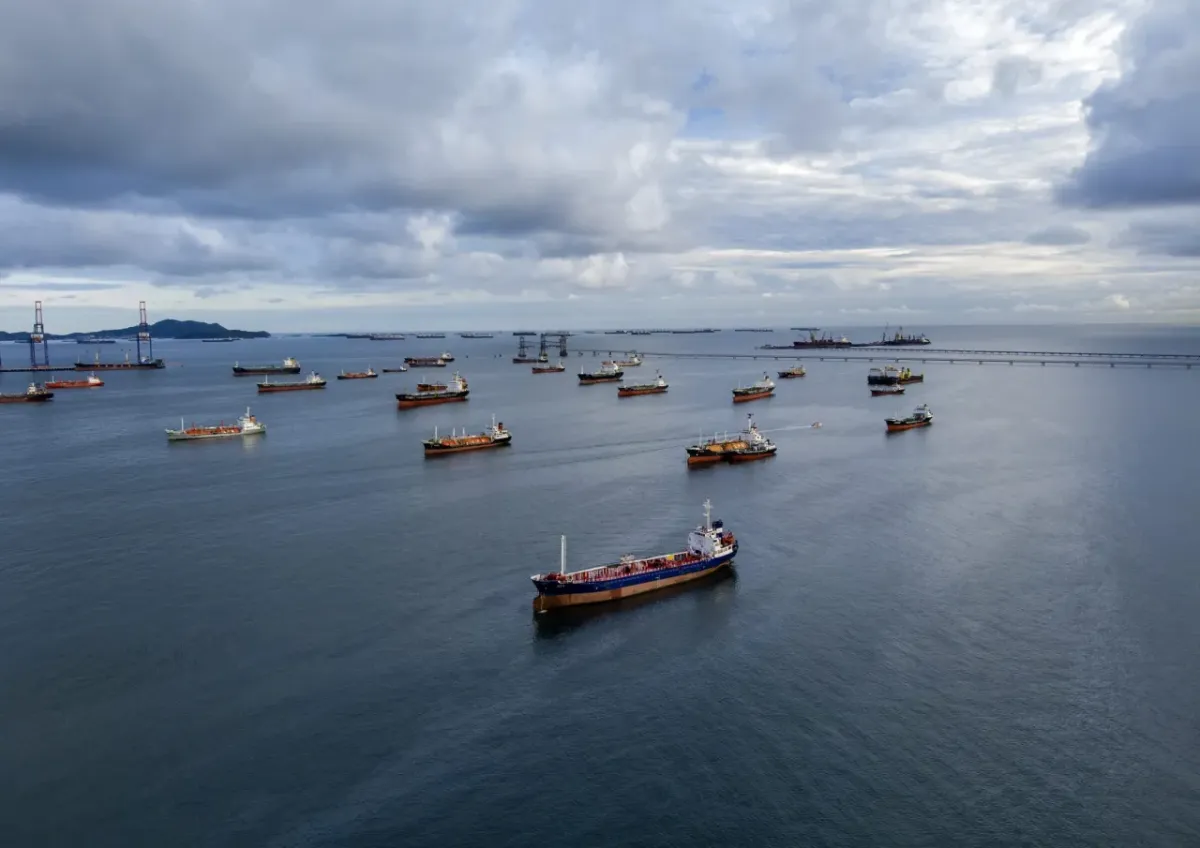
Several tankers carrying oil and liquefied natural gas have passed through the Strait of Hormuz in recent days and set sail for China, Pakistan and India.
According to Reuters, the vessels are part of a limited flow of tankers leaving the Persian Gulf following prolonged delays caused by the war between the US, Israel and Iran, which began on 28 February.
Around a fifth of global oil and LNG supplies usually pass through the Strait of Hormuz. Before the war began, between 125 and 140 vessels passed through the strait every day.
According to the LSEG and Kpler vessel tracking systems, the LNG tanker Fuwairit, flying the flag of the Bahamas, passed through the Strait of Hormuz on Monday. The vessel loaded liquefied gas at the Qatari port of Ras Laffan at the end of March and is heading for Pakistan.
Another LNG tanker, the Al Rayyan, has also left the strait. The vessel, which is carrying cargo from Ras Laffan, is currently between Iran and Oman and is due to arrive in China on 27 June.
The tanker Al Hamra, operated by Abu Dhabi National Oil Company, has also crossed the strait. The vessel was last spotted near the Strait of Hormuz on 19 April, and on 23 May it was sighted off the coast of India.
The supertanker Eagle Verona, which left the strait on Saturday, is carrying nearly 2 million barrels of Basrah crude and is heading for the Chinese port of Ningbo. The vessel is expected to arrive there on 12 June.
According to Reuters, the Eagle Verona was one of seven vessels for which Malaysia had previously requested permission to transit the Strait of Hormuz. Five of them have already left the region, whilst two remain in the Persian Gulf.
Last week, three VLCC supertankers also set sail through the strait to China and South Korea with a cargo of 6 million barrels of oil.
Currently, around 20,000 seafarers remain stranded on hundreds of vessels in the Persian Gulf.