The Moldovan Parliament has approved, at first reading, the country’s withdrawal from the statutory bodies of the CIS

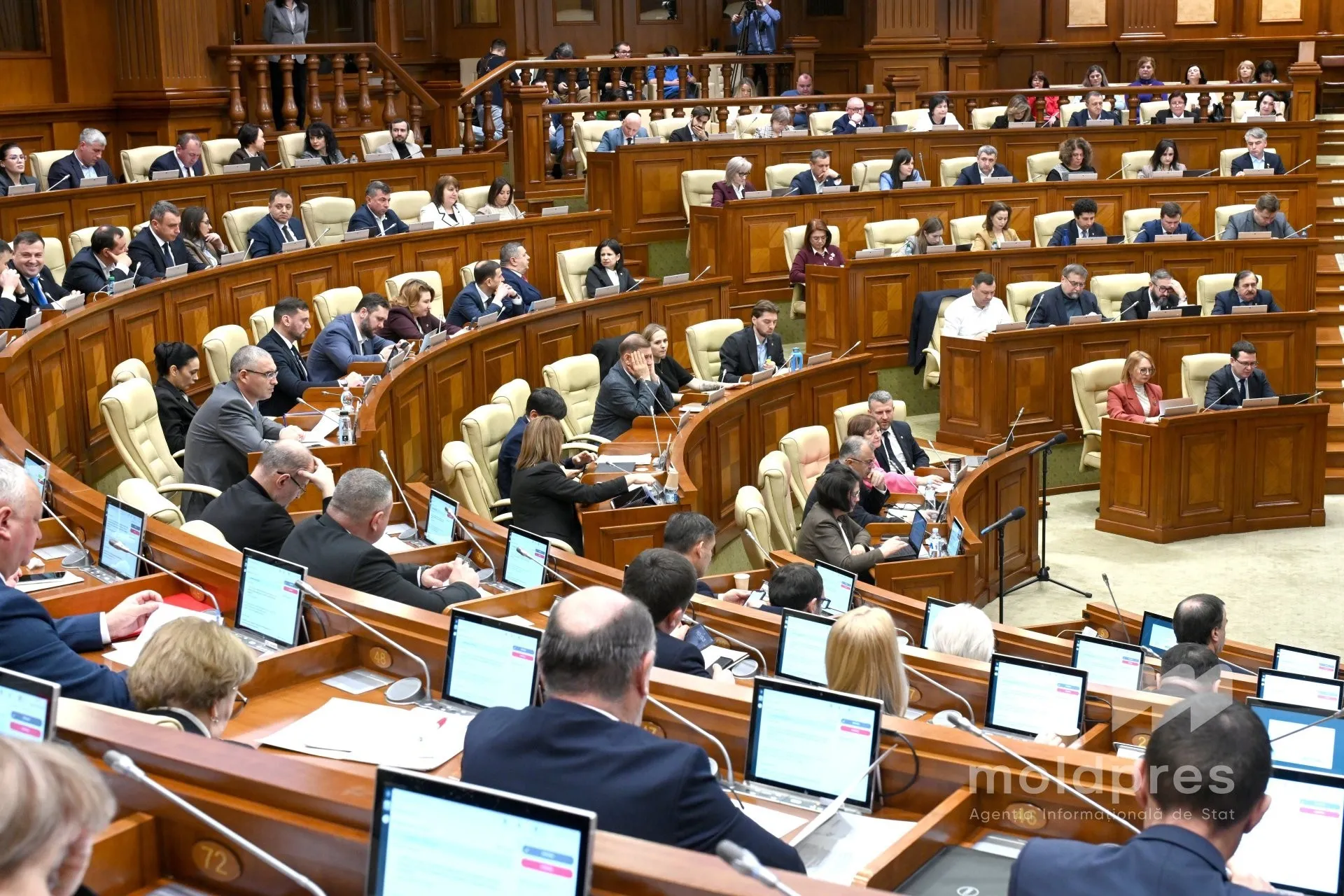
The Parliament of the Republic of Moldova has approved, at first reading, the denunciation of the Agreement on the Establishment of the Commonwealth of Independent States, the relevant Protocol and the CIS Charter.
The initiative was put forward by the Ministry of Foreign Affairs, which explained the decision by stating that the values and fundamental principles of the CIS are not being upheld, in particular the provisions on mutual recognition of the territorial integrity and inviolability of the borders of member states.
The documents were presented at the plenary session by Foreign Minister Mihai Popșoi. He stated that the principles laid down at the time of the CIS’s creation are being violated by the Russian Federation, which is waging war against Ukraine, carrying out acts of aggression against Georgia and illegally maintaining military units on the territory of the Republic of Moldova. Furthermore, he said that the denunciation of the agreement is a step towards accession to the European Union.
“Today we stand at a crossroads, and the decision can no longer be postponed. For more than three decades, we have carried a heavy burden, an invisible chain that kept us tied to a past that no longer belongs to us. The CIS is an organisation born from the ashes of a ruined empire and gradually transformed into a tool for preserving Moscow’s influence over its neighbours. “This ‘suitcase without a handle’ has not brought us prosperity, has not protected our sovereignty, and has not ensured our security. On the contrary, it has kept us in a grey zone and made us vulnerable to energy, political and military blackmail,” stated Mihai Popșoi.
Opposition MPs criticised the initiative. PSRM representative Vlad Batrință noted that such decisions could negatively impact trade and economic relations with CIS countries. PCRM MP Diana Caraman stated that the denunciation could affect the interests of citizens working in Commonwealth countries. Alexander Stoianoglo, a representative of the ‘Alternative’ faction, expressed the view that these actions could affect communication and cooperation in international forums.
The Agreement on the Establishment of the CIS and the Protocol thereto were signed in December 1991 by 11 post-Soviet states, including the Republic of Moldova. The documents legally enshrined the dissolution of the USSR and the creation of the CIS. The CIS Charter, signed in 1993, sets out the basic principles of the organisation’s functioning.
Following the denunciation of the agreements, the state budget will save around 3.1 million lei, which currently constitutes the annual contribution to the CIS budget. At the same time, relations with CIS member states will continue in bilateral and multilateral formats, and Moldova will remain a party to individual agreements, particularly in the trade, economic and social spheres.
The draft laws will be submitted for consideration at second reading.
Over the past two years, Moldova has begun the process of reviewing agreements concluded within the CIS. Of the 283 treaties, 71 have already been denounced, with a further 60 or so currently under review.