Poland plans to create the EU's first anti-drone system San

Poland has begun developing the San anti-drone system, which Warsaw claims is the most advanced in Europe. The project is being implemented by a Polish-Norwegian consortium, and the cost of the programme is estimated at approximately €3.5 billion.
This was reported by The Public with reference to the Financial Times.
The decision to create the system was made after about 20 Russian drones entered Polish airspace in September last year.
The development will be financed by European Union loans allocated to Warsaw under the Safe programme. Its goal is to increase arms production in Europe in response to Russia's aggression.
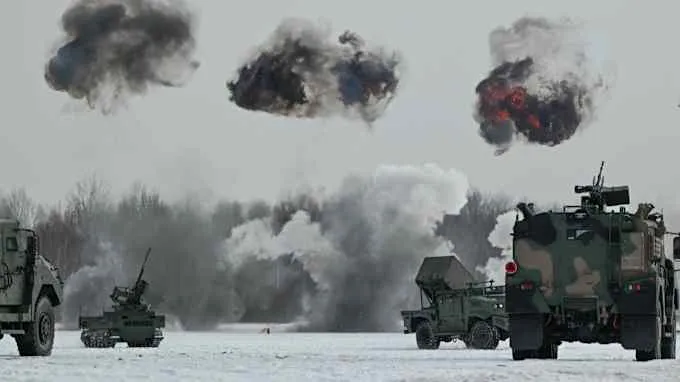
The San system will consist of 18 mobile anti-drone batteries. Each battery will be equipped with sensors and weapons connected to a central control system.
Radar components and guns installed on hundreds of vehicles will patrol the Polish border and be connected to national and allied defence systems.
Former Polish General Jarosław Gromadziński said that the events of September were a serious lesson for Poland.
"September was a big lesson for Poland because we had to use what we had, namely fighter jets with missiles, each costing $1 million, to shoot down drones that probably cost $1,000," he said.
"This showed that we need to quickly fill a large gap in our air defence," Hromadzinski added.
Polish Prime Minister Donald Tusk said the country would create "the most modern, intelligent and integrated drone defence system in Europe."
The system will combine electronic warfare capabilities with the ability to physically destroy targets. It will be able to use drone interceptors, fire 30 mm cannons and launch guided missiles capable of hitting drones and helicopters at low altitudes.
San is being developed by the Polish state defence group PGZ, the Norwegian defence company Kongsberg and the Polish radar manufacturer Advanced Protection Systems.
The government signed contracts for the creation of the system without a tender. The first batteries are planned to be handed over to the Polish armed forces by the end of the year. The system should be fully operational within 24 months.
In February, the consortium held its first field demonstration, during which it showed some of the guns that are planned to be used in the system.
The project has also sparked political controversy. The opposition Law and Justice party opposes the use of European Union loans, arguing that this could give Brussels influence over Poland's defence procurement.
President Karol Nawrocki, nominated by the Law and Justice party, plans to meet with Donald Tusk. He has stated that he may veto funding under the Safe programme and has proposed using the reserves of the Polish central bank.
Donald Tusk responded that in the event of a presidential veto, the government would seek alternative sources of funding.
"Think about whether you really want to strike at the very heart of Poland when such a brutal war is raging abroad, in Ukraine. No one will forgive you for this," Tusk said.
Radosław Pisiewicz, co-owner of Advanced Protection Systems, called San a new concept based on Ukraine's experience.
The company has been supplying Ukraine with radar and radio systems for the past two years and has also established a partnership with the British company MSI Defence Systems to produce anti-drone technology.
Kongsberg representative Ivar Simonsen said that the San programme confirms Poland's role as a centre of innovation in the field of countering drones.
He also noted that Poland, along with Denmark and Germany, is among the countries that have already moved from discussions to actual defence orders.