Putin and Trump are left high and dry

The Financial Times published a column entitled ‘Putin and Trump don’t have the cards’, in which it compared the consequences of Russia’s full-scale invasion of Ukraine with those of a US operation against Iran.
The author recalled that following Russia’s invasion in 2022, Donald Trump described Vladimir Putin’s actions as “brilliant”. At the same time, the article notes that Russia’s war against Ukraine had become “the most costly mistake by a major power in modern times” prior to the launch of the US operation “Epic Fury” against Iran.
Both Putin and Trump had counted on a weak opponent and a quick victory, but ultimately dragged their countries into protracted conflicts at great cost. China emerged as the main beneficiary of Moscow and Washington’s strategic blunders.
Hardliners in the US consider the regimes in Iran and Ukraine to be incomparable due to the political structures of the states. At the same time, the article emphasises that both wars were ‘wars of choice’, and the difference between the initial objectives and the actual outcomes proved significant for both Trump and Putin.
Putin cannot admit the failure of the ‘special operation’, as this could cost him his power and, possibly, his life. As for Trump, his position is determined by political considerations and personal ambitions. Trump will have to negotiate with the Iranian authorities, whom he had previously declared his intention to destroy.
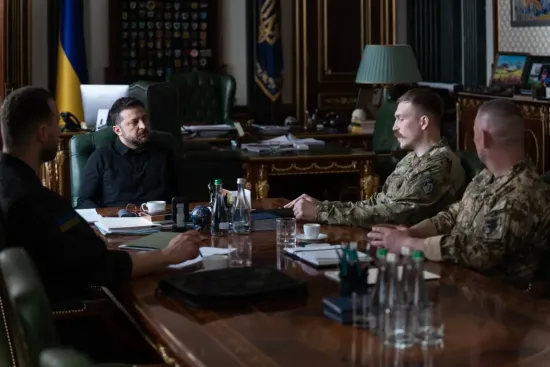
Russia is losing 35,000 troops a month, whilst the Ukrainian army is capable of striking targets on Russian territory at a distance of up to a thousand kilometres. Putin had to appeal to Trump to persuade Volodymyr Zelenskyy not to attack Moscow with drones during the Victory Day parade.
Ukraine has gained new advantages thanks to military technologies, in particular cheap interceptors for destroying Russian missiles. Whilst the Pentagon is running out of missile stocks in the Persian Gulf, Ukraine has effectively revolutionised the military economy. The experiences of Ukraine and Iran are changing approaches to modern warfare and calling into question the effectiveness of expensive traditional weaponry, particularly aircraft carriers. Now the Gulf states, like the US, need these Ukrainian technologies, giving Kyiv significant leverage over Trump.
Russia’s war against Ukraine has backfired on the Kremlin. Following Finland’s accession to NATO, the length of the Alliance’s border with Russia has effectively doubled.
The article also discusses the crisis of various political concepts in the US. The Financial Times notes that NATO’s critics from the American political extremes have found themselves in a difficult position, as have the proponents of the ‘America First’ policy.
Apart from China, medium-sized states are gaining additional opportunities. US influence in the Middle East has weakened, and Iran is likely to remain an important regional power.
Ukraine, meanwhile, could become a key NATO partner should the US’s role in the Alliance diminish.