The US Senate did not support a resolution calling for an end to hostilities against Iran

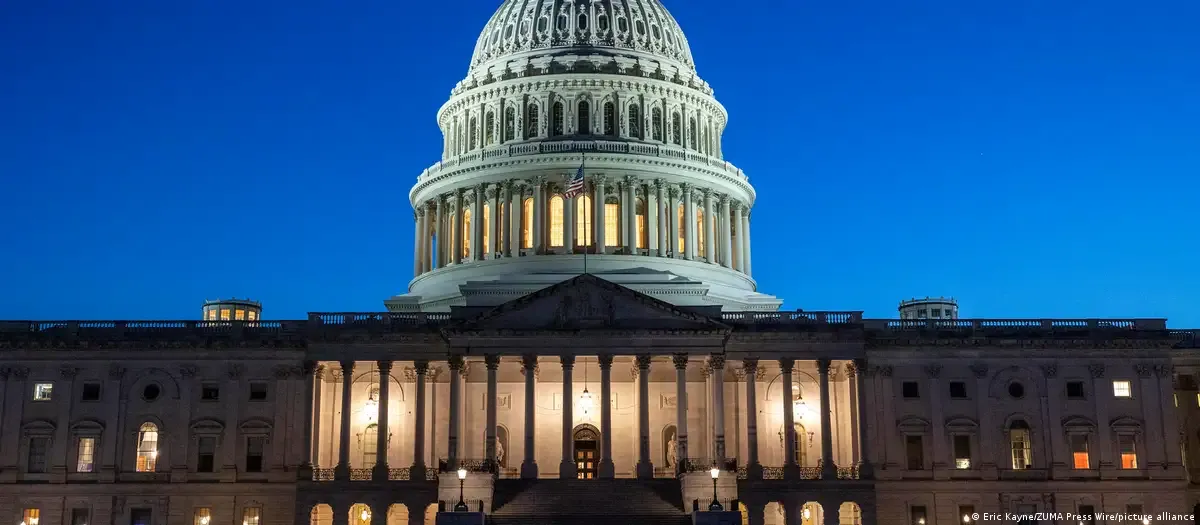
The US Senate has rejected a resolution that would effectively have obliged President Donald Trump’s administration to cease hostilities against Iran and withdraw American troops from the conflict zone until Congress formally authorises the continued use of force. This was reported by ThePublic, citing the Washington Post.
The document, initiated by representatives of the Democratic Party, was supported by 47 senators, with 52 voting against. One senator did not take part in the vote. The resolution was supported by Republican Rand Paul, whilst Democrat John Fetterman voted against it.
This is already the fourth such initiative since the start of the war that Democrats have put to a vote in the Senate, and none of them have garnered the necessary support.
The Democratic authors of the document insist that the military campaign against Iran is illegal and lacks sufficient justification. They have stated that they will continue to bring similar initiatives before the Senate until the conflict is resolved.
The War Powers Act of 1973, on which the Democrats rely, stipulates that the president must withdraw US forces from a conflict not authorised by Congress within 60 days. This deadline expires on 1 May. The law also allows the president to obtain a 30-day extension if he certifies that this is an unavoidable military necessity.
The Senate has stated that it expects the Donald Trump administration to present a more detailed plan for ending the war and further steps towards de-escalation. Republican Majority Leader John Thune said that the White House must propose a plan that will bring the conflict to an end and achieve a result leading to a safer Middle East.
Some Republicans who voted against the resolution also stated that the president must consult with Congress if the war continues. Senator Lisa Murkowski noted that at the start of the operation, the president presented it as a short-term one, yet the 60-day deadline is fast approaching.
Senator John Curtis stated that he would not support additional funding for military operations against Iran without a declaration of war by Congress. Senator Susan Collins emphasised that Congress must authorise the conflict if it lasts longer than 60 days or if the US deploys ground troops.
At the same time, some Republicans are downplaying the significance of this deadline. Lindsey Graham considers the War Powers Act to be unconstitutional. Ron Johnson stated that the president should not allow this law to restrict his actions when it comes to removing the Iranian regime from power.
Democrats in the Senate also argue that the very start of the war was unlawful, and therefore the 60-day issue is not the main concern. Chuck Schumer stated that there is no need to wait 60 days to realise that this war is a mistake. Cory Booker said that if Congress allows this, such an approach could become the new standard.
Meanwhile, lawyer Oona Getaway, who served as a special adviser at the Pentagon during the Barack Obama administration, noted that the 60-day period remains in force even if the president started the war unlawfully. According to her, this threshold clearly shows that the president is prepared to completely disregard the law.
The White House has not yet announced whether Donald Trump will request a 30-day extension. White House spokeswoman Anna Kelly stated that diplomacy remains the president’s priority, and that Iran is seeking to reach an agreement but must first renounce its intentions to acquire nuclear weapons and agree to the terms set by the US.
It is also noted that the House of Representatives is set to consider its own resolution to restrict further strikes against Iran. A similar document failed to gain sufficient support last month.
Polls cited by the American media indicate low public support for war. According to Economist-YouGov, 55 per cent of Americans oppose the war, whilst 32 per cent support it. A CBS News-YouGov poll showed that 64 per cent of Americans disapprove of Donald Trump’s actions in this conflict, whilst 36 per cent approve.
Follow us on Telegram