St Patrick’s Way: a route leading to the origins of Ireland’s most famous festival

However, in Northern Ireland there is a much more peaceful way to mark the occasion — by walking the Saint Patrick’s Way. This is according to the BBC.
The Saint Patrick’s Way is a walking trail approximately 82 miles (around 132 km) long, stretching from Armagh to Downpatrick. It connects historical sites associated with the life of Saint Patrick and ends near his burial place.
The route was opened in 2015. Its creation was inspired by the famous Camino de Santiago pilgrimage route in Spain.
According to Tim Campbell, director of the St Patrick’s Centre in Downpatrick, the idea arose after a local resident, Al Graham, walked the Spanish route and suggested creating a similar trail in Ireland.
“St Patrick’s Day is one of the biggest cultural celebrations in the world, but often St Patrick himself gets lost amid the festivities. We wanted to bring the saint’s story back to the heart of the celebration,” explained Campbell.
Despite popular legends, the story of St Patrick is far more complex.
In particular, he was not Irish. Patrick was born in the late 4th century in Roman Britain. As a teenager, he was kidnapped by Irish raiders and sold into slavery. He eventually managed to escape to France, but later returned to Ireland as a missionary.
Former BBC correspondent Martina Purdy, who is now a nun and leads spiritual walks along the route, believes that it is precisely the saint’s difficult fate that makes his story so relevant today.
“His story is remarkably modern. It is the tale of a man who was abducted, deprived of his home and forced to live in captivity. Many people recognise themselves in his words and experiences,” she says.
The journey begins in Armagh, home to two cathedrals dedicated to Saint Patrick — the Catholic and Anglican cathedrals. They stand on different hills less than a kilometre apart and symbolise Ireland’s complex history.
The route then passes through the apple orchards of the region, famous for its cider, and heads towards the town of Banbridge, which was once a centre for flax production.
From there, the trail follows the Newry Canal and continues to the town of the same name, whose coat of arms depicts St Patrick between two yew trees, which he is said to have planted by the River Clanragh.
Part of the route runs close to the border with the Republic of Ireland through areas that were dangerous for visitors during the conflict in Northern Ireland.
According to Campbell, following the signing of the peace agreement, the route has become a vital part of tourism development. “Patrick stands at the crossroads of faith, history, culture and reconciliation. He does not belong to just one community,” he notes.
One of the most beautiful sections of the route runs along the coast of Carlingford Lough, near the town of Rostrevor, surrounded by the Mourne Mountains.
This is also where the writer C. S. Lewis drew inspiration, using these landscapes to create the world of Narnia.
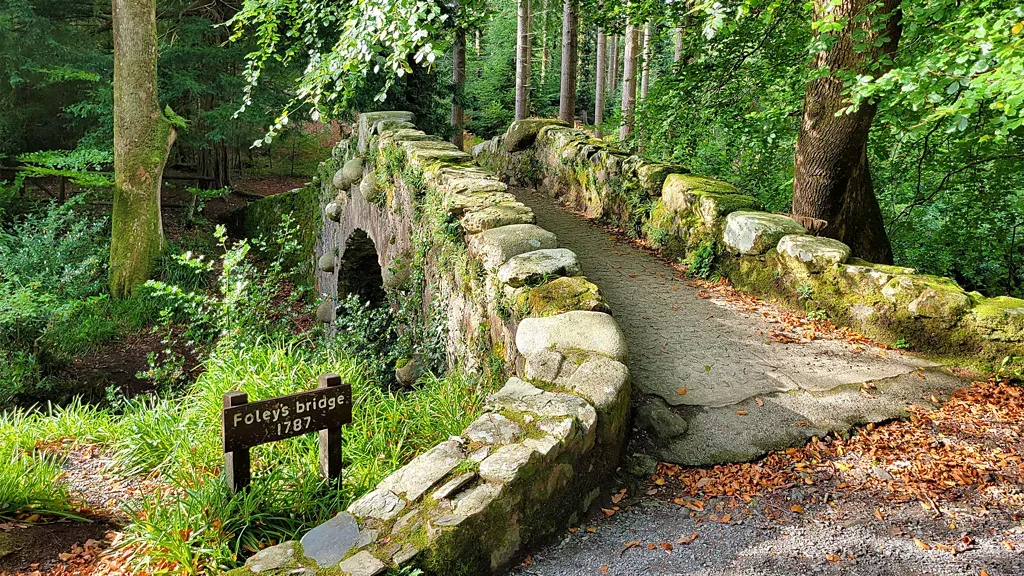
The route passes through Tollimor Forest, famous for its 18th-century stone bridges and as a filming location for the TV series ‘Game of Thrones’, before descending to the resort town of Newcastle.
The final stop is Downpatrick, where, according to tradition, Saint Patrick is buried. His grave is located near Down Cathedral and marked by a simple granite slab bearing a single inscription: ‘Patrick’.
Although Patrick has become a symbol of Ireland, the first St Patrick’s Day celebrations took place not in Ireland but in colonial America — specifically in Boston and New York.
There, Irish migrants used this holiday to emphasise their identity within their new society.
Over time, the celebrations took on political significance. In the 18th century, parades were used to recruit for the British army, and later during the American War of Independence.
Today, there are over 450 churches named after Saint Patrick in the United States alone.
The saint’s story — of exile, trials and return — still resonates with people in different countries around the world.
“People think they come here just for a nice walk. But often it’s something more. It’s a kind of invitation to return to the roots of history,” concludes Martina Purdy.