The Blue Micro-Moon of 2026: a rare full moon will be visible on 30–31 May

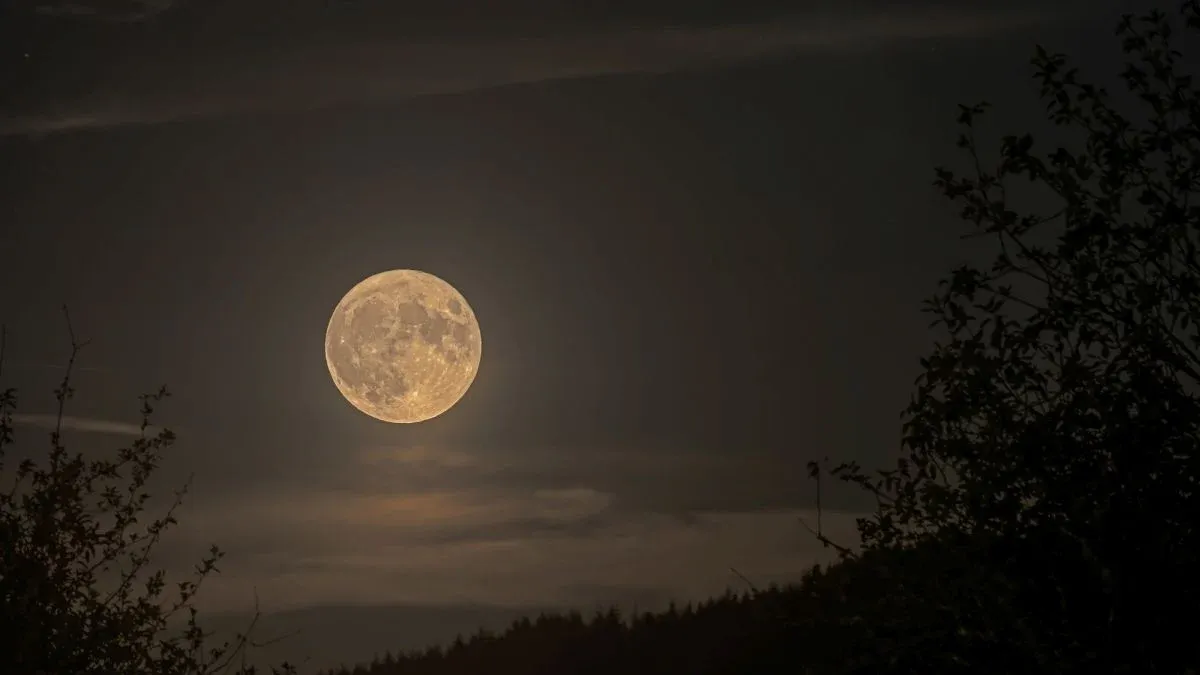
ScienceAlert reports on this rare astronomical phenomenon. Details regarding the date, the distance to the Moon and the nature of the event are also provided by AP and EarthSky.
What to look for in the sky on 30–31 May
The full moon, which will appear in the sky on 30 and 31 May, will be unusual due to a combination of two phenomena.
Firstly, it is a ‘blue moon’ – the second full moon within a single calendar month. The first full moon in May 2026 was on 1 May, and the second falls at the end of the month.
Secondly, it is a micro-moon – a full moon occurring when the Moon is near its apogee, that is, the point in its orbit furthest from Earth.
Despite the name, the Moon will not turn blue. A “Blue Moon” is a calendar term, not a description of colour.
Why is this a rare phenomenon?
On its own, a “Blue Moon” occurs once every few years. Micro-moons are also not a unique phenomenon: there can be two or three full micro-moons in a year.
But their combination is much rarer.
According to ScienceAlert, the next “blue micro-moon” will not be visible until at least July 2053.
How far away will the Moon be?
These days, the Moon will be 406,135 km from Earth. This will be the most distant full micro-moon of the three that will occur in 2026.
Due to this distance, the full Moon will appear slightly smaller and dimmer than usual.
AP notes that a micro-moon may appear about 6% smaller and 10% dimmer than an average full moon. However, for most people, the difference will not be immediately noticeable without a comparison or a photograph.
When is the best time to watch
The best time to observe the full moon is during moonrise on the evening of 30 May or during the night of 31 May.
Look for the Moon near the eastern horizon after sunset. No special equipment is required, though binoculars may make surface details more visible.
EarthSky notes that the exact moment of the full moon will be at 08:45 UTC on 31 May 2026.
Why the Moon may be orange rather than blue
The name ‘blue’ does not mean that the Moon will change colour.
In fact, near the horizon, it may appear yellow, golden or orange. This is due to the way the Earth’s atmosphere scatters light, especially when the Moon is low on the horizon.
What else will be near the Moon
AP reports that during this full moon, the bright red star Antares in the constellation Scorpio will be visible near the Moon. In some southern regions of the world, the Moon will even briefly obscure Antares.
For most observers, the star will simply be visible near the Moon, provided the sky is clear enough.
Ukrainian polar explorers at the Akademik Vernadsky station previously published a video of the full moon in Antarctica.
To observe the “blue micro-moon” in Ukraine, the main factor will be the weather: if the sky is clear, the phenomenon will be visible without a telescope.
Follow us on Telegram