The EU has removed Patriarch Kirill and the founder of Lukoil from its sanctions list
This has been reported by ‘European Truth’, citing diplomats from several EU member states.
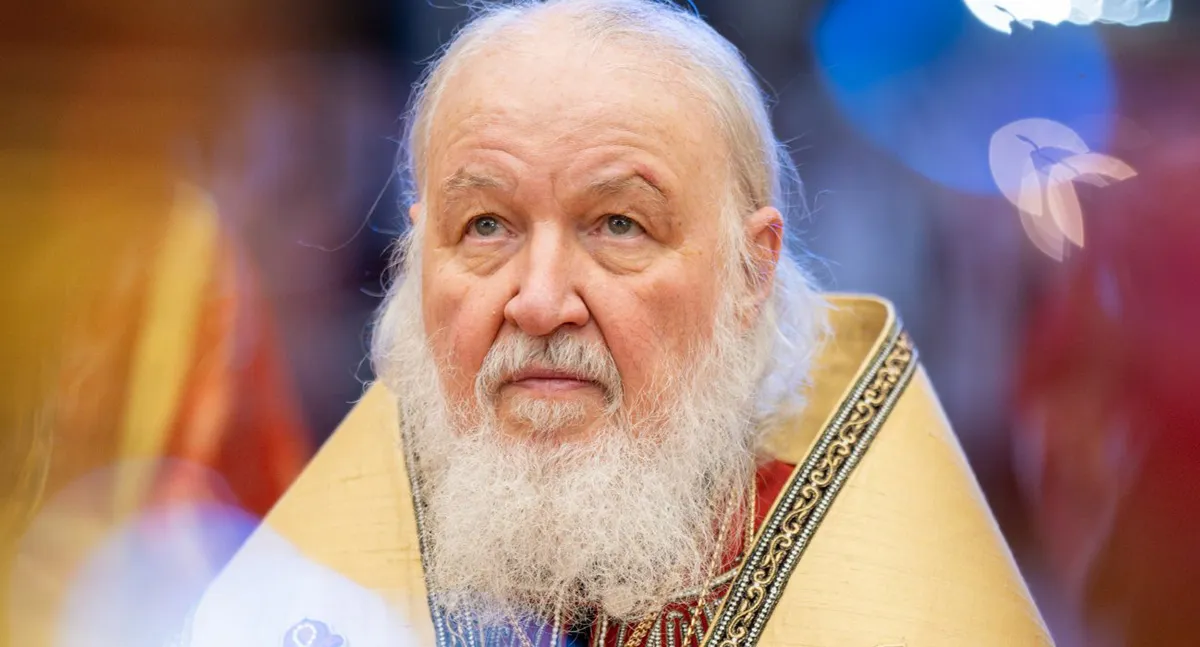
Two names have been removed from the draft of the 21st package of EU sanctions against Russia: Patriarch Kirill of the Russian Orthodox Church and Vagit Alekperov, founder of Lukoil.
According to “European Truth” sources, it was Bulgaria that demanded their removal. Italy later joined this position regarding Patriarch Kirill.
Patriarch Kirill has repeatedly and publicly supported Russia’s war against Ukraine, yet his name has already proved problematic on several occasions during discussions on EU sanctions. Previously, Hungary had blocked the inclusion of the head of the Russian Orthodox Church on the bloc’s sanctions list.
Why Bulgaria was opposed
Bulgaria had previously stated that it might block a new package of sanctions if it affected its economic interests. Reuters reported that Sofia, in particular, was wary of the consequences for Lukoil, which operates Bulgaria’s only oil refinery in Burgas.
Bulgarian Prime Minister Rumen Radev also opposed sanctions against representatives of the Russian Orthodox Church. He stated that Bulgaria did not agree with the extension of sanctions policy into the religious sphere.
Which restrictions have been eased
According to diplomatic sources, the most contentious issues in the 21st sanctions package have already been resolved, but a significant proportion of them have been softened.
In particular, the ban on imports into the EU of cod, pollock and certain other fish species is to be removed from the draft package. Furthermore, the plan for strict restrictions on Russian liquefied natural gas and the relevant tankers will not be implemented.
Furthermore, the scope of the ban on Russian militants entering the EU is set to be significantly narrowed. This means that the initial version of the package was stricter than the version currently being prepared for approval.
What will happen to the oil price cap?
Russian oil remains one of the key points of the 21st package. According to ‘European Truth’, EU member states have agreed in principle to temporarily freeze the price cap on Russian oil at $44.1 per barrel.
This is an important decision, as without such a freeze, the mechanism could automatically adjust the price cap in line with the market formula. Earlier, “European Truth” reported that the European Commission had intended to adopt the package by 15 July — a date linked to the renewal of the oil price cap.
What issues remain unresolved
Among the unresolved issues remains Austria’s demand regarding the assets of the Russian investment company Rasperia, which is linked to the oligarch Oleg Deripaska.
According to sources, Vienna has once again raised the issue of lifting sanctions and unfreezing Rasperia’s assets. The company has legal claims worth billions against a subsidiary of the Austrian bank Raiffeisen.
Since the start of the full-scale war, Raiffeisen has retained one of the largest presences among Western banks in Russia, although it has stated its intention to scale back or sell its Russian business.
When might the package be approved?
EU ambassadors have not yet agreed on the final text of the 21st package of sanctions against Russia. According to ‘European Truth’, it may be put forward for approval by EU foreign ministers on 13 July, but in a watered-down form.
The final decision requires the unanimous support of all EU member states. This is why individual countries may seek to have specific individuals or measures removed from the package, threatening to block the entire decision.
The removal of Patriarch Kirill and Vagit Alekperov suggests that the new EU sanctions package against Russia may end up being weaker than the initial version. Some of the restrictions are either being removed from the draft entirely or scaled back to a less stringent form.
Follow us on Telegram.