The FTA with Turkey will provide duty-free access for most Ukrainian goods

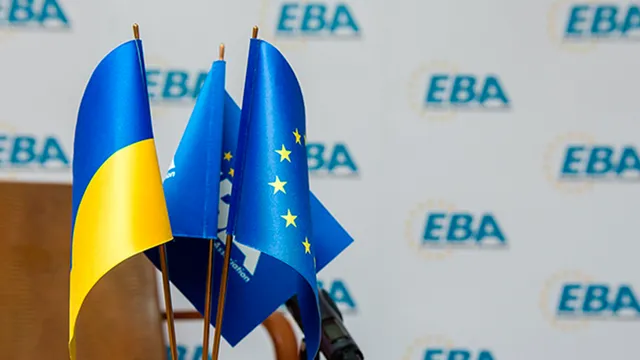
This was reported by the European Business Association in a statement to the Interfax-Ukraine news agency.
The association expects that the launch of the FTA will expand access for Ukrainian goods and services to the Turkish market, help boost exports and create further opportunities for attracting investment.
Which goods will benefit from preferential treatment
Under the terms of the agreement, Turkey will immediately abolish import duties on approximately 93.4 per cent of industrial goods from Ukraine and 7.6 per cent of agricultural products.
Following the completion of transition periods lasting between three and seven years, the duty-free regime will be extended to a further 1.5 per cent of industrial goods and 28.5 per cent of agricultural products. Tariff quotas and special safeguard mechanisms will apply to certain items.
The EBA emphasised that such restrictions are intended to ensure the gradual adaptation of the Ukrainian and Turkish markets and to protect the most sensitive sectors from a sharp increase in competition.
Ukrainian manufacturers will be able to use Turkish components
One of the key benefits of the agreement will be the application of the Pan-Euro-Mediterranean rules of origin.
Following amendments to the cumulation table, Ukrainian enterprises will be able to use Turkish raw materials, materials and components, whilst finished products will retain their preferential Ukrainian origin when exported to the European Union.
This mechanism could be particularly important for companies integrated into production chains linking Ukraine, Turkey and EU countries. The Ministry of Economy has previously cited the application of these rules in trade with Turkey as one of the areas with the greatest untapped potential.
The agreement has not yet entered into force
The Verkhovna Rada ratified the free trade agreement between Ukraine and Turkey on 14 July. The relevant draft law No. 0340 was passed by 236 MPs.
The document was signed by the parties in Kyiv on 3 February 2022, but its implementation was postponed following the start of the full-scale invasion.
Ratification alone does not mean that customs duties will be abolished immediately. The agreement will come into force once both countries have completed their domestic procedures and exchanged the relevant diplomatic notes.
The European Business Association also regards the ratification as an important step in preparing the Ukrainian economy for EU membership. This involves adapting to international trade rules, fostering competition and deepening economic relations with key partners.
Follow us on Telegram.