The US has launched fresh strikes against Iran amid talks to end the war

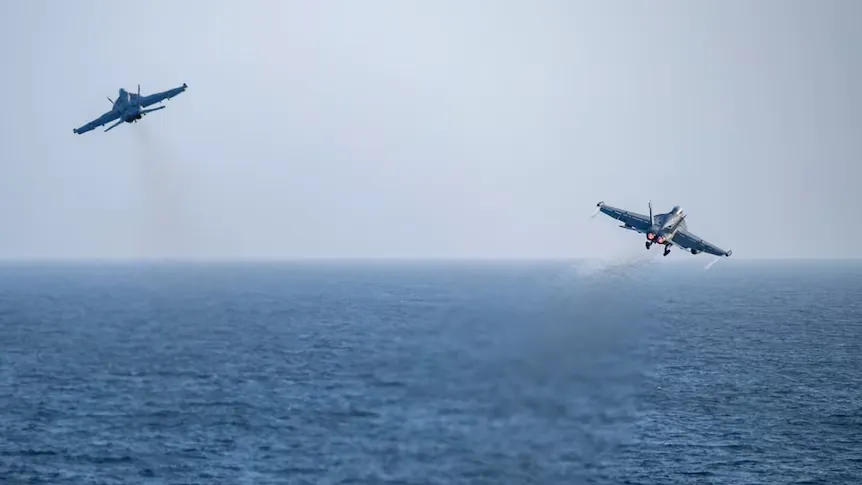
The US has carried out further strikes in southern Iran, targeting missile positions and boats which, according to the US, were attempting to lay mines. This was reported by US Central Command, according to the BBC and the Washington Post.
The strikes were carried out in self-defence and were intended to protect US military personnel from threats posed by Iranian forces.
Central Command spokesman Captain Tim Hawkins stated that US forces “continue to defend their forces whilst exercising restraint during the current ceasefire”.
According to him, the strikes were carried out near the Iranian port city of Bandar Abbas, where Iran’s naval base in the Strait of Hormuz is located.
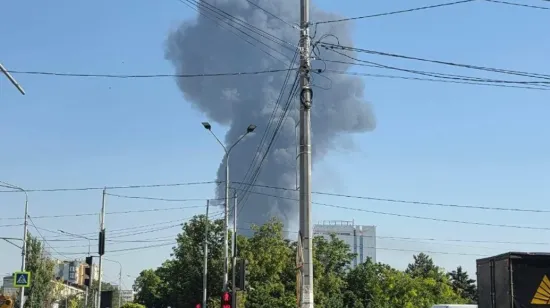
Earlier, Iranian state media reported that local authorities in Bandar Abbas were verifying reports of explosions in the area.
There has been no official reaction from Iran to the new US strikes as yet. Meanwhile, Iranian Foreign Ministry spokesman Esmail Baghai stated that the parties had made progress in negotiations to end the war, but stressed that an agreement “is not inevitable”.
According to Baghai, a significant portion of the issues have already been agreed upon, but it is too early to speak of a swift signing of the agreement.
Following the strikes, US Secretary of State Marco Rubio stated that the possibility of reaching an agreement between Washington and Tehran remains. He mentioned the talks between the chief Iranian negotiator, the Iranian Foreign Minister and the Prime Minister of Qatar.
“We’ll see if we can make progress. Active discussions are currently underway regarding the wording of the initial document, so this will take a few days,” Rubio said during a visit to India.
He also stated that US President Donald Trump is keen to reach an agreement, but it must be “a good deal or no deal”.
Commenting on the situation surrounding the Strait of Hormuz, Rubio stated that it must remain open.
“The Strait must remain open. It will remain open one way or another,” said the US Secretary of State.
According to US media reports, the parties are discussing a memorandum that could provide for a 60-day extension of the ceasefire, the clearance of mines and the opening of the Strait of Hormuz, as well as further negotiations on Iran’s nuclear programme.
CBS News reported, citing US intelligence, that Iran’s Supreme Leader Mojtaba Khamenei is in an unknown location following injuries sustained in an Israeli strike, which is complicating communication with his representatives and slowing down the negotiation process.
US media also report that a final agreement is not expected in the near future. Among the issues still under negotiation are the easing of sanctions against Iran, the unfreezing of Iranian assets, and US demands regarding restrictions on Tehran’s nuclear programme.
According to US estimates, at the start of the war Iran had around 440 kilograms of uranium enriched to 60%. This level is sufficient for further enrichment to the levels required for the production of nuclear weapons.
The day before, Donald Trump stated that the enriched uranium must either be transferred to the US ‘immediately’ or destroyed in coordination with the Islamic Republic of Iran.
The ceasefire between the US and Iran has been in place since 8 April. Despite this, Iran continues to control shipping in the Strait of Hormuz, whilst the US Navy attempts to block Iranian ports.
The conflict between the parties began on 28 February following large-scale strikes by the US and Israel on Iran. In response, Tehran attacked Israel and US allies in the Persian Gulf and effectively blocked the Strait of Hormuz, through which around 20% of the world’s oil supplies pass.