Hungary is withdrawing its troops from energy facilities that it had been guarding against the ‘Ukrainian threat’

This is reported by the Hungarian media outlet 444.hu.
In February, two months before the elections, Hungarian Prime Minister Orbán stated that following the ‘blockade’ of the Druzhba oil pipeline, Ukrainians might attack other Hungarian energy facilities. He therefore ordered the army to step up the protection of critical energy infrastructure.
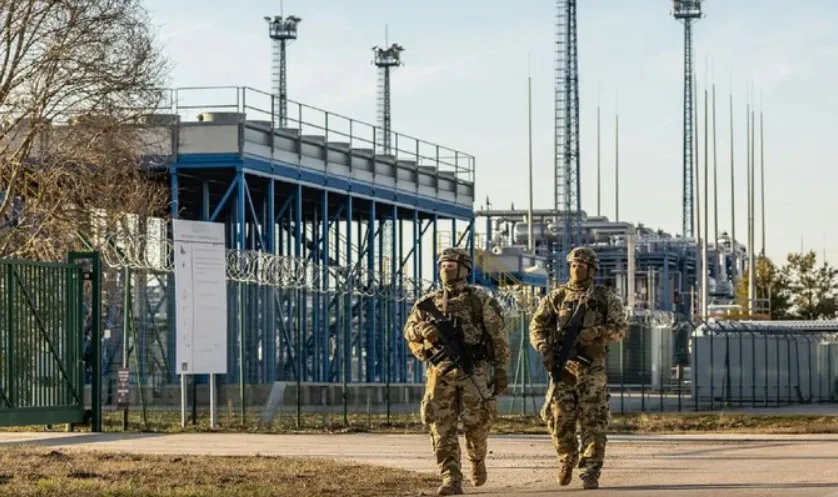
Troops were deployed to repel potential attacks near key energy facilities, and the police were ordered to patrol the areas around designated power stations, distribution stations and control centres. In total, the army deployed around 600 soldiers to patrol 75 facilities.
However, following Orbán’s defeat in the elections, the companies responsible for critical infrastructure reviewed their security measures and independently stepped up security. Consequently, from 15 April, the Hungarian army will gradually withdraw troops from those facilities where the Ministry of Energy no longer requires their presence.
What led up to this
Since late January, Ukraine has halted oil transit via the Druzhba pipeline due to Russian attacks. For their part, Hungary and Slovakia, which received the vast majority of their oil via Druzhba, claimed that Ukraine was blocking the oil route “for political reasons”.
Following this, Hungary blocked a €90 billion loan for Ukraine from the EU until Kyiv restores the Druzhba pipeline. On 26 February, Orbán wrote an open letter to Ukrainian President Volodymyr Zelenskyy, in which he accused him of anti-Hungarian policies and called for the Druzhba pipeline to be reopened.
Zelenskyy responded by saying that he would not restore the Druzhba pipeline, which had been damaged by Russia, as it involved Russian oil.
In March, Ukraine agreed to EU assistance to repair the Druzhba pipeline. At the time, Zelenskyy stated in a letter to EU leaders that it would take approximately one and a half months to resume transit via the Druzhba pipeline. As early as 14 April, Zelenskyy announced that the pipeline would be repaired by the end of April and would resume operations.
Follow us on Telegram