Ukraine has strengthened its position in the war thanks to the mass production of drones

At a factory near Kyiv, Fire Point produces around 300 medium- and long-range FP-1 and FP-2 drones every day. According to the company’s co-founder, Denis Shterman, each drone costs around €50,000, reports the Financial Times.
These UAVs are used daily to strike Russian targets and have become part of a wider transformation of Ukraine’s drone warfare. Ukraine is increasingly taking the fight onto enemy territory whilst simultaneously slowing the advance of Russian troops on the front line.
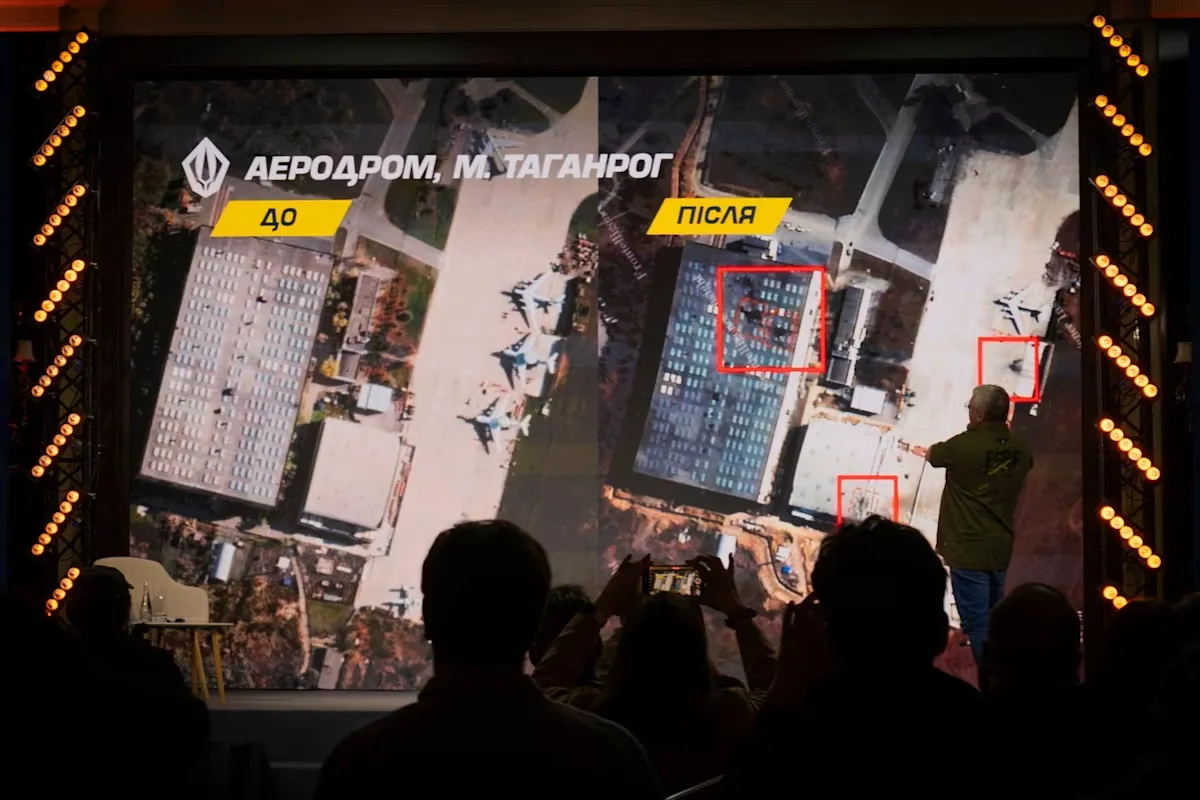
Stilman described one of the tactics employed in occupied Crimea in recent weeks. He said that the FP-1s can be used as ‘mother’ drones carrying two quadcopters loaded with explosives. Such drones can lie in wait near Russian airfields and attack aircraft upon their arrival.
President Volodymyr Zelenskyy stated last week that the situation on the front line had shifted in Ukraine’s favour in May. According to him, Ukrainian forces are holding more positions and inflicting greater damage on the enemy.
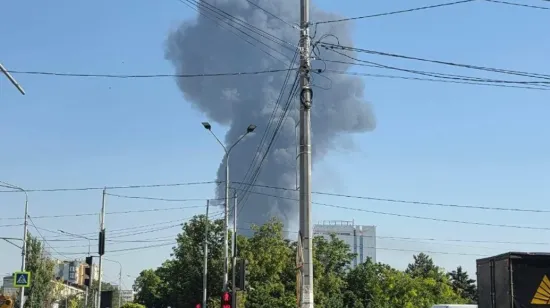
Shortly afterwards, Ukrainian drones carried out the largest attack on Moscow since the start of the war. Some of the drones penetrated Russian air defences and struck oil refineries, causing fires and huge plumes of smoke.
Alona Getmanchuk, Head of Ukraine’s Mission to NATO, stated that Ukraine is in one of its strongest positions since the start of the war, as it is less dependent on its partners.
Ukrainian military officials and Western experts believe that the Ukrainian army is now stronger than at any time since Donald Trump returned to power in the US. Kyiv is offsetting the reduction in American support with increased European aid and its own production.
Alarm in Moscow
Ahead of the Victory Day parade on 9 May, the Russian authorities stepped up security measures in Moscow. Amid speculation about a possible strike by Ukrainian drones on Red Square, the celebrations were scaled back, leaving only military marching columns.
In Ukraine, Zelenskyy ironically ‘allowed’ the parade to go ahead, publishing a decree on the president’s website promising not to strike Moscow.
In Russia, dissatisfaction with the war is growing, as it increasingly affects regions far from the front line. Ukrainian drones regularly attack targets even at great distances from the line of combat, particularly in the direction of the Urals.
According to data from the Russian state sociological centre VTsIOM, the ‘personal protest potential’ index rose to 25% in April. This is the highest figure since the start of the war.
On the battlefield, Russian ground forces are struggling to advance due to the constant threat from Ukrainian drones.
Ukrainian Defence Minister Mykhailo Fedorov stated that in March and April, around 35,000 Russian soldiers were killed or seriously wounded each month. The Ukrainian side estimates that Russia is recruiting an average of around 29,500 new soldiers per month.
According to Kyiv’s estimates, for five consecutive months Russia has been losing more personnel than it can mobilise.
Fedorov stated that Ukraine’s goal is to take out 50,000 Russian troops every month.
Some intelligence estimates suggest that since February 2022, Russia may have lost around 1.2 million troops killed or wounded. The head of the British intelligence agency GCHQ, Anne Kist-Butler, stated that nearly half a million Russian troops have already been killed.
Ukraine also faces a manpower shortage. According to Western estimates, Ukrainian forces may have suffered between 500,000 and 600,000 casualties. Neither Kyiv nor Moscow publishes official figures on casualties.
Scaling up production
Ukraine is investing resources in its own arms production to reduce its dependence on Western supplies and the political restrictions associated with them.
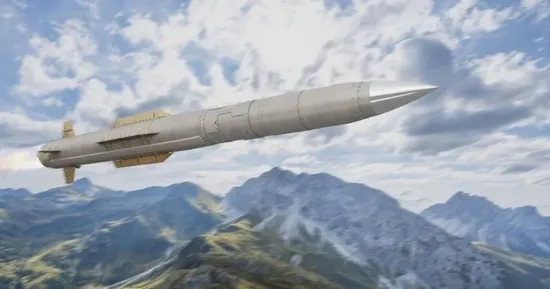
Kyiv is rapidly ramping up production of land, sea and air drones, artillery systems, electronic warfare equipment, as well as ballistic and cruise missiles.
According to the Ukrainian Ministry of Defence, in the first four months of this year, production of reconnaissance drones rose by 441% compared to the whole of 2025, medium-range strike drones by 312%, and long-range strike systems by 53%.
Production of fibre-optic FPV drones, according to the ministry, rose by 179%.
Stanislav Grishin, a representative of the Ukrainian manufacturer ‘General Chereshnya’, stated that FPV drones are changing the traditional nature of warfare. According to him, in March one of the company’s drones shot down a Russian Ka-52 attack helicopter.
Military analyst Franz-Stefan Gady believes that thanks to swarms of FPV drones, Ukraine has regained parity or an advantage in certain sectors of the front in the drone war.
Ukraine is expanding the use of not only long-range but also medium-range drones to disrupt Russian logistics and supply lines.
Among the new systems mentioned are the FP-2 from Fire Point, the Khmarynka from General Cherry, and the Hornet, manufactured by the American company Swift Beat, founded by former Google CEO Eric Schmidt.
This month, the Ukrainian military published videos of strikes on targets between 30 and 65 kilometres from the front line. There were also reports of FP-2 drones striking an FSB headquarters and an air defence system near the entrance to occupied Crimea, over 200 kilometres away.
Zelenskyy stated that as a result of the strike on the FSB facility, around 100 Russian operatives were killed or wounded.
Dmytro Putyata, a former serviceman with the Unmanned Systems Forces, noted that the new medium-range drones allow targets to be struck at ranges that have not been reached since 2024, when Ukraine had more American and European long-range missiles.
Such strikes are forcing Russian troops to move their depots further from the front line and extend their supply routes. The Russians acknowledge that Ukrainian medium-range strikes in the occupied southern regions, particularly in Crimea, are becoming increasingly dangerous.
After a year of fruitless diplomacy involving the Donald Trump administration, Ukrainian officials increasingly believe that negotiations will only become possible once Russia is subjected to pressure it cannot comfortably withstand.
Zelenskyy refuses to cede the eastern territories of Donbas, which Russia failed to capture at the start of its covert invasion in 2014.
Kyiv seeks to weaken Moscow’s ability to continue the war and to convince the Kremlin that the cost of continuing it will rise.
At the same time, Vladimir Putin shows no sign of being prepared to abandon the tough demands that Ukraine regards as tantamount to capitulation.
According to people who are in contact with the Russian president, he believes his troops can capture the rest of Donbas by autumn, after which he plans to escalate his territorial demands.
The war is not yet won
Experts warn that it is too early to speak of a complete shift of the initiative to Ukraine.
Franz-Stefan Gady notes that Russian troops have been regrouping and have only recently stepped up the pace of operations. He points to Moscow’s activity on three fronts, as well as the protracted battle for Ukraine’s ‘fortress belt’.
Russian forces are pressing on Dobropillia, Kostiantynivka, Druzhkivka, Kramatorsk and Sloviansk. They are using guided aerial bombs and FPV drones on fibre-optic cables.
The loss of any of these towns could significantly increase the pressure on the Ukrainian defence.
Ukrainian drones still require operators, and a shortage of personnel remains a problem. Pay rises, the option to transfer between units and other incentives have not led to a significant increase in the number of recruits.
Russia, despite its losses, has greater reserves of manpower and resources and continues to strike at Ukraine’s energy infrastructure, seeking to wear down society and the economy.
To win, Ukraine needs to simultaneously maintain mobilisation, ramp up arms production and preserve financial stability.
Ukrainian troops on the front line say that morale is now at its highest in the past year.
In Kyiv and other cities that are regularly subjected to missile and drone strikes, the public is exhausted but remains determined to stand up to Russia.
Alona Getmanchuk notes that there is a widespread feeling in Ukraine that the hardest phase of the war is now behind them.
“Ukrainians increasingly believe they will be able to withstand whatever comes next,” she said.