Ukrainian medium-range attacks are dealing a double blow to the Russian war machine

Зміст
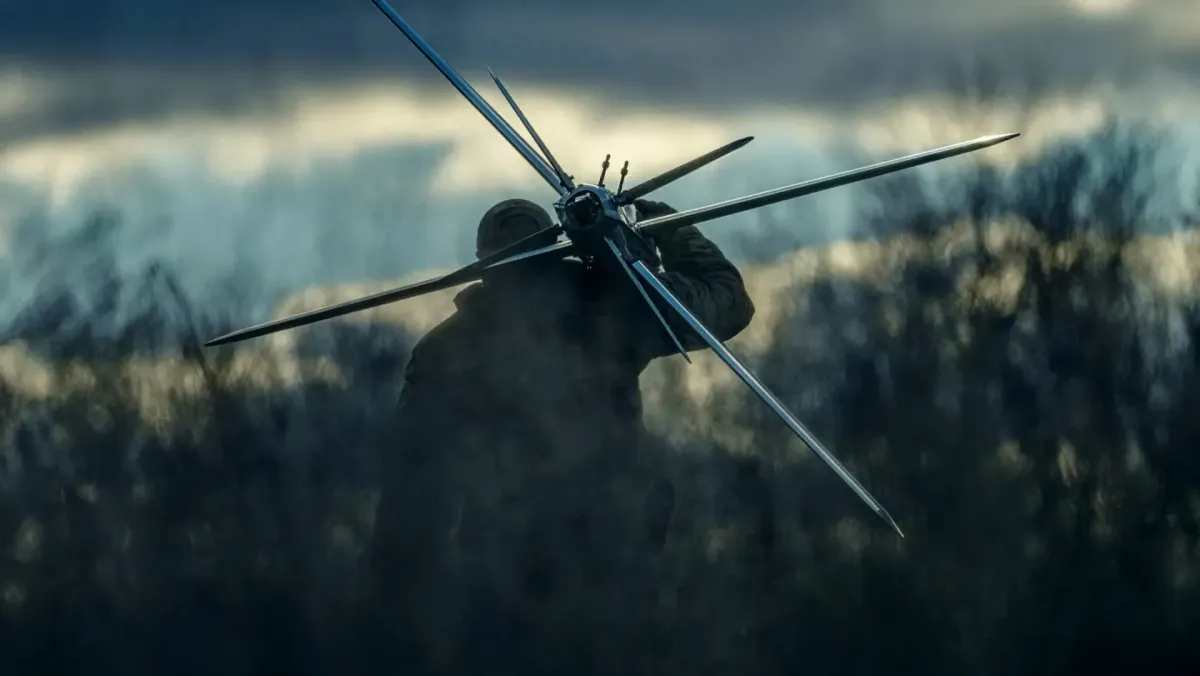
Reuters, citing Ukrainian commanders, drone experts and military analysts, reports that Ukraine has significantly stepped up its use of medium-range drone strikes in recent months.
These are attacks carried out at distances ranging from 30 to 180 kilometres from the front line.
According to the agency’s sources, such strikes enable attacks on Russian radars, short- and medium-range air defence systems, logistical infrastructure, communications equipment and large-scale military hardware in the so-called ‘operational depth’.
Robert Brovdi, commander of Ukraine’s Unmanned Systems Forces, told Reuters that medium-range strikes are currently playing a “decisive role”.
He explained that the weakening of Russian air defence makes it easier for long-range drones to reach oil and military targets deep within Russian territory.
President Volodymyr Zelenskyy stated this month that the number of Ukrainian medium-range strikes had doubled compared with March and quadrupled compared with February.
The commander of the 7th Battalion of the 414th Separate Unmanned Systems Brigade, codenamed ‘Kusto’, told Reuters that Ukraine’s capabilities in this area had grown significantly since the autumn.
According to him, Ukraine has increased the number of crews, expanded the number of platforms and increased the variety of systems.
“Kusto” reported that his unit primarily targets objectives up to 100 kilometres from the front line.
Among the priority targets, he named Russian radars and the “Buk”, “Tor” and “Pantsir” air defence systems, as well as logistics and large transport vehicles.
According to the commander, the drone usually flies about 150 kilometres to the designated area, after which it begins searching for targets.
He also stated that the unit most often uses Ukrainian Chaklun V and B-2 drones.
Robert Brovdi said that manual control of the drones ensures greater accuracy than guidance by coordinates.
He said that this year his units had destroyed at least 129 air defence systems in the occupied territories. Reuters notes that it has been unable to independently verify these figures.
In recent months, Ukrainian long-range strikes have inflicted the most damage on Russian oil infrastructure since the start of the full-scale invasion in 2022.
Last month, Russia cut oil production due to attacks on ports and refineries, and supplies via the last remaining Russian oil pipeline to Europe were halted.
Robert Brovdy stated that his forces had attacked the Ryazan oil refinery, one of the largest in Russia.
Reuters also reports that operations have been suspended at the NORSI refinery and facilities in Perm, which is located approximately 1,500 kilometres from the Ukrainian border.
Justin Bronk, a senior research fellow at the Royal United Services Institute, stated that long-range strikes are forcing Russia to move its air defence systems further away from the front line.
This, he said, opens up the possibility for Ukrainian forces to attack ammunition and fuel depots, command posts, supply convoys and other drone units.
The Ukrainian Ministry of Defence reported that in April, Ukrainian forces carried out over 160 medium-range strikes at distances of 120–150 kilometres.
Ilya Mashina, commander of the 431st Separate Unmanned Aerial Systems Battalion ‘Brodagi’, stated that such strikes complicate Russian logistics by increasing the distance between the front line and rear units.
“The further you retreat, the more complicated logistics become,” he said.
The US Institute for the Study of War also notes that the pace of Russian troop advances has slowed since October. Among the reasons cited are medium-range strikes, fortifications and the nature of the terrain, particularly in the Donbas.
Reuters also reports that Russian troops have faced communication problems following restrictions on the use of Starlink.
Justin Bronk stated that the rapid development of Ukrainian medium-range drones was a response to the need to counter Russia’s superiority in manpower and weaponry.
According to ‘Kusto’, the constant use of drones on the front line is accelerating technological change, and collaboration between manufacturers and the military allows for rapid system upgrades.
A technical engineer with the call sign “Symbol” told Reuters that some manufacturers are already supplying platforms that are almost fully combat-ready.
“Previously, medium-range strikes were more of a one-off opportunity. Now it is a systematic part of operations,” he said.
Emil Kastehelmi, an analyst at the Finnish group Black Bird, stated that such attacks are unlikely to change the course of the war on their own, but they do present a new challenge for Russian forces.
“And I don’t think we’ve seen the limit of this yet,” he said.