Весняне рівнодення 2026: що означає і як його пояснює наука

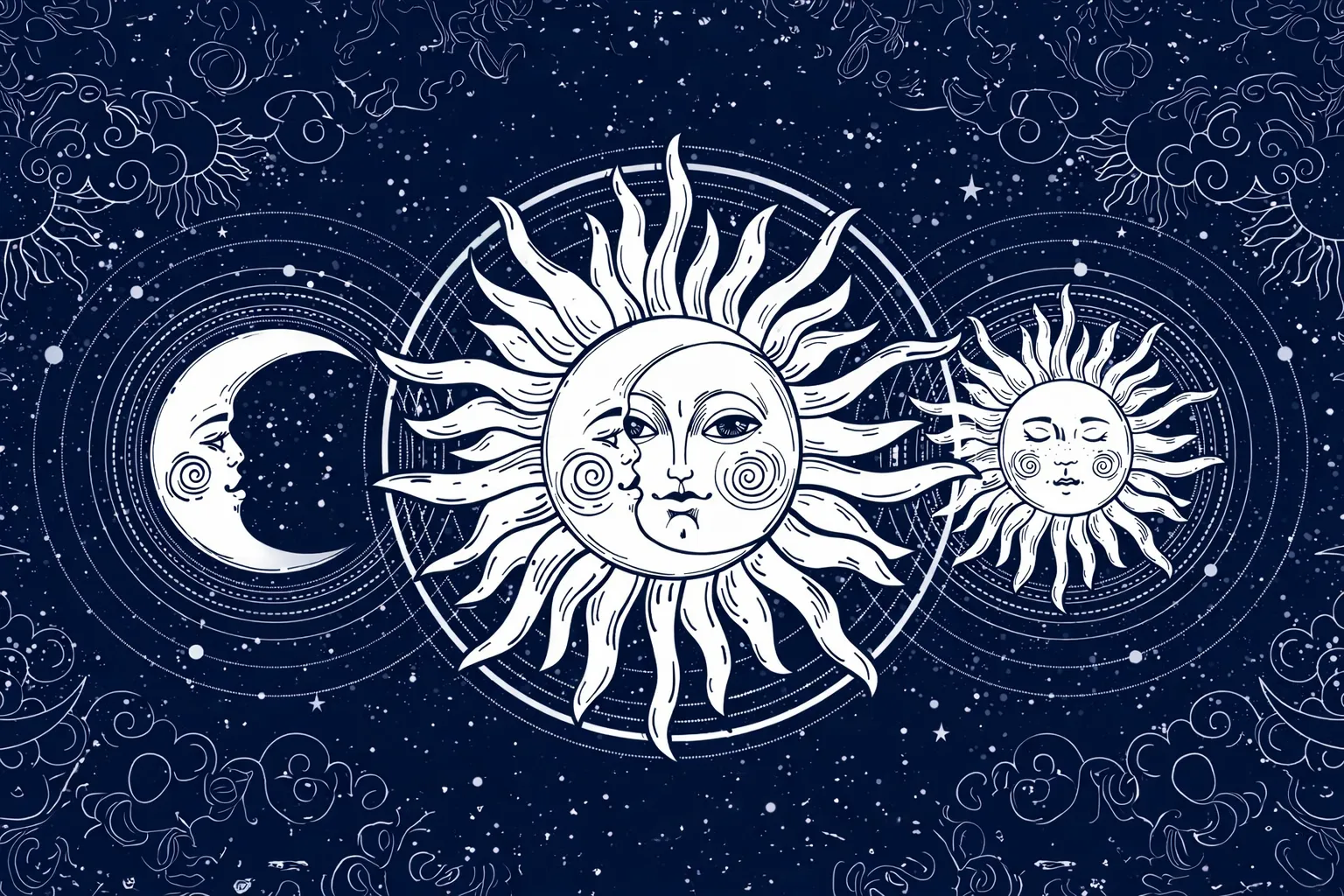
In 2026, the spring equinox will occur on 20 March at 14:46 Coordinated Universal Time (UTC). For Kyiv, this is approximately 16:46 in the current time zone. The time may vary slightly across different sources. The difference is usually one or two minutes due to rounding.
Despite the very name ‘equinox’, day and night do not become exactly equal in most places on this particular day. There is usually slightly more daylight. This is due to two natural reasons. Firstly, the Sun has a visible disc in the sky. Secondly, the Earth’s atmosphere slightly bends the light. Because of this, we see the Sun a little earlier at sunrise and a little later at sunset.
In terms of the weather, the equinox does not mean a sudden warming. It is rather the start of a period when solar energy gradually increases. The temperature rises gradually. The land and oceans heat up slowly, so the warmth arrives with a certain delay.
For wildlife, this moment is very important. Changes in the length of daylight affect the biological rhythms of living organisms. This is when seasonal changes begin. Birds set off on their migrations, animals enter their breeding season, and plants start to grow and flower more actively.
In Ukrainian culture, the equinox is often associated with the spring ritual cycle. In folk traditions, this time was accompanied by spring songs and rituals to summon spring. Folk beliefs associated with the Feast of the Forty Saints and the tradition of baking ritual biscuits in the shape of birds — the so-called larks — are also mentioned.
Sometimes this moment is described as a symbol of balance. At this time, the Sun crosses the celestial equator, and astronomical spring begins for the Northern Hemisphere.
The spring equinox sounds poetic. However, behind this phenomenon lies precise astronomy and a very ancient cultural memory. It is linked to calendars, agriculture, folk songs and rituals that have been passed down from generation to generation.
Scientific explanation
The spring equinox is a brief moment in time, not a whole day. The Earth orbits the Sun, and twice a year the Sun’s apparent path across the sky crosses the celestial equator. This path is called the ecliptic.
When this occurs in March, the Sun moves into the northern celestial hemisphere. It is then, according to astronomical rules, that spring begins in the Northern Hemisphere and autumn in the Southern Hemisphere.
The reason for this phenomenon is the tilt of the Earth’s axis, which is approximately 23.5 degrees. Because of this tilt, the angle at which the Sun’s rays strike the Earth changes. This is why the length of day and night varies throughout the year, and the seasons alternate.
There is a widespread myth that the seasons occur because the Earth alternately moves closer to and further away from the Sun. In reality, it is the tilt of the axis that plays the main role.
In 2026, the March equinox will occur on 20 March at 14:46 UTC, which corresponds to approximately 16:46 Kyiv time.
Is the day really equal to the night?
On the day of the equinox, daylight and darkness are almost equal in duration, but not mathematically equal.
There is usually slightly more daylight for two reasons.
The first reason is that the Sun has a visible disc. In reference books, sunrise is defined as the moment when the upper edge of the disc appears above the horizon.
The second reason is atmospheric refraction of light. The atmosphere slightly alters the direction of light, so we see the Sun a little earlier at sunrise and a little later at sunset.
Because of this, there is even a separate term — equilux. This is the name given to the day when the duration of the light and dark parts of the day coincide as closely as possible. It can fall a few days before or after the equinox.
What can be seen in the sky
Around the equinox, the Sun rises almost exactly in the east and sets almost exactly in the west. The exact position depends on the terrain and atmospheric conditions, but as a general rule, this holds true.
At this time, another interesting feature is clearly visible. The line dividing day and night on Earth runs in such a way that both hemispheres are illuminated almost symmetrically.
Why spring doesn’t arrive instantly
The equinox marks the beginning of astronomical spring, but warm weather often arrives later.
Meteorologists also use the concept of meteorological seasons. These have fixed dates and are used for the convenience of observations.
Even when there is more solar energy, the land and water need time to warm up. This phenomenon is called seasonal lag and is associated with thermal inertia.
Biological rhythms
For living organisms, it is not only temperature that matters, but also the length of daylight hours.
In humans and animals, light and darkness influence circadian rhythms — the body’s internal biological cycles. These determine sleep patterns, activity levels and many physiological processes.
In plants and animals, there is a phenomenon known as photoperiodism. This is a reaction to changes in the length of day and night. Thanks to this, plants determine when to flower, and animals determine their breeding or migration periods. These processes are also influenced by temperature, humidity and food availability.
A historical perspective
People have recognised the significant moments of the year for a very long time. Light and the changing seasons determined the timing of fieldwork, navigation and the rhythm of community life. The spring equinox is easy to observe, as it occurs twice a year.
In many cultures across Eurasia, this moment symbolised the renewal of nature. Sometimes it was even regarded as the start of the year.
The best-known example is Nowruz. This is the New Year festival of the Iranian, Turkic and some Caucasian peoples. It is celebrated on the day of the astronomical equinox as the beginning of spring.
The UN officially recognises 21 March as International Nowruz Day, and UNESCO highlights its intercultural significance.
Spring festivals also existed in Europe. In Ancient Rome, the festival of Hilaria was celebrated at the end of March, associated with the cult of Cybele and Attis and the idea of the rebirth of life.
In Christian Europe, 25 March — the Annunciation — was an important date. In some countries, this date was considered the start of the year. For example, in Britain, the legal year began on this day for a long time.
Later, the calendar system was changed, and the start of the year was moved to 1 January.
Ukrainian traditions
In Ukrainian folk culture, spring is a whole cycle of rituals. Spring was welcomed with songs, games and communal rituals.
An important part of the tradition were spring songs. Girls would sing them whilst going out onto hills or open spaces. Sometimes they would hold ritual biscuits above their heads, symbolically calling for spring and a good harvest.
Another well-known tradition is ‘larks’. This is the name given to ritual biscuits shaped like birds, which were baked for the Feast of the Forty Saints.
In his book *The Customs of Our People*, ethnographer Oleksa Voropai described this festival as a whole complex of folk beliefs. People believed that birds returned at this time. Children were given ‘bird’ biscuits with honey so that the farm would be blessed with poultry.
Interestingly, in the folk calendar, this date falls on 22 March in the new style or 9 March in the old style. This is a period close to the spring equinox.
In these traditions, birds symbolise the return of life. Grain signifies the coming harvest. Round dances remind us of the cyclical nature of time.
Folk omens and advice
In folk tradition, it was believed that the period when there is more daylight requires proper behaviour. People prepared ritual food, sang songs, went out onto hills or fields and observed nature.
Oleksa Voropai’s book mentions an interesting folk view on the start of sowing. Some believed that sowing on the Day of the Forty Saints would bring a bountiful harvest. Others argued that one should not sow on this day, as it is a holiday.
In other words, folk customs were more about respecting the day and exercising moderation than following precise agricultural instructions. There was also a saying about the ‘forty frosts’. This meant that cold weather could return several more times even after the start of spring.
Modern science partly confirms this idea. Spring temperatures rise gradually, and cold spells are possible.
Related holidays
The spring equinox falls within a calendar period when many important events take place. One of these is Navruz, which is celebrated on the day of the astronomical equinox or around that time.
Another important holiday is Easter. Its date is historically linked to the spring equinox and the subsequent full moon. In church calculations, the equinox is conventionally fixed on 21 March. In 2026, Easter falls on 12 April.
In the Jewish tradition, Passover begins at sunset on 1 April and lasts until 9 April.
Other dates are also observed during this period:
- 20 March — International Day of Happiness
- 21 March — International Day of Forests, World Poetry Day
- 22 March — World Water Day
- 23 March — World Meteorological Day