The US Navy has lost its most powerful underwater weapon – the Seawolf submarines

Tetiana Bodnarenko
Tetiana Bodnarenko Journalist
The US Navy has lost its most powerful underwater weapon – the Seawolf submarines

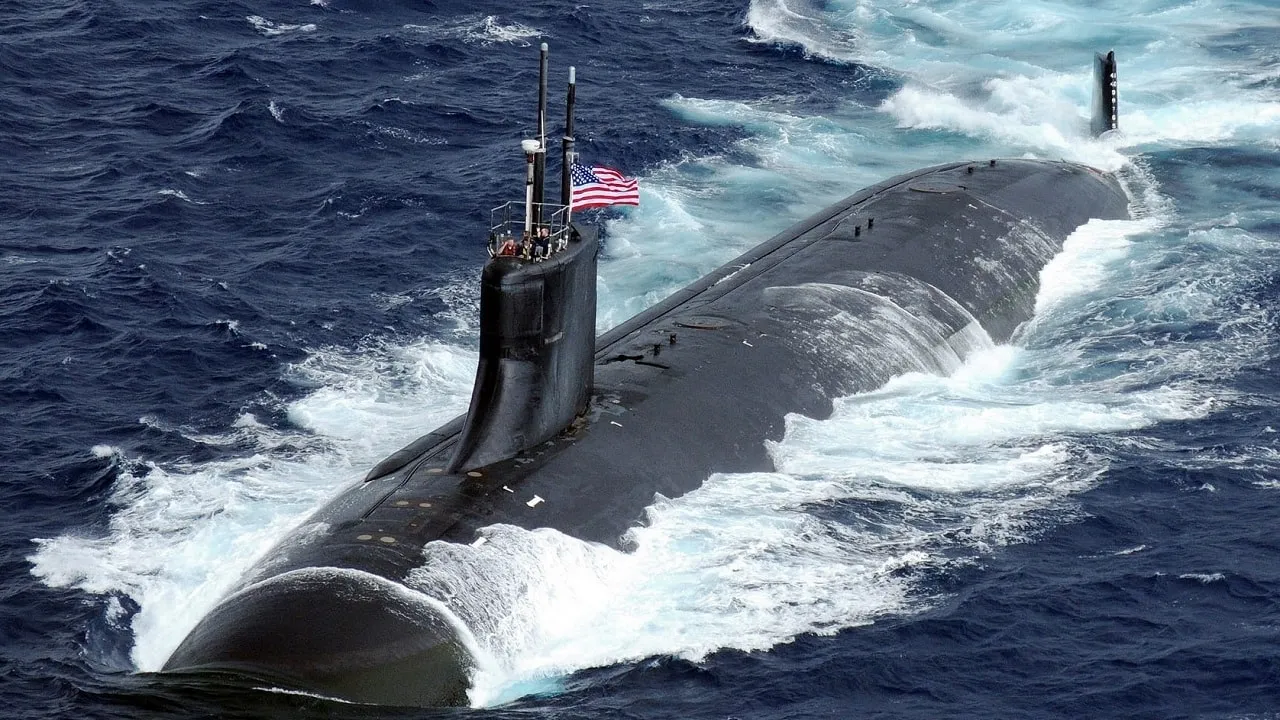
Seawolf-Class Submarine USS Seawolf. Image Creative Commons.
Following the end of the Cold War, the US prematurely scaled back its Seawolf-class submarine programme, despite having originally planned for a much larger fleet. This decision is attributed to an underestimation of long-term threats.

Following the end of the Cold War, the Seawolf-class submarine programme was scaled back, even though these vessels were considered promising and well-armed. Instead of the planned 29 units, only three were built.

The decision to scale back the programme is linked to a short-term approach to assessing global threats. Despite the easing of tensions following the collapse of the Soviet Union, the US continued to require a substantial fleet of attack submarines to deter and maintain its underwater superiority.

The US Navy command has repeatedly noted that demand for submarines exceeds supply. This increases the risks for surface ships and forces deployed in forward areas, particularly in the Pacific region.

Russia has traditionally lacked a powerful surface fleet, yet its submarine forces remain a threat to the US, NATO and the West as a whole.

The Seawolf-class submarines were distinguished by their high performance. They were built from HY-100 steel, which allows them to operate at significant depths, and could carry up to 50 Tomahawk cruise missiles.

The winding down of this programme partly explains the current shortage of submarines in the US Navy. It has also been one of the factors behind the active construction of modernised Virginia-class submarines.

The Virginia Block V submarines feature an additional 80-foot module, allowing them to carry up to 28 additional Tomahawk missiles. The total armament increases from 12 to 40 missiles.

Increased firepower has become a crucial factor in the current environment, particularly given the threats posed by major powers.

Seawolf-class submarines were also designed for operations in shallow waters and to support special operations. Similar capabilities are also provided in Virginia-class submarines, in particular thanks to special systems for deploying special forces units.
ThePublic on Telegram

Share tittle
War
Over the past 24 hours, there have been 279 combat engagements on the front line
War

Over the past 24 hours, there have been 279 combat engagements on the front line

Over the past 24 hours, Russian troops have carried out hundreds of attacks on the positions of the Ukrainian Defence Forces and on Ukrainian towns and villages. The enemy remained most active in the Pokrovsk, Huliaipole and Lyman sectors.

04.06.2026
The Russian Federation’s military casualties have exceeded 1.369 million
War

The Russian Federation’s military casualties have exceeded 1.369 million

Over the past 24 hours, the Russian army has lost a further 1,300 troops in the war against Ukraine. The Defence Forces have also destroyed dozens of enemy vehicles and weapons.

04.06.2026
A Russian drone attacked an evacuation vehicle belonging to a humanitarian mission in Druzhkivka
War

A Russian drone attacked an evacuation vehicle belonging to a humanitarian mission in Druzhkivka

In Druzhkivka, in the Donetsk region, a Russian FPV drone struck an armoured vehicle belonging to the ‘Proliska’ humanitarian mission, which was being used to evacuate civilians. The driver was unharmed, but the vehicle sustained damage.

03.06.2026
1,500 motorcycles have been procured for the Ukrainian Armed Forces – Fedorov
War

1,500 motorcycles have been procured for the Ukrainian Armed Forces – Fedorov

The Defence Procurement Agency (DPA) has signed contracts for the supply of 1,500 motorcycles to the Armed Forces of Ukraine.

03.06.2026
Syryskyi called for the rational use of resources due to a shortage of air defence missiles
War

Syryskyi called for the rational use of resources due to a shortage of air defence missiles

Commander-in-Chief of the Armed Forces of Ukraine Oleksandr Syrskyi emphasised that Ukraine lacks modern air defence systems and the missiles required for them. He stressed the importance of making efficient use of available resources, improving effectiveness, and receiving assistance from partners.

03.06.2026