WELT explained why it will not be possible to ramp up production of Patriot missiles in Ukraine quickly

Tamara Vasylchuk
Tamara Vasylchuk Journalist
WELT explained why it will not be possible to ramp up production of Patriot missiles in Ukraine quickly
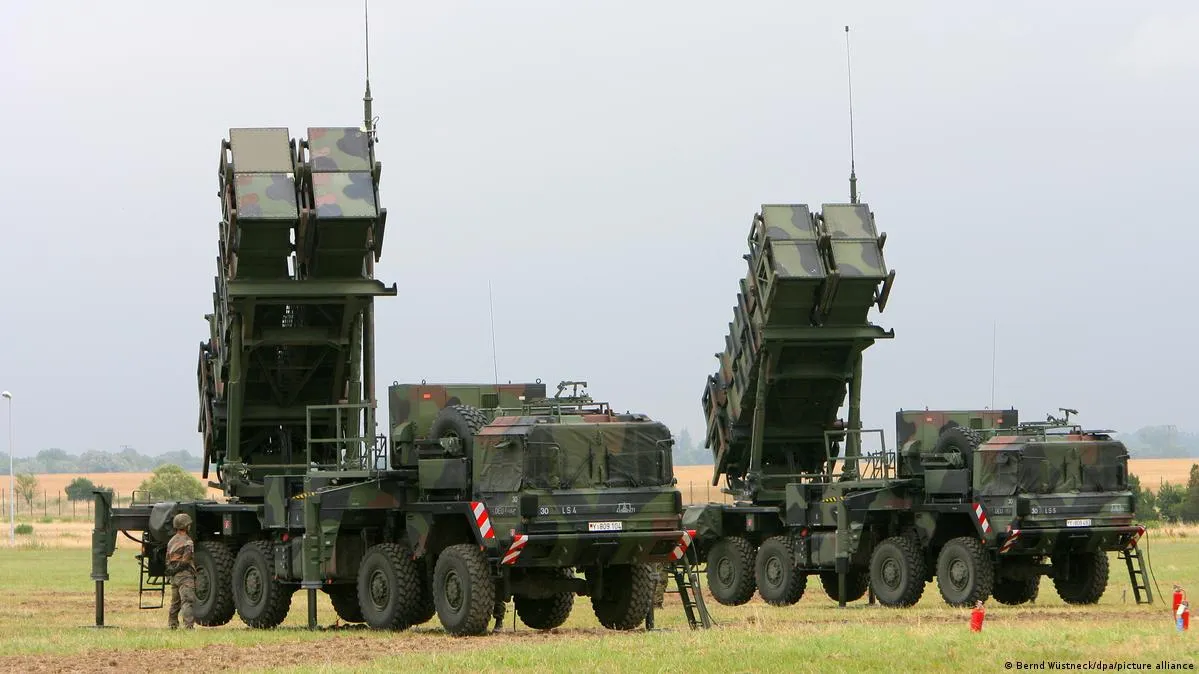
Patriot air defence system – Illustrative photo
The possibility of the US authorising the production of missiles for Patriot systems in Ukraine does not mean that the problem of a shortage of interceptors will be resolved in the near future. Experts point out that launching such production requires a considerable amount of time and complex preparation.

The possibility of manufacturing missiles for the Patriot systems in Ukraine could be an important step towards strengthening air defence, but it will not be possible to ramp up such production quickly. This is according to WELT.

During the NATO summit, US President Donald Trump stated his willingness to allow Ukraine to produce missiles for the Patriot system independently. At the same time, as defence experts point out, implementing such a project is considerably more complex than it might appear.

According to missile analyst Markus Schiller, it could take between one and two years from the start of production to the delivery of the first finished missiles. He suggests that Ukrainian companies could manufacture individual components, such as engines, whilst the complex electronics would be supplied from the US.

WELT points out that there are only a few production sites worldwide that manufacture Patriot missiles under an American licence. In Japan, it took around five years to get such production up and running. In Germany, construction of the first European plant began in 2024, with the first deliveries expected in 2027.

To organise production, it is necessary to agree on the transfer of technology from the US, set up a specialised company, import specialised equipment, certify suppliers and establish production lines. Even with political support, experts estimate that this process could take at least a year.

Another unresolved issue is exactly which variant of the missiles Ukraine will be able to produce. The options are the PAC-2 missiles with a fragmentation warhead or the more modern PAC-3 missiles, which destroy targets with a direct hit. It is the PAC-3 missiles that are designed to intercept ballistic missiles and have already been used by Ukraine against ‘Iskander’ and ‘Kinzhal’ missiles.

However, Lockheed Martin, the manufacturer of the PAC-3 missiles, has not previously supported full-scale production of this variant in Europe. As a result, it is not yet known whether Ukraine will be granted authorisation specifically for the production of the PAC-3.

The article also notes that Ukraine currently relies heavily on supplies of foreign missiles, whilst global production volumes of the Patriot system remain limited. According to Ukrainian President Volodymyr Zelenskyy, approximately 60–65 such missiles are produced worldwide each month, which is insufficient to meet Ukraine’s needs.

Domestic production could shorten supply chains, speed up repairs and reduce dependence on allies. However, experts stress that even after obtaining a licence, this would not allow the shortage of interceptor missiles to be quickly resolved, so Ukraine will continue to require ready-made supplies.

Follow us on Telegram

Share tittle
Politics
The EU will allow Ukraine to purchase British weapons using a €60 billion loan
Politics
  • Important

The EU will allow Ukraine to purchase British weapons using a €60 billion loan

The European Union is close to reaching an agreement that will allow Ukraine to use a €60 billion EU loan to purchase weapons from British manufacturers. An announcement regarding the agreement could be made as early as next week.

10.07.2026
Belarus continues to expand its military infrastructure near the border with Ukraine
Politics

Belarus continues to expand its military infrastructure near the border with Ukraine

No strike force has been detected on Belarusian territory, but the development of military infrastructure near the Ukrainian border is continuing. At the same time, according to Ukrainian intelligence, Russia continues to put pressure on Minsk to play a more active role in the war.

10.07.2026
The Supreme Court has refused Poroshenko’s request to overturn the sanctions imposed by the National Security and Defence Council
Politics

The Supreme Court has refused Poroshenko’s request to overturn the sanctions imposed by the National Security and Defence Council

The Supreme Court has refused to overturn the sanctions imposed by the National Security and Defence Council (NSDC) against the fifth president, Petro Poroshenko. The ruling was handed down by the Administrative Court of Cassation, which forms part of the Supreme Court, after it had considered Poroshenko’s claim against President Volodymyr Zelenskyy.

10.07.2026
Zelenskyy said that China had reacted strongly to Russia’s nuclear threats
Politics

Zelenskyy said that China had reacted strongly to Russia’s nuclear threats

President Volodymyr Zelenskyy stated that China had, for the first time, reacted firmly to statements from Russia regarding the possible use of nuclear weapons. He said that European leaders had informed him of Beijing’s position.

10.07.2026
Ukraine is calling on the UN Security Council to adopt a resolution on a ceasefire
Politics

Ukraine is calling on the UN Security Council to adopt a resolution on a ceasefire

Ukraine has called on the members of the UN Security Council to urgently table a draft resolution calling for an immediate and unconditional ceasefire. Officials in Kyiv have stated that the Security Council’s inaction regarding Russia’s crimes must end, and that international support for Ukraine must continue.

10.07.2026