The Council of the EU has granted Hungary access to €10 billion

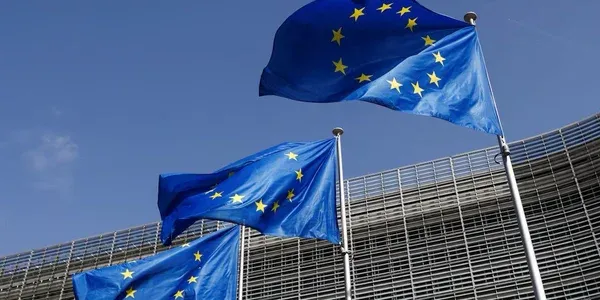
This was reported by ‘European Truth’, citing the EU Council’s press service.
On 10 July, the Council of the EU approved a new recovery and resilience plan for Hungary. This involves €10 billion under the Recovery and Resilience Facility, which forms part of the NextGenerationEU programme.
Of this amount, around €6.5 billion is in the form of grants, with a further €3.5 billion in the form of loans.
The funds are to be used for reforms and investments related to the ‘green’ and digital transitions, the modernisation of the economy, the resilience of state institutions and compliance with EU requirements.
Why Hungary’s funds were blocked
EU funds for Hungary have remained blocked for years due to Brussels’ concerns regarding Viktor Orbán’s government. The European Union raised concerns regarding the risks of corruption, the use of public resources, transparency in public procurement, the independence of the judiciary, academic freedom and the rule of law.
In May, the European Commission agreed to unblock €16.4 billion of previously frozen funds for Hungary following reforms by Péter Magyar’s new government. Of this amount, €10 billion is specifically allocated to the NextGenerationEU recovery fund.
The new recovery plan must take EU requirements into account and replace the previous document, the implementation of which had effectively stalled.
The Council of the EU explains that delays in completing key stages of the previous plan have made its implementation problematic. Among the reasons cited were rising costs due to fluctuations in energy prices, geopolitical changes, implementation difficulties, time constraints and other circumstances.
The new plan is intended to strengthen the protection of the EU’s financial interests, Hungary’s anti-corruption system, and the transparency of public procurement and the use of public resources.
What reforms must Hungary carry out?
The plan sets out measures to strengthen the independence of the judiciary and the rule of law. It is also intended to improve the involvement of stakeholders and social partners in the legislative process.
A separate section deals with the fight against corruption. The EU expects Budapest to provide guarantees that funds will be used transparently and under proper oversight.
Reuters previously reported that Hungary is set to join the European Public Prosecutor’s Office. The European Commission has described this as an important step towards monitoring the use of EU funds. (reuters.com)
Approval of the plan does not mean that the full amount will be paid out automatically. As in other EU countries, funds will be released once agreed interim milestones and targets have been met.
The European Commission will only make payments once Hungary has demonstrated the completion of the specific reforms and investments set out in the plan.
Euronews reported that Hungary must fulfil the key conditions linked to the plan by the end of August in order to gain access to the funds.
Unlocking EU funds was one of the main election pledges of the Tisa party, which won the parliamentary elections in April.
Following talks with the European Commission, the new Prime Minister, Péter Magyar, stated that his government had achieved in a matter of weeks what Viktor Orbán’s previous cabinet had been unable or unwilling to do.
For Hungary, access to European funds is of economic importance, as the country needs the money to support growth, develop infrastructure, modernise public services and fund reforms.
What other funds might be unblocked?
At the end of May, it emerged that the European Union was prepared to release over €16 billion to Hungary.
This sum comprises €10 billion from the Recovery and Resilience Facility, €4.2 billion from cohesion funds linked to the fight against corruption and judicial reform, and €2.2 billion linked to the implementation of reforms on academic freedom
. Thus, the EU Council’s decision on the €10 billion is part of a broader process of restoring Hungary’s access to European funding following a change in political direction in Budapest.
Follow us on Telegram.