Will there be enough gas and electricity this winter? What Ukrainians need to prepare for in the new heating season

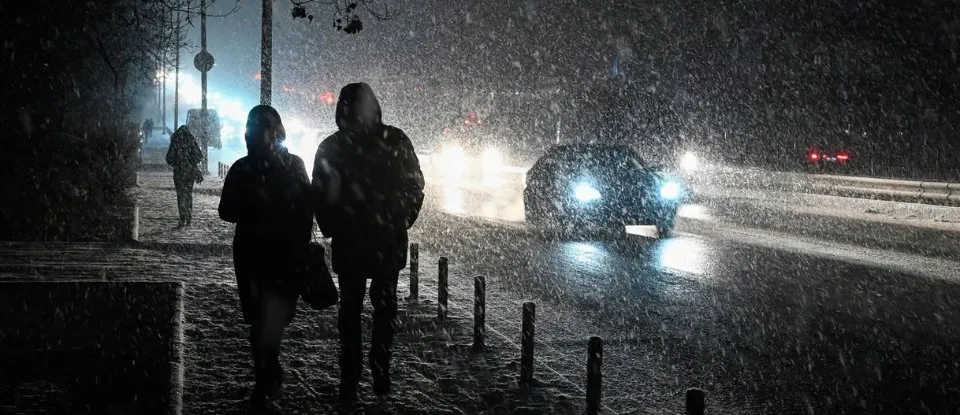
The power grid is operating at full capacity, the restored capacity remains vulnerable, and Russia is expanding its list of targets and promising to escalate its attacks.
Read ThePublic’s article to find out what lies ahead for Ukraine during the 2026/2027 heating season and how to prepare for the worst-case scenario.
The 2026/2027 heating season: what the government is doing
Ukraine’s preparations for the new heating season have been the main task of Yulia Svyrydenko’s government and have been identified as a top priority by Serhiy Koretskyi’s Cabinet.
“If we are heading into winter, we must prepare. We have been preparing for some time now, but the priorities are clear – preparing for winter,” said President Volodymyr Zelenskyy before appointing the new prime minister.
According to Zelenskyy, he selected Koretskyi as a candidate partly on the basis of Koretskyi’s experience in the energy sector.
The government has identified three key areas of focus for winter preparations.
Firstly, the implementation of resilience plans to ensure the protection and operation of critical infrastructure. Secondly, the establishment of alternative power generation to increase the capacity of the national electricity grid. And thirdly, the accumulation of the necessary volume of gas.
The average implementation rate of the Comprehensive Regional Resilience Plans across Ukraine stands at 40 per cent. The Ministry of Community, Territorial and Infrastructure Development, which was solely responsible for implementing these plans, has been split into two separate departments. The Ministry of Infrastructure will now be responsible for preparations for the winter.
So far, the new head of this department, Mykola Kalashnyk, has not provided any assessment of the situation or outlined specific steps for further action. However, ministers have already been instructed to prepare their own vision of the priority tasks.
Russia intends to respond to attacks by Ukrainian drones with strikes “on an ever-increasing scale”. This was stated by Putin, who promised to launch strikes that would be several times more powerful.
“Wherever they try to strike on Russian territory, we will respond in kind, only several times more powerfully. The enemy will feel this. They are already feeling it, I hope,” the Russian dictator said earlier.
This statement came against the backdrop of an increase in the number of Russian attacks on Ukrainian oil depots, petrol stations, logistics hubs, fuel storage facilities and gas production sites. Electricity infrastructure is also coming under attack, although so far mainly in regions close to the front line.
According to the German newspaper *Bild*, Russia is preparing new strikes against Ukraine’s energy sector. They estimate that Putin “intends to condemn people to death by freezing” and will attempt to “destroy Kyiv before winter sets in”.
Ukrainian officials are also warning of the threat of intensified attacks. The mayor of Ivano-Frankivsk, Ruslan Martsinkiv, has advised residents to prepare for more intense missile and drone strikes on Ukraine’s western regions in September and October.
Former Foreign Minister Dmytro Kuleba has also advised residents of Kyiv and other cities that are regularly under fire to consider temporarily relocating to a safer place. According to him, the situation regarding Russian attacks is not improving as yet.
What will the energy situation be like during the 2026/2027 heating season?
Experts’ forecasts for this winter are also not encouraging. And this winter — from October to February — we will feel the full force of the attacks, particularly given the shortage of air defence systems such as Patriots or other systems. Their shortage weakens the defence system as a whole.
There is very little time to repair the damage caused last winter. In Kyiv, some combined heat and power plants and thermal power stations that were damaged by shelling are currently being repaired. But the reality is this: to put it bluntly, even if they were operating at 100 per cent capacity, they would, at best, be running at 70 per cent. In other words, heating problems will persist regardless, even if there is no shelling and the winter turns out not to be too harsh.
“There will still be problems with heat supply, particularly on the Left Bank. Kyiv is on a larger scale in terms of the number of facilities; it has significant capacity, whereas other cities have less. Take Lviv or Odesa, for example — if the intensity of the shelling is the same as it was in Kyiv last winter, a disaster could occur there. But even if the strikes are the same or even stronger — particularly on Kyiv, on the heating and electricity networks, and on the substations that have already been destroyed around the city — the situation will become critical,” says energy expert Yuriy Korolchuk.
Previously, there was what was known as the ‘energy ring’. This was a system whereby elements of the Kyiv region’s power grid could replace and support one another. If one substation failed, its load would be switched to another. Even in the winter of 2022, when substations were under attack, it was possible to switch to backup lines and other power generators. Now, as Korolchuk emphasises, this is no longer possible. Consequently, we can expect power cuts this winter — even if there is no shelling. And if there is, we will see a repeat of what we have already experienced: 15–20 hours without power, and constant emergency repairs.
According to the expert, the situation is being kept under control thanks to reduced industrial consumption following strikes on factories. This creates the illusion that there is enough energy. But as soon as the load increased — a month or two weeks ago, for just a few days — the shortage became apparent. The main problem is the substations. According to Ukrenergo, damage to them has increased by 38 per cent.
“There is no optimism. There is realism: we could be left without electricity, heating or gas. In September, there will be a wave of advice to leave — such talk is already emerging. There will be far more of it than before. Unless, of course, the situation changes at a political level. But even without the shelling, things won’t get any better — too much has been destroyed. Everything is operating at the very limit of its capacity, and people often don’t realise this. There’s nowhere to go. Especially not from Kyiv. There’s nowhere to stay in Ternopil or Rivne, and they’re being shelled there too. A cottage in the countryside isn’t an option either. The risk is everywhere, although perhaps in a quieter spot a person might feel a bit more at ease,” Korolchuk emphasises.
Will there be enough gas this winter?
The situation with gas is also complicated. Last year, Ukraine faced a shortage, and this year, production has fallen. The plan was for a shortfall of 1.5 billion cubic metres, but it is most likely to be 2 billion cubic metres.
Gas is currently being pumped into storage facilities, and by winter, reserves are likely to reach up to 15 billion cubic metres. But there is a risk: Russia is targeting not only wells but also gas distribution stations. These can be repaired. However, if the wells themselves are damaged, repairs will take 2–3 months.
“Last winter there were no restrictions on gas consumption, as large consumers – thermal power stations – were taking almost no gas at all; they were being knocked out by shelling. The pressure in the system remained normal. If the winter is stable, with no disruptions to the operation of thermal power stations, and gas consumption does not fall, the pressure could drop. There is also the opposite effect: when the power goes out, people switch off their gas boilers themselves, and the load on the system decreases. Everything is interconnected,” notes energy expert Yuriy Korolchuk.
Gas-fired generators won’t save the day either, the expert believes, even though there are plans to build them with a capacity of 2.5 GW. The generators are located locally and have not been connected to the main grid.
“Ukrenergo” is asking owners to connect to the grid and operate on command — but this is not cost-effective. Everyone uses their generator solely for their own needs. They do not feed electricity into the main power system. This is merely an illusion of a solution to the problem.
Between 10 and 20 days. Will there be apocalyptic power cuts this winter?
As Oleg Popenko, head of the Utility Consumers’ Union, points out, there is currently no single model or unified system to suggest that gas, lighting and electricity will disappear simultaneously in all cities. But it is already clear that there will be problems with electricity, given the possibility of strikes on substations. We could realistically be without electricity for a long time.
“We can expect actual power cuts lasting 10, 15 or 20 days. But that is only if the attacks continue. If a severe cold snap hits in the current situation, we will somehow manage with short power cuts of 2–4–6 hours. We’ll be able to fully supply some regions, but not others. Kyiv is the main target of the strikes and could be left completely without electricity for 3–5 days, as well as without heating or gas. And these strikes are to be expected as winter approaches,” says Popenko.
The Ministry of Energy insists that they will build and restore nearly 5.5 gigawatts of capacity. But, as the expert states, he does not believe this will happen.
“I believe this is impossible. God willing, if they manage to restore 500 megawatts — that alone would be a magnificent victory. We need to stop talking and get on with the repairs, rather than making empty promises. Otherwise, the talk starts: ‘this isn’t working’, ‘that is working’. But even if they do restore everything, it will be easily destroyed. No defences will save it. There are no defences at the power generation facilities, nor can there be. You can’t build defences at a thermal power station. There aren’t any there. That’s why the likelihood of everything being destroyed again is very high. If CHPP-4 is hit, no one will restore it. If CHPP-5 or CHPP-6 is hit, 80 per cent of Kyiv will be left without heating. And that’s it,” notes Popenko.
And whilst an almost apocalyptic scenario for the winter is unfolding for Ukrainians, the money earmarked for repairing the power stations continues to disappear into the pockets of officials. The SBU has reported that over 10 million hryvnias were embezzled during the repairs to the Trypilska and Zmiivska thermal power stations.
How Ukrainians should prepare for winter
Ukrainians must once again prepare thoroughly for winter. There is little time left to do all this. First and foremost, they must ensure their homes have heating and lighting.
In blocks of flats, it is essential to urgently check and repair all electrical wiring, particularly the condition of the distribution boards. Install inverters with batteries so that the pumps continue to operate even during power cuts. This is extremely important for buildings taller than five storeys.
In the private sector, things are more complicated: it requires more funding, but on the other hand, you don’t need to coordinate with anyone. Be sure to install an inverter with batteries, and solar panels if possible, and thoroughly check all equipment.
Follow us on Telegram