The war in Iran: tough rhetoric and Trump’s own fears

Trump’s Fears
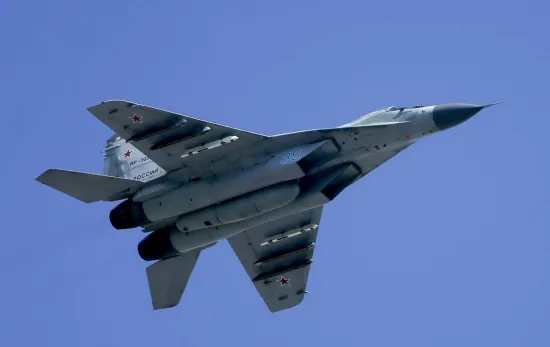
During the war with Iran, US President Donald Trump, according to sources speaking to The Wall Street Journal, reacted with increasing intensity to the risks associated with the conflict. On Good Friday, after learning that an American aircraft had been shot down over Iran and two servicemen were missing, Trump shouted at his aides for several hours.
At that moment, he was particularly troubled by the Europeans’ reluctance to help, the average price of petrol at $4.09 a gallon, and memories of the 1979 Iranian hostage crisis, which is considered one of the most notorious foreign policy failures of the American presidency.
Back in March, Trump had mentioned Jimmy Carter and the failed hostage rescue operation, claiming that it had cost him the election.
The President demanded the immediate extraction of the missing servicemen, but the US had had no ground presence in Iran since the overthrow of the government, following which the hostage crisis occurred. Aides deliberately kept Trump out of the room where updates were coming in minute by minute, believing that his impatience would only get in the way.
One of the servicemen was found quickly. It was not until late on Saturday that Trump received word of the second serviceman’s rescue. After that, around 2 am, he went to bed.
Threats and harsh statements
Within a few hours, Trump had returned to his tough rhetoric and, on Easter morning, posted a call on social media to open the Strait of Hormuz, using profanity and adding an Islamic prayer.
The drama-loving president brought his maximalist style to the conflict, wavering between bellicose and conciliatory approaches. Behind the scenes, he tried to gauge just how far things might spiral out of control.
Despite this, Trump would sometimes lose focus and switch to details of the construction of the White House ballroom or fundraising for the midterm elections. According to sources, he told advisers that he wanted to discuss other topics as well.
Fears of American casualties
Trump was afraid to issue orders that could lead to the death or injury of American troops. That is why he resisted the idea of sending soldiers to the island of Kharg, from where 90 per cent of Iranian oil exports originate.
He was told that the operation would be successful and would allow the US to gain access to the strait, but Trump feared unacceptably high casualties. According to sources, he said that American troops there would become easy targets.
At the same time, the president made risky statements without consulting his national security team. In particular, this refers to his post threatening to destroy Iranian civilisation. According to administration officials, Trump believed that the image of an unstable leader might force Iran to the negotiating table.
At one point, he even mused that he should award himself a Medal of Valour.
The war Trump didn’t want
Trump ran for office promising to end foreign wars, but decided to try, with the help of the US Air Force and Navy, to resolve a problem that seven of his predecessors had failed to tackle.
Following the ceasefire, it remains unclear whether it will hold. The Strait of Hormuz has been closed for several weeks, and new radical leaders have taken power in Iran. All this could drag out the conflict, although Trump has repeatedly stated that the operation would last only six weeks. That timeframe has already passed since the war began on 28 February.
Meanwhile, the White House believes that signs of a breakthrough in the negotiations may emerge in the coming days. New contacts in Pakistan are being considered.
Impulsive style and lack of a plan
Trump’s impulsive style has never before been tested in the context of a protracted military conflict. Unlike the operation in Venezuela, which the administration deemed a success, this time he has faced an adversary that is in no hurry to back down.
Cory Sheik, an analyst at the American Enterprise Institute, stated that the current situation demonstrates military successes that do not translate into victory, and attributed this to a lack of attention to detail and planning on the part of the president.
Reaction to the Easter post
Following Trump’s Easter post, aides received calls from Republican senators and Christian leaders asking why he had written ‘Praise Allah’ on Easter morning and why he had used an expletive.
According to sources, Trump later explained that he had come up with the idea about Allah himself, as he wanted to appear as erratic and offensive as possible, believing this would help force Iran into negotiations. At the same time, he himself asked his advisers how the public was perceiving his words.
On the Tuesday after Easter, he issued the most dramatic ultimatum of his presidency, declaring that if Iran did not agree to a deal within 12 hours, an entire civilisation would be destroyed.
The administration explained this as an attempt to speed up negotiations. Less than an hour and a half before the deadline, Trump announced a fragile two-week truce.
White House spokeswoman Caroline Levitt stated that the president had fulfilled his promise not to allow the Iranian regime to build nuclear weapons and remained the leader the country needed.
‘Blood and Sand’
How Trump measures success
According to those close to him, Trump is closely monitoring the war and gauges its success by the number of Iranian targets destroyed.
They also say that Trump was impressed by the scale of the explosions in Iran and that he watched footage of the strikes shown to him every day. He told aides how powerful the US military’s actions looked.
The war’s impact on the oil market and politics
With the outbreak of war, when the closure of the Strait of Hormuz threatened around 20 per cent of global oil supplies, energy companies began to grow nervous. In mid-March, Energy Secretary Chris Wright told a meeting of the American Petroleum Institute that the war would be over in a few weeks.
However, some industry representatives believed that the White House was underestimating the risk of a price spike if the escalation continued. Sources claim that Trump told his advisers to monitor the markets closely, and his statements did indeed influence them.
However, the president began to realise that the military operation could turn into a disaster. Speaking to Republicans in Florida just over a week after the war began, he recalled the foreign policy failures of Democratic presidents, notably the withdrawal of troops from Afghanistan under Joe Biden, before returning to Jimmy Carter and the botched hostage rescue operation.
Irritation with allies
European countries and NATO refused to join Trump’s campaign against Iran and were unwilling to help open the Strait of Hormuz. This frequently annoyed him.
He was angry with British Prime Minister Keir Starmer over the slow approval of the use of British bases by American troops. He also mocked French President Emmanuel Macron in the White House, drawing out the syllables of his name with an exaggerated French accent following disputes over the war and the French president’s wife.
When NATO Secretary-General Mark Rutte arrived in Washington for a pre-scheduled meeting, Trump later told officials that it had been almost a waste of time, as Rutte had been unable to persuade the allies to help.
The Strait of Hormuz as a source of frustration
The Strait of Hormuz became a particular source of irritation for Trump. Before the war began, he told his team that the Iranian government would most likely capitulate before daring to block it, and that even if Tehran did so, the US military would be able to cope.
However, some advisers were surprised that tanker traffic came to a virtual standstill almost immediately after the bombing began. Later, Trump marvelled at how easily the strait had been blocked, telling acquaintances that a single man with a drone could halt the entire route.
Publicly, he alternated between demanding that allies help reopen the strait and declaring that the US neither needed nor wanted military support.
Attempts to return to negotiations
As early as late March, about a week before the Iranians shot down the plane, Trump instructed his negotiating team to find a way to re-establish contact.
Following the escalation and a rise in petrol prices of more than a dollar a gallon, some representatives of the oil industry believed that the market had not yet fully assessed the risks of war. One person familiar with the mood in the energy sector stated that Trump had so far kept oil prices in check through the power of his rhetoric, but that reality would sooner or later take its toll.
According to this source, industry representatives were given to understand that Trump was prepared to accept short-term political losses due to high prices.
Mixed signals from the White House
Trump’s early morning posts, which mixed various messages, began to worry his team. Some aides feared that the war was becoming a political liability.
The president was constantly speaking to journalists, telling Axios that there were ‘almost no targets left’ in Iran, and complaining to an Italian newspaper about Giorgia Meloni. In an interview with The Wall Street Journal on Easter Sunday, he said he could strike “every power station” in Iran, which, as the article noted, could violate international law on war crimes.
His closest advisers took turns trying to persuade him to limit his impromptu interviews, as they only reinforced the impression that his messages were contradictory. For a time, Trump agreed, but later reverted to this style of communication.
Address to the nation and internal crisis meetings
Some advisers insisted that Trump should address the nation. White House Chief of Staff Suzie Wiles believed this would reassure the public and show that the president had a plan.
At first, Trump was reluctant to do so, as he did not know what exactly to say. He could not declare victory and did not know how it would all end. Eventually, he was persuaded, and on 1 April he delivered a speech in which he told sceptical Americans that the US had achieved success on the battlefield and would fulfil its military objectives ‘very soon’.
The speech did not provide a clear understanding of exactly how the US planned to withdraw from the war, nor did it increase public support.
The rescue operation, minute by minute
Rescuing the pilot and preparing for a ceasefire
Constant crises during the war prompted new emergency meetings within the administration. Over the 24 hours of the Easter weekend, Trump’s team was connected to the Situation Room. J.D. Vance worked from Camp David, Susie Wiles from her home in Florida.
They received near-minute-by-minute updates on how the military was entering Iran, how rescue planes were getting stuck in the sand, and how they were trying to distract the Iranians. They referred to the last missing pilot by a code name. Trump himself did not take part in the meeting, but was briefed by telephone.
After the president threatened to destroy Iranian civilisation, White House officials began contacting the Pakistani side regarding a possible role as mediator in a ceasefire. According to administration officials, Trump was too angry with the Europeans for them to fulfil this role.
On the evening before the deadline he had set, Trump jumped from one topic to another. He discussed support for candidates in the Indiana election and the mid-term elections, listened to briefings on cryptocurrency and artificial intelligence, and asked Susie Wiles and Steve Witkoff what stage the negotiations were at. According to sources, he repeatedly told Witkoff to push for a deal.
Heightened security measures and life beyond the war
Security concerns have intensified at the White House. In recent weeks, Trump and his team have noticed additional security measures. At Mar-a-Lago, for example, one evening in April, all the parasols on the terrace were opened in an unusual pattern, and club members were told this was being done to reduce visibility for drones.
Marco Rubio, according to sources, told others how he had seen a suspicious drone near his home on the military complex grounds. Secret Service security teams began carrying weapons that White House staff had not seen before.
Despite this, Trump told advisers that he wanted to discuss other topics as well. When participants in the Kennedy Centre leadership meeting arrived at the White House, he took some of them aside to talk about the ballroom he is building on the grounds of the presidential residence. He showed them drawings of a large excavation pit and marvelled at how much could be built underground. According to his advisers, he holds several meetings a week on this matter and sees himself, in effect, as the main contractor.
He was also preoccupied with fundraising for the midterm elections. Just a few hours after the war began, on the last Saturday in February, he attended a charity event at Mar-a-Lago. When part of his team suggested cancelling it, Trump replied that he would have to have dinner anyway.
Talk of a reward for himself
During a White House reception held the evening after his threat to destroy Iranian civilisation, Trump, in the presence of donors and administration staff, mused that he should receive the country’s highest military honour, the Medal of Honour.
According to those present, he explained this with a story from his first term, when he flew to Iraq for a surprise Christmas visit to the troops. The plane was landing in the dark on an unlit runway, and Trump, as he himself recounted, was counting down the feet to touchdown, recalling how terrifying it was. The pilots kept reassuring him, and eventually the landing went smoothly.
Afterwards, he said he could not accept the award because White House legal adviser David Worthington, who was standing nearby, would not allow it.
White House spokeswoman Caroline Levitt stated that the president was joking.