US regulator has refused to grant Wise a banking licence due to concerns regarding its financial control system

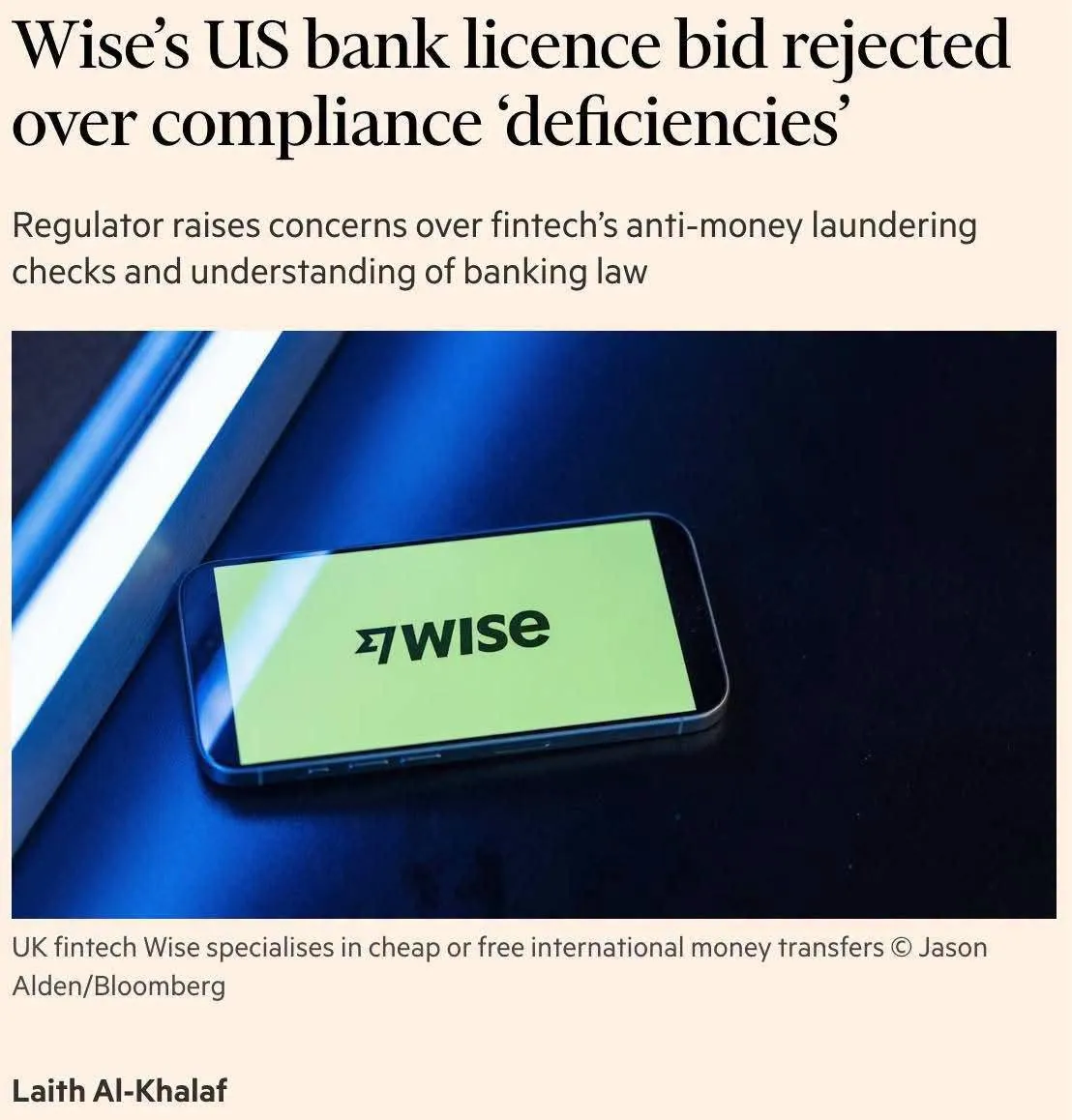
The US Office of the Comptroller of the Currency has refused to grant a banking licence to the fintech company Wise. The regulator highlighted shortcomings in the anti-money laundering system, an insufficient understanding of banking legislation requirements, and concerns regarding the institution’s future management.
According to the Financial Times, the US regulator – the Office of the Comptroller of the Currency (OCC) – has refused to grant a banking licence to the Estonian-British fintech company Wise. The reason: shortcomings were identified in its anti-money laundering checks and an insufficient understanding of US banking legislation.
Questions have also been raised regarding the bank’s future management. In the OCC’s view, the proposed executives and members of the board of directors have not demonstrated sufficient experience in carrying out the fiduciary operations typical of federally licensed banks in the US.
The regulator also noted that it cannot yet consider the future anti-money laundering and counter-terrorist financing system to be effective – at least until Wise has rectified the existing shortcomings. In early trading on Friday, 24 July, Wise’s shares fell by 9 per cent.
The company stated that it had submitted its application over a year ago and had since significantly improved its regulatory compliance system and made changes in response to the regulator’s comments. The company plans to submit a new application for a national trust bank licence under the GENIUS Act. The company’s objective remains unchanged – to gain access to the US federal payment network.
Wise has previously faced scrutiny from regulators and law enforcement agencies in other countries. The Belgian public prosecutor’s office is investigating potential anti-money laundering violations, as well as the possible use of the company’s accounts by international criminal groups. Last year, Wise’s US division agreed to pay a fine of $4.2 million for breaching the US Bank Secrecy Act and regulations on anti-money laundering and counter-terrorist financing.
This is a perfect illustration of a simple principle: rules only work when regulatory bodies actually monitor compliance, and those who breach them are held accountable under the law. Ukraine recently adopted a National Strategy to Combat Fraud and Other Offences to protect the financial interests of Ukraine and the EU, and approved an action plan for its implementation by 2028.
The tangible outcomes of these plans should be the timely detection of complex schemes, the protection of funds and the inevitability of accountability. This is precisely how the principle worked in the case of Wise: the identified shortcomings formed the basis for a specific decision by the regulator.
All articles in the "Opinion" section are published in full from their original sources. The editorial team may not share the authors’ views and accepts no responsibility for their statements.