Will Telegram be banned in Ukraine? What is happening around the popular messenger?

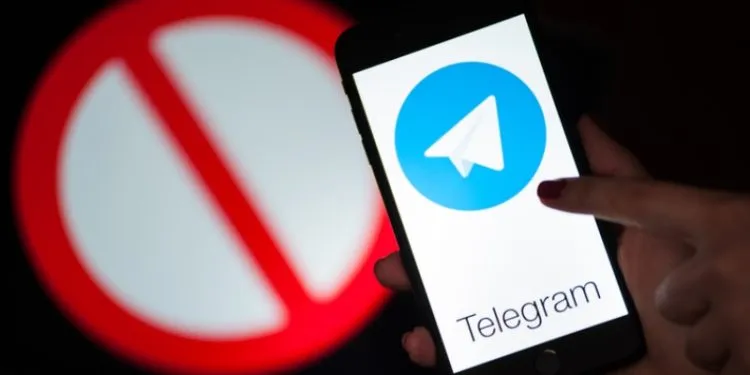
The issue of restricting Telegram in Ukraine has been raised again at the level of the President's Office. Deputy Head of the President's Office Iryna Vereshchuk stated that the messenger is used to recruit saboteurs, coordinate attacks and terrorist activities, and therefore, if restrictions are necessary to protect the lives and safety of citizens, such measures should be adopted. Thus, the discussion about a possible blockade or partial restriction of Telegram, which has been going on for several years, has gained new momentum.
Vereshchuk directly addressed the security aspect of the issue.
"Telegram is used to recruit saboteurs, coordinate attacks against Ukraine and terrorist activities," she said.
At the same time, the official emphasised that the issue of restrictions should be considered exclusively from a security perspective:
"If restrictions are necessary to protect the lives and safety of our people, such decisions must be made."
Pressure on Telegram began even before the full-scale war
Unofficial pressure on Telegram in Ukraine began during the presidency of Petro Poroshenko. However, the initiative did not come from the authorities, but from a group of people from grant-funded organisations and structures close to the US Democratic Party. Their complaints boiled down to three points: the Russian origin of the messenger, the lack of access to algorithms, and the inability to establish full feedback with the developers.
Telegram has indeed rarely cooperated with states. In 2015, Pavel Durov announced the blocking of 78 channels linked to ISIS. In 2021, the platform restricted the operation of the "Smart Voting" bot, created by Alexei Navalny's team to support alternative candidates in the Russian State Duma elections. At the same time, there were virtually no precedents of cooperation with the Ukrainian authorities. This did not prevent Ukrainian politicians from actively using the messenger: until 24 February 2022, Telegram remained the main communication tool for Volodymyr Zelenskyy's team, Servant of the People MPs and representatives of other parties.
The war made Telegram the country's main messenger
After the start of the full-scale invasion, the issue of banning Telegram was periodically raised, but for a long time it existed only at the level of discussions on social networks. Moreover, the war only strengthened the messenger's position. While in 2021, Viber was the most popular means of online communication in Ukraine, followed by Facebook Messenger and Telegram, which had already overtaken WhatsApp, after February 2022, Telegram effectively became the number one messenger.
The authorities began to officially talk about the risks
In the autumn of 2023, the state moved from discussions to practical action for the first time. The National Council on Television and Radio Broadcasting, together with relevant agencies, began considering the issue of regulating Telegram. In November, NSDC Secretary Oleksiy Danilov publicly called the messenger "a very dangerous thing" from the point of view of national security. In March 2024, the head of the Main Intelligence Directorate, Kirill Budanov, expressed a similar position, stating directly that Telegram was a problem for Ukraine.
The authorities' key complaint was the platform's refusal to block channels spreading Russian propaganda.
The incident with the blocking of Ukrainian special services bots
However, in the spring of 2024, an incident occurred that only exacerbated tensions. On 28 April, Telegram temporarily blocked Ukrainian chat bots, including the official services of the Main Intelligence Directorate, which were used to collect information about the movement of Russian troops. The next day, access was restored, and representatives of the platform explained the blocking as a technical error.
The state has already partially restricted the use of the messenger
Against this backdrop, at one point, the issue of a complete ban on Telegram began to be discussed at the level of state decisions. However, the authorities opted for a compromise. In September 2024, the National Cybersecurity Coordination Centre restricted the use of Telegram in state bodies, military formations and critical infrastructure facilities. Formally, this meant that military personnel and employees of a number of structures were prohibited from using the messenger for official purposes — Signal was offered as an alternative. At the same time, the restrictions did not apply to personal devices, and in practice, Telegram continued to be used.
The main problem is technical and financial
Since then, discussions about the possible blocking of Telegram have arisen regularly. The main problem lies not only in the political decision, but also in the technical implementation. To fully restrict the messenger's operation, it is necessary to implement deep packet inspection (DPI) systems, which can cost tens of millions of dollars to purchase. In addition, many government agencies already use Telegram as an official communication channel, including state-owned companies and government bodies. Transferring them to other platforms will require additional resources and time.
Russia's experience shows the complexity of blocking
Russia's experience shows that even large-scale attempts at blocking do not guarantee results. In 2018, Roskomnadzor attempted to completely restrict access to Telegram, but this led to disruptions in many third-party services, while the messenger itself continued to function. Subsequently, the restrictions were relaxed. In 2024 and 2025, the Russian authorities again began to introduce partial restrictions, including blocking calls and slowing down the platform, but users continue to bypass them using VPNs.
Telegram has been subject to pressure in various countries
Complaints about Telegram are not limited to Ukraine and Russia. In August 2024, Pavel Durov was detained in France as part of an investigation, after which he was released on bail and placed under judicial supervision. Shortly thereafter, he announced that measures to combat crime on the platform would be strengthened.
Durov himself had previously claimed that he left Russia under pressure from the authorities and has since been developing Telegram as an independent international project. It is this independence, which has ensured the platform's rapid growth, that has also made it the target of pressure from states that are unable to directly control the processes within the messenger.