Von der Leyen wants to restrict the admission of Ukrainians to the EU

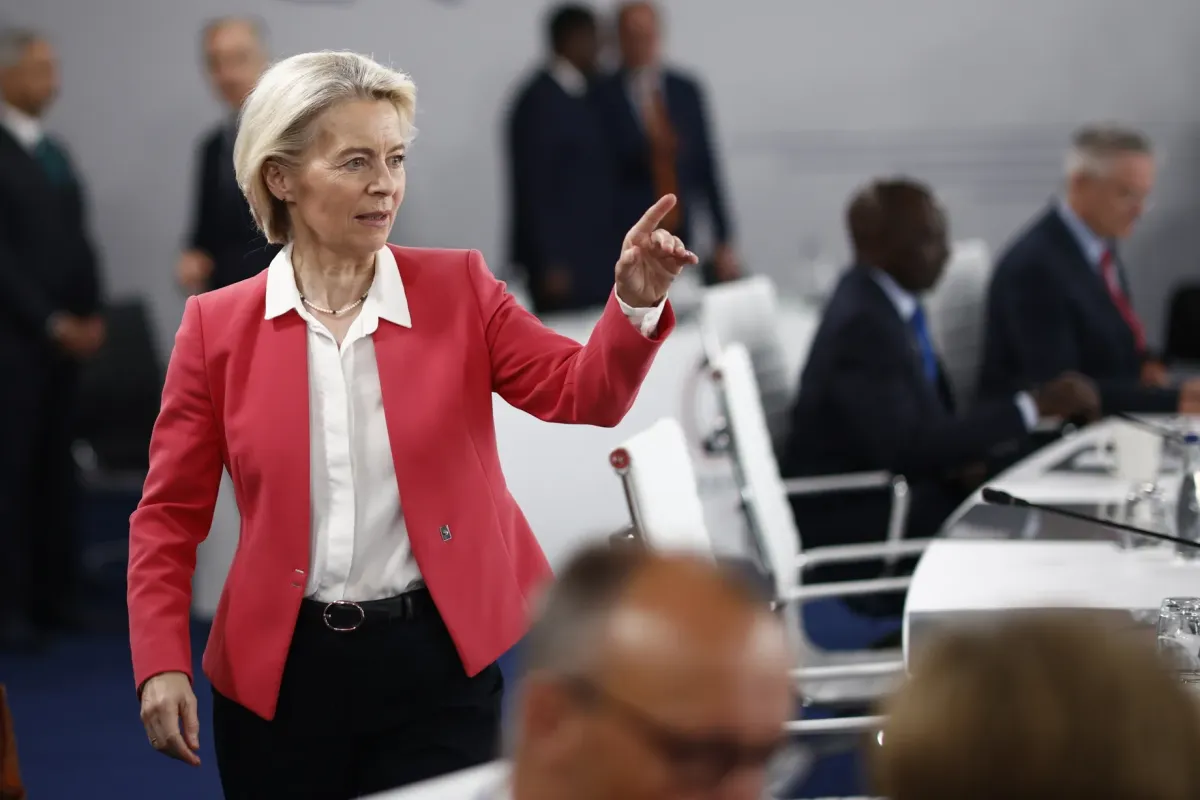
Der Spiegel reports this, citing a letter from von der Leyen to EU leaders.
Ursula von der Leyen has announced that the European Commission will propose extending temporary protection for people fleeing Russia’s war against Ukraine.
At the same time, she wants to limit the scope of these rules so that the extension of protection does not undermine Ukraine’s ability to defend itself.
Von der Leyen did not provide any details of the forthcoming proposal.
Who might be affected by the changes
Der Spiegel reports that the wording of the letter could be interpreted as a hint at a possible restriction on the admission of men of conscription age.
In early June, Germany and a number of other EU countries had already advocated making it more difficult to admit Ukrainians liable for military service.
According to dpa, the idea of not extending the simplified admission rules to men aged between 23 and 60 has gained support among EU interior ministers.
How protection for Ukrainians in the EU currently works
Ukrainians who have fled to the EU due to the war benefit from the temporary protection scheme.
This status exempts them from the individual asylum procedure and grants them the right to reside, work, receive social assistance and medical support, and ensures their children’s access to education.
Temporary protection for Ukrainians in the EU is currently set to remain in place until 4 March 2027.
How many Ukrainians have protection in the EU
According to figures cited by Der Spiegel, over 4.3 million Ukrainians have been granted temporary protection status in the European Union.
This is precisely why any changes to the admission rules could affect a significant number of people and would require a separate decision at EU level.
Germany’s position
German Chancellor Friedrich Merz previously stated that he had asked Ukrainian President Volodymyr Zelenskyy to tighten the rules on young men leaving the country.
According to Merz, Ukraine needs these men, not Germany.
At present, this is not a decision that has already been taken, but a future proposal from the European Commission.
It is yet to be discussed by EU countries. The final rules will depend on the position of the Member States and the specific wording of the proposal.
Follow us on Telegram