Illegal crossing of the EU border: how the number of cases is changing

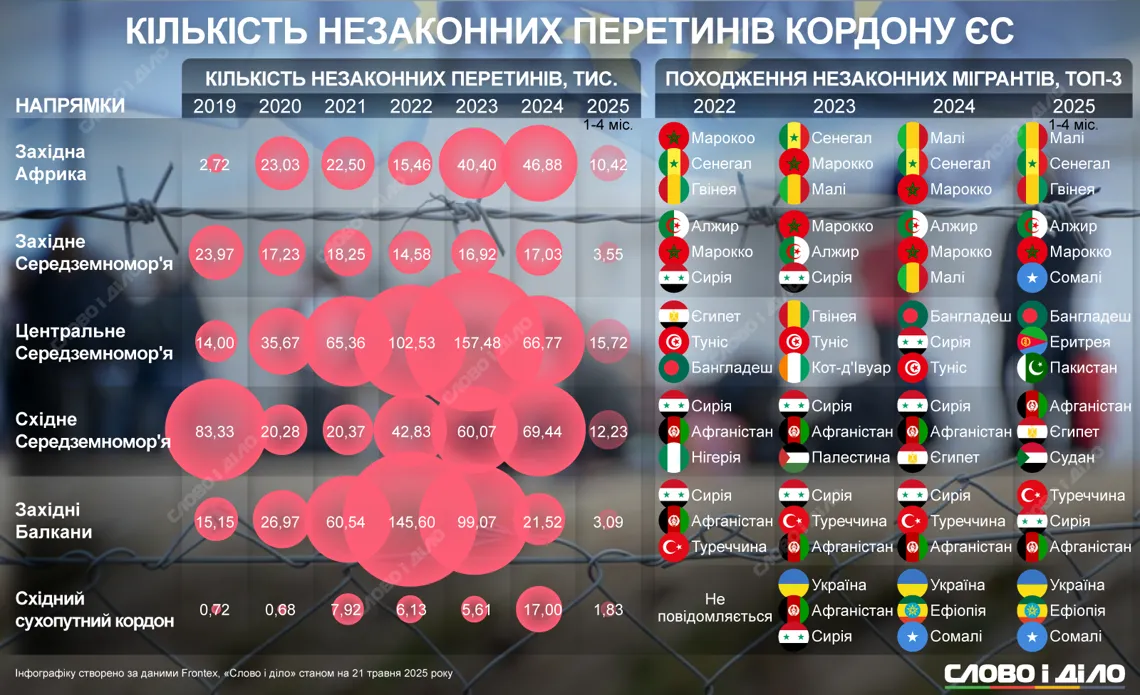
In 2019, the number of illegal border crossings into the European Union countries was nearly 140,000. The main routes for illegal migration were the Eastern (83.33 thousand) and Western (23.97 thousand) Mediterranean.
In 2020, the number of illegal crossings decreased to about 120,000 (partly due to the coronavirus pandemic). The popularity of the West African route through Central Mediterranean and Western Balkans increased sharply.
In 2021, the total number of illegal crossings into the EU was slightly less than 200,000, the highest since 2017.
One of the factors influencing the increase in illegal crossings, according to Frontex, was the situation at the Belarus border. The regime of Alexander Lukashenko was then accused of inviting migrants from the Middle East into the country and then redirecting them to the western border. The EU considered this retaliation for sanctions imposed after the suppression of protests.
It should be noted that recently Lithuania filed a lawsuit with the International Court of the UN against Belarus in connection with the migration crisis.
Most often, citizens of Syria, Tunisia, Morocco, Algeria, and Afghanistan were detained during illegal border crossings. The most used route was through Central Mediterranean and Western Balkans. The number of illegal entries through the eastern land border increased.
In 2022, about 330,000 illegal border crossings were detected at the EU's external border — the highest since 2016. Nearly half of the total was on the route through the Western Balkans. The route through Central Mediterranean was also popular.
In almost half of the cases, Syrians, Afghans, and Tunisians illegally crossed the border.
In 2023, the number of illegal crossings into the EU again increased — to about 380,000. The most popular routes were through Central and Eastern Mediterranean, Western Balkans.
Most often, Syrians illegally crossed the border — more than 100,000 cases per year. They are followed by citizens of Guinea and Afghanistan.
In 2024, slightly more than 239,000 cases of illegal crossing into the EU were recorded — the lowest level since 2021. Frontex attributes this to increased cooperation between the EU and partners in combating illegal migration.
It is noted that the reduction in illegal border crossings was due to a sharp decline in the popularity of the route through Central Mediterranean (by 59%) and Western Balkans (by 78%).
In the first four months of 2025, there were nearly 47,000 cases of illegal border crossings, most often via the route through Central Mediterranean. The most detained citizens were from Bangladesh, Afghanistan, and Mali.
It should be noted that, according to Frontex, in 2023-2025, Ukrainians were among the citizens most frequently detained at the eastern land corridor.