Azerbaijan and Georgia have agreed to resume operations on the Baku–Supsa oil pipeline

The Georgian Ministry of Economy announced the signing of the agreement.
The ministry stated that this would allow the resumption of oil transit from Central Asia through Georgian territory to Europe and increase revenue for the country’s state budget.
Georgia’s Minister of Economy and Sustainable Development, Mariam Kvirivishvili, announced that following the negotiations, the Georgian government had decided to begin cooperation with Azerbaijan’s state oil company SOCAR to restore the pipeline’s operation.
According to her, the launch of the route is significant for regional energy cooperation and strengthening Georgia’s role as a transit country.
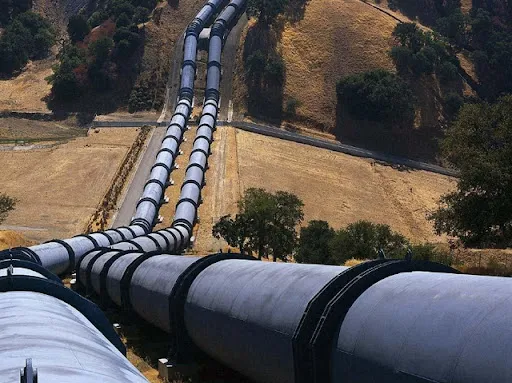
The Baku–Supsa oil pipeline, also known as the WREP or Western Route Export Pipeline, is a branch of the Baku–Tbilisi–Ceyhan pipeline. It was commissioned in April 1999 to transport oil from the Azeri–Chirag–Guneshli field block.
The pipeline is 837 kilometres long and has a capacity of over 7 million tonnes of oil per year, or 145,000 barrels per day.
The route allows Azerbaijani and potentially Central Asian oil to be transported to the Black Sea coast of Georgia, bypassing Russia.
Oil pumping through the pipeline was halted in spring 2022. In 2024, 90,000 tonnes of oil were transported via it, and in 2023 – 150,000 tonnes.
The pipeline is operated by BP. BP-Azerbaijan had previously stated that the route was not frozen and was ready for the resumption of oil transport.
According to Georgian media reports, BP is stepping down as the pipeline operator. As of December 2025, the parties were discussing options for transferring the operator’s functions to Socar Midstream or the Georgian Oil and Gas Corporation.
During Georgian Prime Minister Irakli Kobakhidze’s visit to Azerbaijan, the parties also signed intergovernmental agreements in the fields of energy and transport.
Specifically, these include a new 20-year agreement on the supply of natural gas to Georgia, agreements on the supply and transit of electricity, and the launch of full operations on the new section of the Baku–Tbilisi–Kars railway.
In addition, the parties agreed to resume daily passenger rail services between Tbilisi and Baku from 26 May, following a six-year hiatus.