

Reactive UAVs: "This is a new serious threat" - BBC

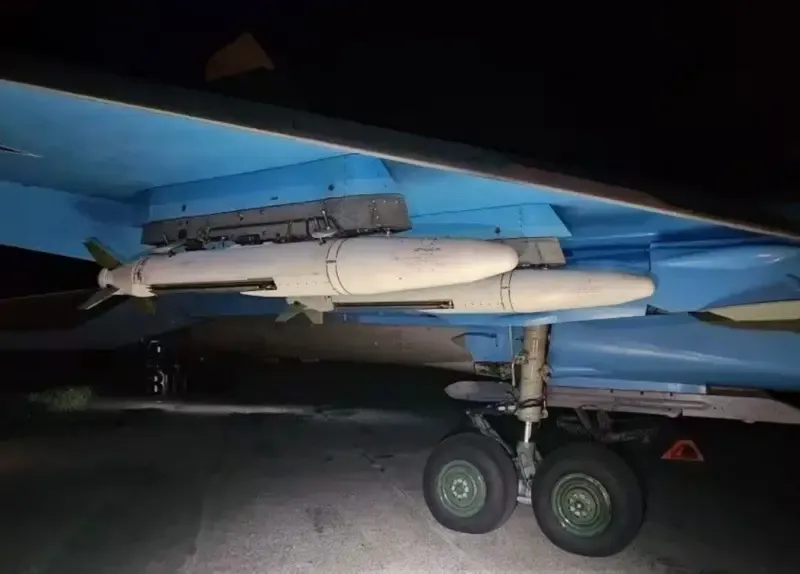
Russia has managed to significantly modernize one of the most widespread and terrifying types of weapons - guided aviation bombs, reports ThePublic.info citing BBC Ukraine.
The Russian army has been launching hundreds of guided bombs at Ukrainian positions near the front line daily, and now has the capability to strike them at rear cities as well.
On the day of October 24, a new Russian guided bomb flew for the first time to the Odessa region. The likely target was the port city of Pivdenne. At least, the Air Force command of the Ukrainian Armed Forces reported at 13:30 on Friday that the bomb was flying over the Black Sea towards this settlement.
"During today’s air attack, the Russian army used guided bombs against civilian infrastructure in our region for the first time. This is a new serious threat to Odesa. Such strikes pose enormous danger to people and can cause significant destruction," - said Oleksii Kiper, head of the regional administration.
Earlier in the fall, strikes with reactive guided bombs were recorded in Dnipropetrovsk, Poltava, Kharkiv, and Mykolaiv regions.
In all cases, this destructive bomb covered a considerable distance - over 100 km - and attacked rear cities that were previously protected from this type of weapon.
What is this bomb
As early as the end of 2023, Russia began widespread use of guided bombs on the front.
More precisely, the first samples of this type of weapon were Soviet high-explosive bombs, such as FAB-250 and FAB-500, which were equipped with a universal glide and flight correction module (UMPK). It looks like an elongated aluminum thin board that releases special wings during flight. Additionally, the module has satellite and inertial navigation systems and a device to overcome electronic interference.
The UMPK allowed to significantly extend the range of bomb deployment.
Now, a Russian bomber aircraft no longer needs to risk entering the zone of Ukrainian air defense. It can drop several guided bombs from 50-70 km away from the contact line.
While a regular free-fall FAB had a maximum range of up to 10 km, the modified guided bomb with "wings" could hit targets at a distance of up to 70-80 km. The latest development - a jet-guided bomb - has twice the range. That is, up to 150 and even 200 km.
Representative of the Main Intelligence Directorate Vadym Skibitsky stated that in recent tests, Russians managed to achieve a range of 193 km with the new guided bomb.
"During September-October, the Russian Federation developed and now has reached the final combat testing of aviation bombs with new control modules. They envisage a range and combat radius of such bombs to be about 200 km," - said the GUR general. "Unfortunately, they are moving towards serial production of this weapon," - he added.
Considering that Russia has established production of new bombs and still has significant stocks of Soviet FABs, this weapon could become a very serious threat to Ukraine’s rear, primarily to Dnipro, Chernihiv, Odesa, Mykolaiv, i.e., cities located 100-200 km from the front line.
Currently, isolated cases of reactive guided bomb use are recorded. Unlike conventional guided bombs, which Russia drops in hundreds daily.
The secret is in the engine
Intelligence reports that Russian guided bombs of increased action may have several names. Most often, they mention "Grom-1" (Grom-E1 or "Grom-2") or a new product called UMPB-5R.
The main innovation of this product is a jet engine, which actually allows the bomb to fly three times longer than a regular guided bomb.
Reb system and communications expert, head of the "Radio Technology Center" Serhii Beskrestnov (call sign "Flash") states that the warhead of this bomb is 100 kg, and the diameter of the product is 30 cm.
"This is not quite the guided bomb in the format we are used to with wings. This product more resembles a cruise missile in shape, assembled entirely in one body straight from the factory," - explains the expert.
He also published a photo of such a bomb, which on October 20 nearly reached the outskirts of Poltava. That is, it covered over 120 km from the launch point.
The specialized publication Defense Express indicates that this is the SW800 engine from the Chinese company Swiwin. It is available on the civilian market, and Russians have already used it for their cruise missile S8000 "Banderol".
Its price on Chinese marketplaces ranges from 15 to 17 thousand dollars.
"Overall, thanks to the Chinese engine, Russia can quite expect to produce such long-range strike means on a large scale," - summarize analysts from Defense Express.
How to counter this
It should be considered that after almost 4 years of full-scale war, an effective solution against conventional guided bombs has not yet been found. However, Ukrainians managed to establish a sufficiently effective electronic warfare system to reduce the effectiveness of this type of weapon.
But there remains another problem. Even if a guided bomb passes by a military target under electronic warfare, its 200-500-1000 kg of explosives will still fall somewhere nearby, quite possibly on residential buildings.
In other words, Russia is now mass-using this weapon more for intimidating the civilian population rather than for military purposes, explained in an interview with BBC the head of the radio-electronic and cyber warfare department Ivan Pavlenko.
"They (Russians - Ed.) regularly just drop guided bombs on populated areas to terrorize people. To force people to leave. We understand that this is hybrid warfare. One of the tasks is to control the population," - said the specialist.
Meanwhile, Colonel Pavlenko emphasizes that Ukrainian EW is "very effective" against Russian guided bomb navigation systems. This, in particular, forces the enemy to constantly improve them, increasing the number of antennas for satellite signal reception.
The Ukrainian authorities emphasize that the most effective way to stop "guided bomb terror" is to shoot down the aircraft launching them. Primarily, this refers to Su-34 and Su-35.
However, this is quite difficult to implement, considering the constant shortage of long-range surface-to-air missile systems capable of hitting these aircraft.
For example, the American Patriot system can shoot down such aerodynamic objects at a range of up to 160 km. But, firstly, Ukraine has very few of these systems and missiles, secondly, moving them closer to the front line entails significant risks, and thirdly, even in such cases, modern guided bombs already have a range of up to 200 km, meaning their carriers are theoretically protected from missile defense systems.
Thus, Ukraine has limited options left. Either improve EW and divert bombs away from the target, or try to shoot them down in flight, for example, from fighters, or use expensive anti-aircraft missiles against them.
Apparently, one or several of these options or a combination thereof were used to repel the air attack on Odesa on October 24.
This is evidenced by the fact that the "South" air command noted that the region was attacked not by one, but by three bombs.
The report states that the air defense managed to shoot down two of them. The third fell in an open area "with no consequences." It is not specified how exactly Ukrainians managed to shoot down the latest guided bombs.

The NBU has updated the rules on the authorisation of financial institutions: a lawyer explained what has changed in 2026
The NBU continues to update regulatory requirements for the financial sector, tightening control over providers of financial and payment services. The latest changes relate to both authorisation procedures and requirements concerning business reputation, ownership structure and business planning for financial institutions. The new rules will also affect pawnbrokers and insurers, which must adapt their internal processes to the updated standards.

Will there be enough gas and electricity this winter? What Ukrainians need to prepare for in the new heating season
Ukraine is approaching another heating season whilst its energy infrastructure comes under constant attack. Whilst the authorities report on gas reserves and the commissioning of new power generation capacity, experts point to disputed figures and problems with connecting new capacity, and in some places power cuts lasting between 10 and 20 days.

The legalisation of cryptocurrency: how does it (not) work in Ukraine?
Ukraine is actively moving towards legalising the cryptocurrency market, but for the time being, cryptocurrency transactions remain in a ‘grey area’ of regulation. ThePublic spoke to Yakov Voronin, a lawyer and managing partner of the Yakov Voronin Law Firm, Chairman of the Public Oversight Council at the Economic Security Bureau and Chairman of the Committee on Customs and Tax Law at the National Association of Advocates of Ukraine, Yakov Voronin.

The NBU has published a macroeconomic review: what is happening with inflation, the economy and public finances
In May, headline inflation in Ukraine slowed to 8.2 per cent year-on-year, thanks to an increase in the supply of certain raw food products. At the same time, core inflation accelerated to 7.9 per cent, as businesses continued to factor rising labour, energy and logistics costs into their prices, as well as the impact of the previous depreciation of the hryvnia. According to the National Bank’s estimates, headline inflation continued to slow in June, whilst core inflation continued to rise.
There is talk in the Kremlin of a successor to Putin: who is Alexei Dyumin and why is he being touted as the frontrunner?
Alexei Dyumin has once again found himself in the spotlight amid reports that discussions about Vladimir Putin’s possible successors are becoming increasingly common in Russian political circles.
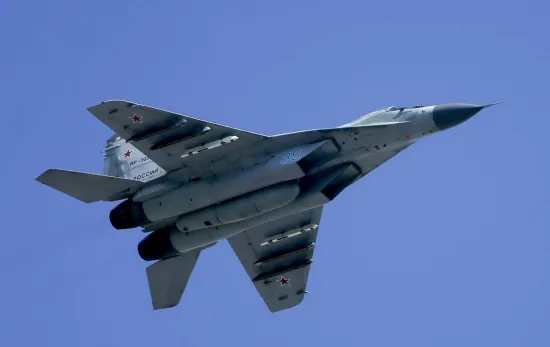
The Ukrainian Armed Forces have destroyed a Russian MiG-29 at an airfield in the Kursk region
The Ukrainian military carried out a strike on the Russian military airfield ‘Khalino’ in the Kursk region, resulting in the destruction of a MiG-29 fighter jet and a ‘Pantsir-S1’ anti-aircraft missile and gun system.

Peskov stated that Russia considers the deployment of NATO troops in Ukraine to be unacceptable
Dmitry Peskov, the press secretary of the illegitimate President of the Russian Federation, Vladimir Putin, has stated that Russia considers the possible deployment of NATO military contingents on Ukrainian territory to be unacceptable. According to him, this is precisely how the Kremlin justifies the so-called ‘special military operation’.
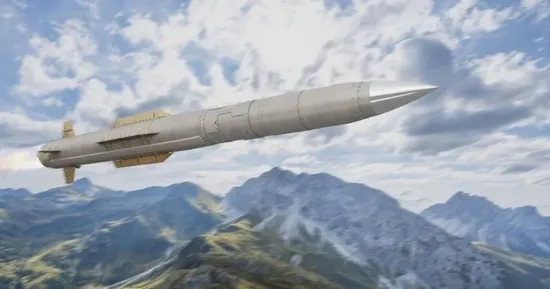
Lockheed Martin has unveiled a new, cheaper missile for the Patriot system designed to shoot down Russian ballistic missiles
Lockheed Martin has unveiled a new missile, the Adapted Capability Effector, for the Patriot systems, which is set to become a cheaper alternative to PAC-3 interceptors. The development was unveiled against a backdrop of growing demand for missile defence systems in the wake of ballistic missile attacks.

Russia has launched a second batch of ‘Rassvet’ satellites into orbit, which are described as the equivalent of Starlink
Russia has launched the second batch of ‘Rassvet’ satellites, which are seen as a future counterpart to the Starlink system. There are currently around 40 such satellites in orbit, but this is not sufficient for military purposes.
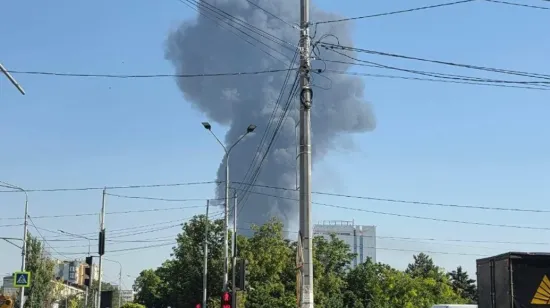
Explosions have been heard in Mariupol — a petrol tanker, a petrol station and, presumably, Russian warehouses have been hit
Explosions have been heard in occupied Mariupol. A petrol tanker, a petrol station and a garage were hit as a result of the strikes. Reports that the occupiers’ warehouses have been destroyed are also being verified.

