China has begun secretly preparing for Putin’s departure and a change of power in Russia

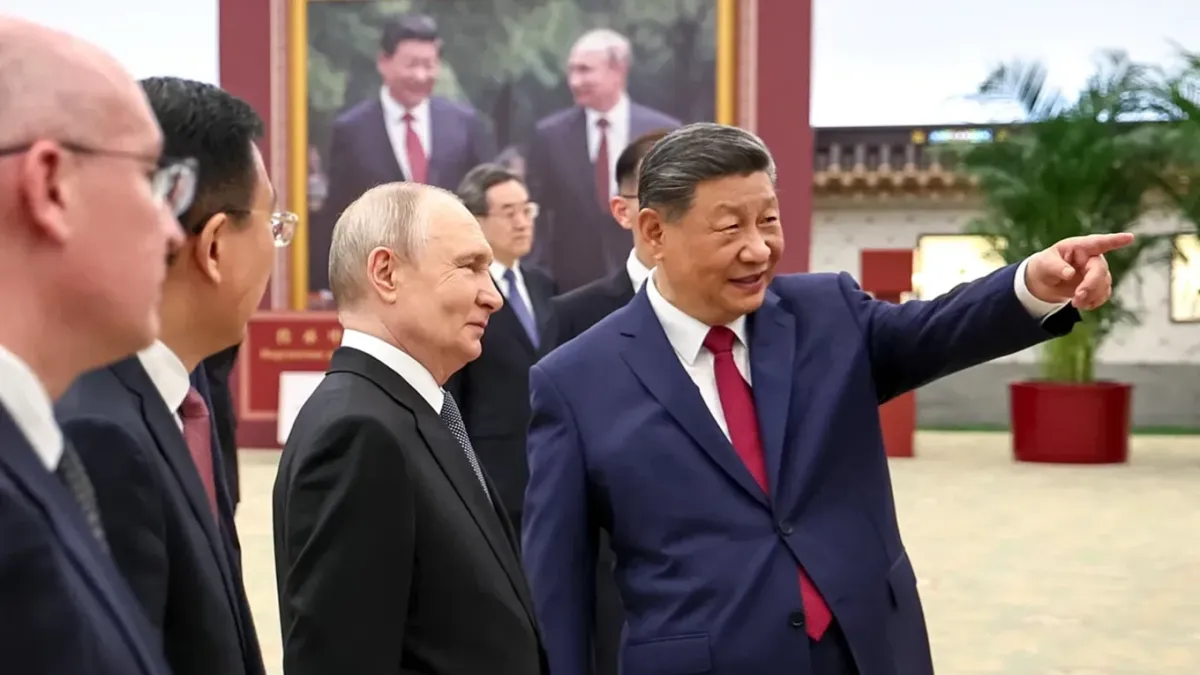
According to The Wall Street Journal, following the breakdown in relations between Russia and the West, China has significantly strengthened its influence over Moscow. The publication notes that Beijing is cautiously and discreetly building relations not only with Vladimir Putin, but also with members of the Russian political class who may play an important role in the country’s future.
Citing officials from both countries and analysts, the newspaper reports that China is strengthening its ties with Russian officials and members of the elite, going beyond the current Russian leadership.
One source, close to the Russian security services, told the publication that cases of Chinese espionage and attempts to recruit mid-level officials are being recorded with increasing frequency in Russia. According to him, the Russian authorities are in no hurry to publicise such cases or discuss them with Beijing, so as not to damage bilateral relations.
The Wall Street Journal also notes that, according to some analysts, anti-Western sentiment in Russia is so deeply entrenched in society and state institutions that it will persist regardless of any change in the country’s leadership.
Alexander Gabuev, director of the Carnegie Berlin Centre for Russia and Eurasia, stated that China has been given the opportunity to make Russia a country that is significantly more dependent on Beijing. According to him, Beijing is gradually establishing long-term mechanisms for cooperation that will remain in place for decades.
The publication also draws attention to changes in relations between Russia and China in Central Asia. According to Chinese government advisers and diplomats interviewed by the newspaper, over the past year Xi Jinping has secured Vladimir Putin’s support for the use of the yuan as the main currency of the Shanghai Cooperation Organisation’s Development Bank. Moscow had previously opposed such a decision.
The newspaper’s sources claim that financial isolation has forced Russia to reconsider its position. At the same time, other international financial institutions in which China plays a leading role have not yet provided Russia with mechanisms to circumvent Western sanctions. In particular, Russia has lost the opportunity to work fully with the Asian Infrastructure Investment Bank and the New BRICS Development Bank.
According to The Wall Street Journal, Russia continues to supply China mainly with oil, gas and other natural resources. Whilst China accounted for around 10 per cent of Russia’s foreign trade turnover in 2013, this figure has now increased approximately fourfold. At the same time, Russia’s share of China’s foreign trade, according to the publication, stands at less than 4 per cent.
The newspaper devotes particular attention to the negotiations regarding the ‘Power of Siberia 2’ gas pipeline. It notes that the Russian side has repeatedly sought to push the project through, but during talks in Beijing in May 2026, the Chinese side made it clear that it would only agree to the construction on condition that gas was supplied at Russian domestic market prices.
According to sources familiar with the course of the negotiations, Chinese officials also made it clear to Russian representatives that there was no point in returning to this issue until Moscow agreed to the proposed terms. Consequently, among the 42 documents signed during Vladimir Putin’s visit to China, there was no agreement on ‘Power of Siberia 2’.
German businessman Jörg Wuttke stated that China has no economic need to rush the implementation of this project. According to him, there is sufficient liquefied natural gas on the global market, and China’s demand for imported gas is forecast to peak in the mid-2030s.
Alexander Gabuev also believes that Beijing may be taking its time over the decision, waiting for Russia’s economic situation to deteriorate further in order to secure more favourable terms for cooperation.