Church holiday on 20 July 2026: history, traditions and taboos

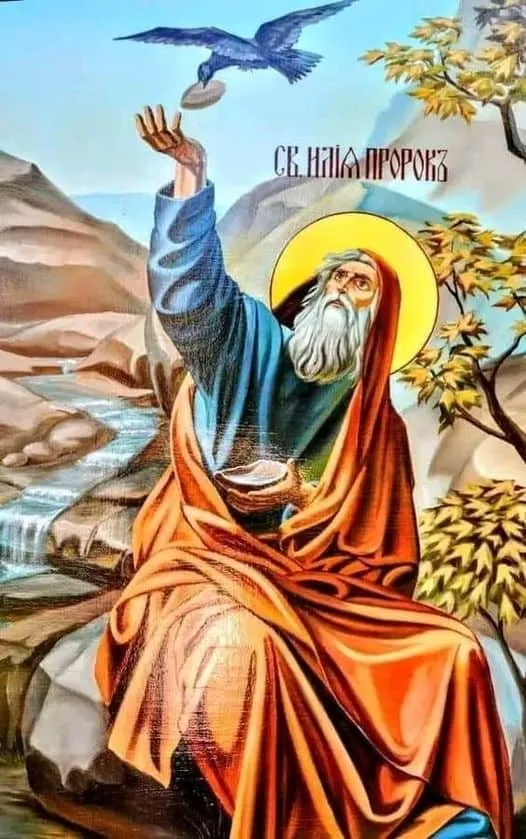
The prophet Elijah lived in the Kingdom of Israel in around the 9th century BC. According to the Holy Scriptures, he spoke out against idolatry and urged the people to keep their faith in the one true God.
The prophet openly opposed King Ahab and his wife Jezebel, who supported the worship of the pagan god Baal. Biblical accounts attribute numerous miracles to Elijah, including the resurrection of a dead boy, the descent of fire from heaven, and the end of a prolonged drought.
According to the biblical account, at the end of his earthly life, the prophet did not die but was taken up into heaven in a chariot of fire. In Christian tradition, Elijah is regarded as an example of unshakeable faith, spiritual fortitude and a steadfast struggle against evil.
On this day, believers pray to the prophet Elijah for the health of their loved ones, peace and prosperity in the family, a bountiful harvest and an end to the drought. In some communities, bread and fruit are blessed, which are then offered to family members or shared with those in need.
What not to do on Elijah’s Day
The Church urges people to refrain from quarrelling, anger, envy, foul language and despair. One should not offend others, refuse to help, or wish ill upon anyone. It is recommended to devote the feast day to prayer, good deeds and supporting one’s neighbours.
Prohibitions against heavy physical labour, fishing and swimming stem from folk beliefs and are not part of official church regulations. It was traditionally considered a sin to work in the fields or vegetable gardens on this day.
The best-known prohibition concerns swimming in open bodies of water. People believed that after St Elijah’s Day, the water becomes cold and dangerous, and that evil spirits supposedly appear in rivers and lakes.
There was also a legend that one of the prophet’s horses lost a horseshoe in the water, after which the bodies of water began to cool rapidly. In reality, this folk belief may have arisen from observations of the weather: towards the end of July, the nights gradually grow colder and the water temperature drops.
The Church does not consider swimming or ordinary household chores to be a sin. The Church’s teachings on this day relate primarily to a person’s behaviour, their attitude towards loved ones and their willingness to help others.
Traditions of the Feast of the Prophet Elijah
In folk tradition, the Prophet Elijah was regarded as the patron of thunder, rain and fertility. He was depicted as a horseman on a fiery chariot, and the rumble of thunder was explained as the sound of its wheels.
Following the adoption of Christianity, the image of the prophet in popular imagination partly took on the traits of the pagan god Perun. For this reason, Elijah was called the Thunderer, and it was believed that he could send rain, end a drought or punish people for their misdeeds.
Ilya’s Day was associated with the end of haymaking, the start of the harvest and the gradual approach of autumn. This is the origin of the saying: ‘Before Ilya — summer, after Ilya — autumn’.
According to folk tradition, on this day people would help the poor, give alms and treat their neighbours to refreshments. Particular attention was paid to those who found themselves in difficult circumstances.
Folk omens for 20 July
According to folk observations, hot weather on St Ilya’s Day foretold a dry autumn. Thunder without rain was associated with a lack of rainfall in the near future; a large number of mosquitoes with sunny weather; and the absence of rain with a prolonged drought.
A heavy downpour was considered a sign that there would be few fires over the coming year. Prolonged thunder was said to warn of bad weather, whilst intermittent thunder promised a brief shower.
These superstitions form part of folk tradition and have no scientific basis.
When is St Elijah’s Day celebrated according to the old calendar?
Communities that follow the Julian calendar will honour the prophet Elijah on 2 August. For them, 20 July corresponds to 7 July in the old style — the day of remembrance of the Venerable Job and Theodosius of Manyava.
The date for honouring Job and Theodosius of Manyava on 7 July according to the New Julian calendar was approved by the Holy Synod of the OCU.
Elijah’s name day falls on 20 July according to the new church calendar, and on 2 August according to the old calendar.
Follow us on Telegram.