Church holiday on 21 July 2026: why it is advised to speak less

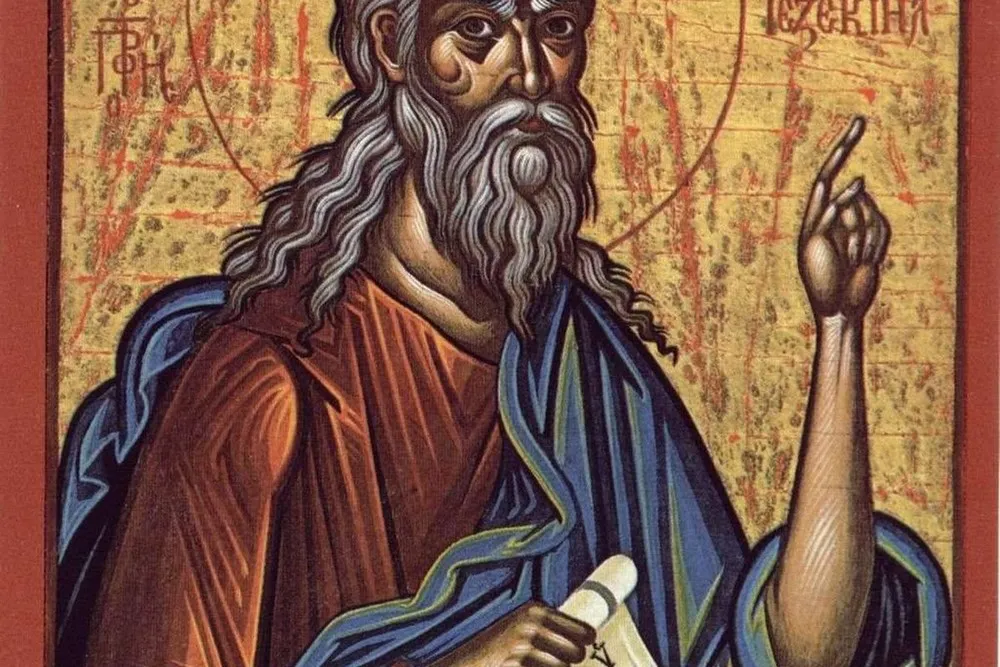
One of the saints commemorated on 21 July is the Old Testament prophet Ezekiel. He lived in the 6th century BC and authored one of the prophetic books of the Old Testament.
On this day, the Venerable Simeon, a holy fool for Christ’s sake, and John, his fellow ascetic, are also commemorated. According to church tradition, they lived in around the 6th century, undertook a pilgrimage to Jerusalem together, and thereafter devoted their lives to prayer and the service of God.
Separately, the Church honours the Venerable Onuphrius the Silent and Onesimus the Recluse of the Kiev-Pechersk Lavra. They lived in the 12th–13th centuries, and their relics rest in the Near Caves of the Kiev-Pechersk Lavra.
No detailed information about the lives of these ascetics has survived. Church tradition associates Onuphrius with the feat of silence, and Onesimus with seclusion, solitary prayer and an austere monastic life.
Parishes that follow the Julian calendar will honour these saints on 3 August. Meanwhile, 21 July, according to the old church calendar, marks the day of remembrance of the Great Martyr Procopius of Caesarea.
What people pray for on this day
People turn to the Venerable Onuphrius and Onesimus with prayers for patience, spiritual fortitude and help in overcoming difficult life circumstances.
Onuphrius the Silent is asked to teach prudence, restraint and responsibility for one’s words. This does not mean a complete refusal to communicate, but rather a desire to avoid idle talk, lies, insults, gossip and the condemnation of others.
The day can be devoted to prayer, helping those in need, reconciliation with loved ones and peaceful work.
What is traditionally done on 21 July
In the folk calendar, the day is known as Onufriy the Silent or the Silent One. Our ancestors believed that it was best to go about one’s business on this day without unnecessary chatter. Silence was seen as a way of preserving peace within the family and avoiding saying things one might later regret.
Traditionally, on 21 July, people would tidy their homes, sort through their belongings, air out their winter clothes, and dry out their storerooms, sheds and cellars. Where necessary, they would repair the walls and floors in outbuildings, preparing them for storing the harvest.
Housewives made jams and compotes, dried fruit, and prepared kvass and other home-made preserves. During this period, they also began harvesting early varieties of apples.
Another folk belief is linked to so-called ‘silent water’. This was collected before sunrise, without uttering a single word, and was then used for washing and sprinkling the home. This custom is part of folk beliefs and is not a church ritual.
What not to do on 21 July
The Church does not impose any specific everyday prohibitions for this day. Believers are advised to refrain from quarrelling, foul language, lying, gossip, envy, humiliation and condemnation of others.
Thoughtless words, revealing other people’s secrets, and conversations that might harm another person are considered particularly inappropriate. If a dispute arises, it is better to postpone sorting things out and return to the conversation once emotions have subsided.
According to folk beliefs, on 21 July people tried to avoid using sharp objects unless absolutely necessary, as it was believed that any wound sustained on this day would take a long time to heal. It was advised not to invite unwelcome guests into the home, to avoid starting arguments, or to bathe in open bodies of water.
There was also a tradition of not eating raw apples until Apple Spas. However, this is a folk custom rather than a general church prohibition.
Folk omens for 21 July
According to folk observations, a cold night foretells an early and frosty winter. Morning mist promises a return to warm weather, whilst light rain heralds a good mushroom harvest.
A heavy downpour was considered a harbinger of a long, wet autumn. If magpies are chirping loudly, winter is said to be mild, whilst a quiet and clear day promises calm weather at the end of the year.
Folk omens are not meteorological forecasts and are based on ancient observations and beliefs.
Who has a name day on 21 July
According to the church calendar, 21 July is the name day for Ezekiel, Simeon, John, Onuphrius and Onesimus. The list of name days may vary depending on which church calendar a person follows.
Follow us on Telegram.