Why does Trump so admire the appearance of other men – Financial Times analysis

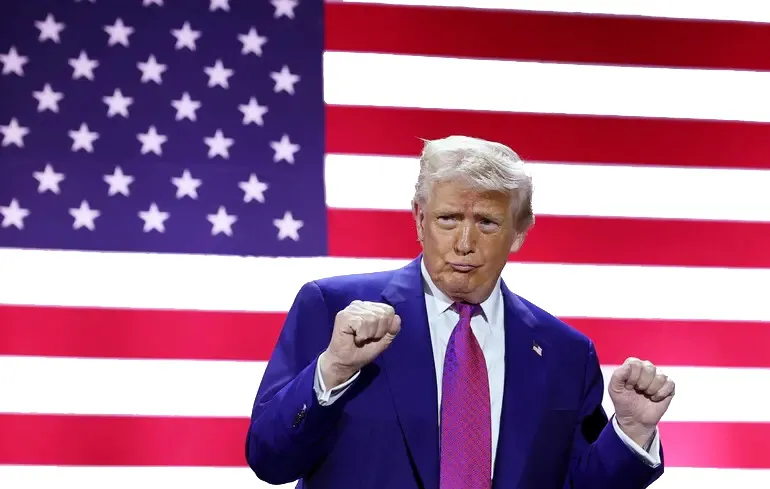
During the recent tour of the Gulf countries the U.S. President Donald Trump once again drew attention with his tendency to make public compliments about men's appearances. He called the President of Syria "young and attractive," the head of the UAE "wonderful," and described the Crown Prince of Saudi Arabia and the Emir of Qatar as "tall, handsome, and smart guys." Such statements, which are increasingly heard in Trump's speeches, raise questions about their motivation, and some experts see in this more than just diplomatic politeness, in particular his "desire to be liked."
Financial Times journalist Jemima Kelly analyzes this phenomenon in her column and reflects on whether these numerous comments indicate a deeper psychological basis. According to her observations, Trump's tendency to compliment on appearance extends not only to foreign leaders. During a visit to the White House of a Florida student basketball team, he called its members "tall" and "good guys." Even during the tribute to fallen police officers, Trump did not restrain himself from external characteristics: describing the son of one of the fallen, he stated that "the son is also handsome."
In an interview on Joe Rogan's podcast, Trump mentioned how during his first presidency he flew over Iraq aboard Air Force One with the "most beautiful people" he had ever seen. "They looked better than Tom Cruise," he said, emphasizing that for him they were "perfect specimens."
Trump has not hidden his interest in appearance since the 1990s. He owned the "Miss Universe" contest, often evaluated women based on physical parameters on Howard Stern's TV show, and in 2006, scandalously stated that if his daughter Ivanka were not his relative, he could date her.
This obsession with men's appearance has become more pronounced in recent years, and as psychologist Mary Trump – his niece – notes, such behavior may have a personal psychological basis. She points out that her father, Donald's older brother Fred Trump Jr., who died from alcohol dependence at age 42, was also the subject of similar comments. In her book "The Art of the Deal," Trump called him "extremely handsome." According to Mary, compliments about her father contained a note of superiority: as if saying, "he was a loser, but at least handsome."
According to Mary Trump, such manifestations may be an attempt to satisfy the U.S. president's need for approval. "He has charisma and it is very important for him to be liked by people," she said. At the same time, she notes that Trump uses compliments as a social tool – a way to establish contact without having a deeper understanding of the interlocutor. "It's superficial but effective," she explains.
Compliments can also serve as a means of demonstrating dominance: the one who praises seems to occupy a higher position. Trump mostly uses this tactic in a positive, "friendly" context. During meetings with Volodymyr Zelensky or South African President Cyril Ramaphosa, who voiced critical positions, such words did not come from him. As Mary Trump noted, "he will not compliment those he wants to humiliate."
Kelly believes that besides his impulsive manner of communication, behind this behavior lies a desire to create his own reality where he is a star, and others are "perfect" secondary characters selected "from the central casting."
"Partly, this is explained by Trump's tendency to say everything that comes to mind. But it is also about making himself feel good – Trump doesn't just want to compliment handsome men, he wants to surround himself with them," the author summarized.