Decentralisation of the power grid: how wind energy benefits Ukraine during the war

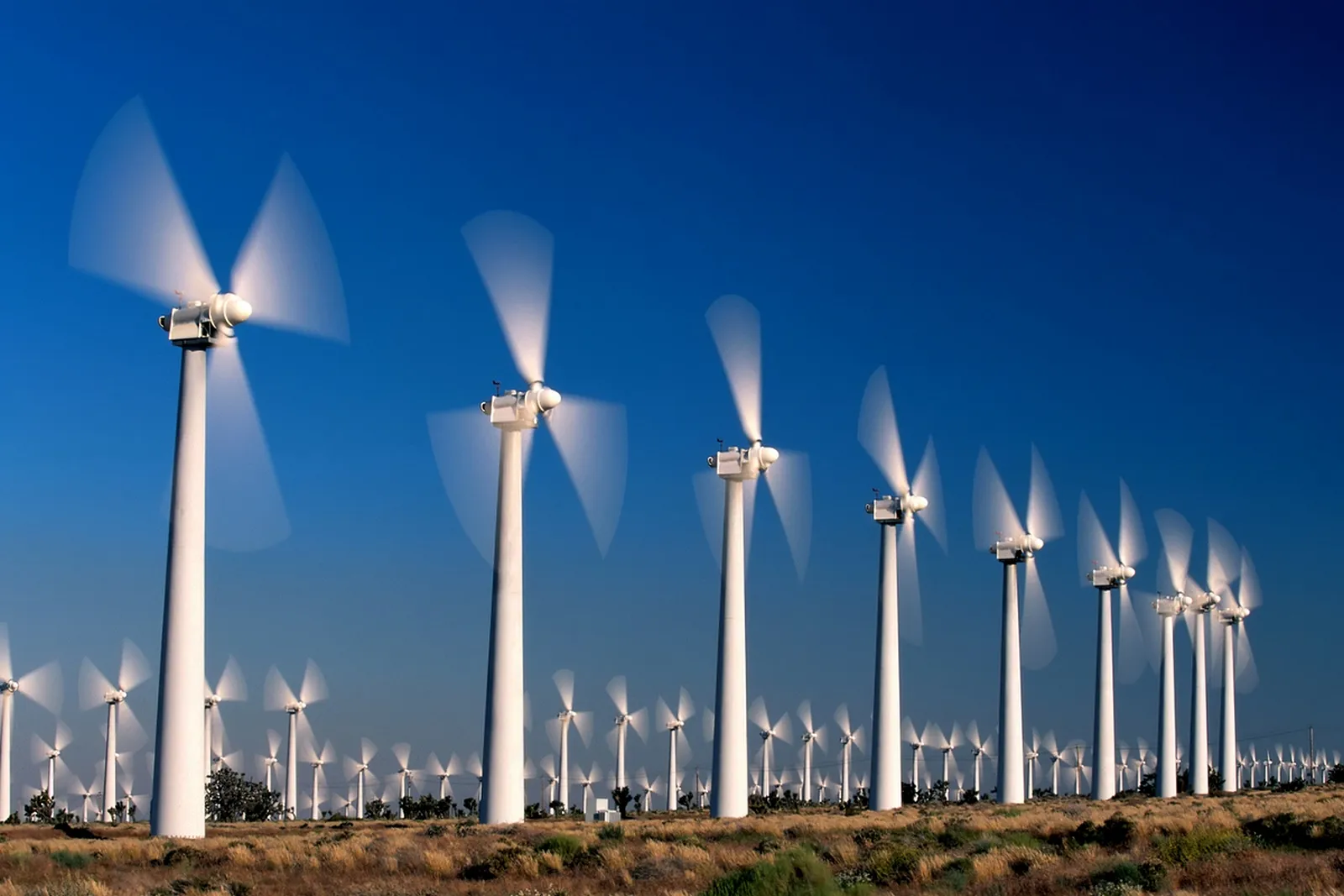
The full-scale war has served as a stress test for Ukraine’s power grid – and at the same time has laid bare one of its main structural vulnerabilities: excessive centralisation. Massive enemy attacks on large power stations and the main transmission infrastructure have shown just how risky a model reliant on a few key generation hubs and long transmission lines really is.
Ukrainian News reports that in response to these challenges, a different approach is gradually taking shape in Ukraine – decentralised generation, as close to the consumer as possible. And wind energy is playing an increasingly prominent role in this transformation.
Why wind energy is beneficial for Ukraine during the war
The professional discussion is focused on accelerating the construction of wind farms. This is discussed by Andriy Zhupanin, Member of Parliament and Deputy Chair of the Parliamentary Committee on Energy, and Andriy Kharchenko, Director of the Energy Research Centre.
This concerns not only projects planned before 2022, but also new initiatives being implemented amidst a full-scale war. At the same time, the sector’s economy itself is changing: some wind farms are gradually moving away from the ‘green tariff’ system and transitioning to the competitive electricity market.
Whereas previously investors had a guaranteed price, they now operate within a market model where revenue depends on generation times and current market conditions.
Why wind?
The key argument increasingly cited by experts is that wind generation integrates better into the power system than solar – particularly in conditions of high volatility.
This is primarily due to a more consistent output profile. Wind generation tends to occur during hours when electricity prices are higher, which reduces the load on the system’s balancing and improves economic efficiency.
That is precisely why, according to Andrii Kharchenko, wind power looks more promising as a business on an industrial scale:
“A lot depends on the cost of implementing the project: for example, whether a line needs to be laid from the wind turbines to the nearest substation over 40 or 120 km – this has a significant impact on the economics. In other words, access to grid infrastructure remains the key factor.
However, when it comes to the Ukrainian power system as a whole and on an industrial scale, I have much greater faith in wind energy than in solar. It is a business that will grow.”
At the same time, investors face systemic constraints: complex approval procedures, environmental requirements and the need for constant communication with local communities.
Transcarpathia — a new hub for wind energy development
One of the key market players remains the management company ‘Wind Parks of Ukraine’, which has over 15 years’ experience in the sector. Following the outbreak of full-scale war, the company relocated its operations from Donetsk Oblast to Zakarpattia – a region that is gradually becoming a new growth hub for renewable energy.
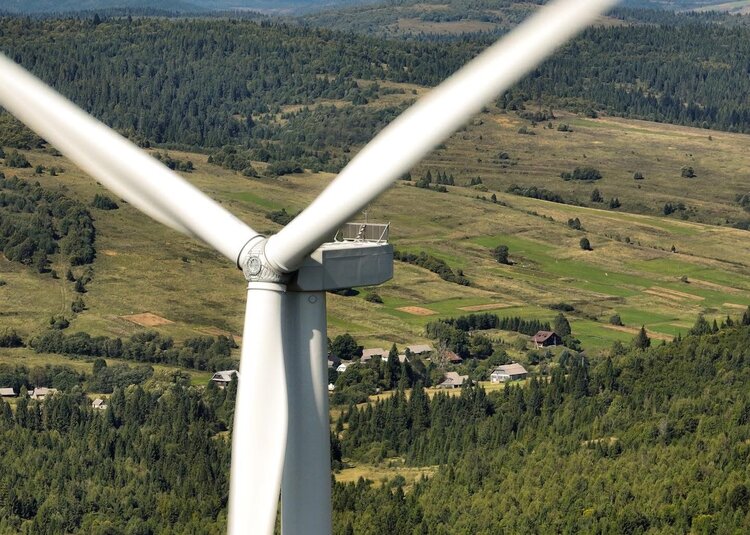
The company’s first project in the region was implemented in the Nyzhniovoritska community. The wind farm consists of 16 turbines manufactured by the Ukrainian company ‘Friendly Wind Technologies’, with a total capacity of 80.8 MW, and is already fully connected to Ukraine’s integrated power grid.
“Since the launch of the first turbine, the plant has already fed over 70 million kWh of electricity into the grid. In the long term, the plant’s capacity will be sufficient to supply electricity to around 50,000 households annually, which meets the needs of an average Ukrainian town,” the company reports.
However, the development of new energy projects is not without public debate – especially in regions where such facilities are appearing for the first time.
As the company’s CEO, Vladislav Yeremenko, explains, communication is key:
“This is often linked to myths or a lack of awareness. That is why we are constantly working with local communities, explaining how modern wind turbines work and what environmental standards are applied. Our experience shows that, following an open dialogue, most people begin to view such projects as an opportunity for regional development. Although, of course, there are also a certain number of people who deliberately oppose such initiatives.”
The changes currently taking place in Ukraine’s energy sector indicate a gradual transition from a centralised model to a more flexible, geographically distributed system.
This transformation is driven not only by security challenges but also by economic factors: it helps reduce systemic risks, improve resilience to attacks, minimise transmission losses and speed up recovery following infrastructure damage.
In this new configuration, wind energy is gradually becoming one of the key elements – thanks to a combination of scalability, a relatively consistent generation profile and the ability to operate effectively in market conditions.