A non-crumbly, non-sticky Easter cake glaze: 6 recipes

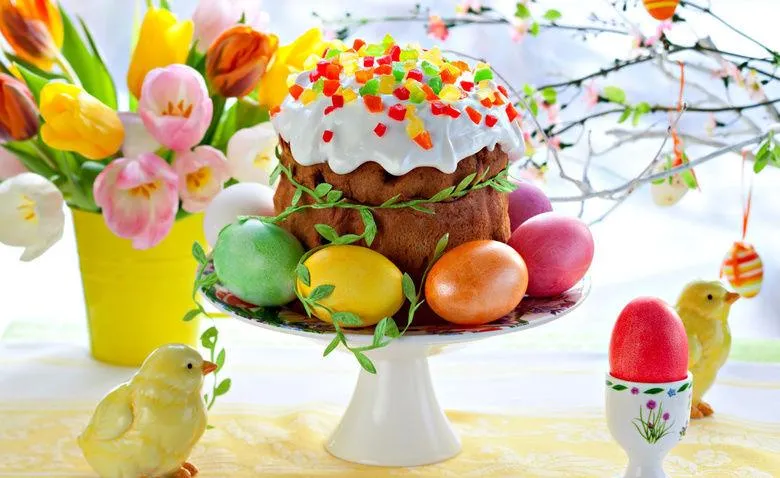
ThePublic has put together a selection of recipes for Easter cake icing that holds its shape well, doesn’t crumble and doesn’t flake off.
In the run-up to the holiday, home cooks are often looking not just for a tasty, but specifically a reliable Easter cake glaze – one that doesn’t stick to your hands, doesn’t crack once set, and doesn’t crumble when sliced. The recipes provided offer several options that differ in ingredients, texture and application method.
Which icing to choose for Easter cake
If you want a classic option, you can make an egg white icing. For this, take 100 grams of icing sugar, one cold egg white and 2 grams of citric acid or 1 teaspoon of lemon juice. Beat the egg white with a mixer, starting on a low speed and then increasing to high, gradually adding the icing sugar and citric acid. The mixture should become smooth, shiny and uniform. Apply this icing immediately, before it starts to dry out.
Another egg white option, which also sets well, is made using sugar syrup. For this, you will need 150 grams of sugar, 40 grams of water and 55 grams of egg white. Boil the syrup over a low heat for about 7 minutes from the moment it comes to the boil, whilst separately whisking the chilled egg whites until stiff peaks form. Then pour the syrup in a thin stream into the egg white mixture and beat for another 5–7 minutes until the icing becomes thick and glossy. If it takes a long time to set, the Easter cake can be dried slightly in the oven at a temperature of 90–110 degrees.
The most popular option for those who want a glaze without raw eggs is a gelatine-based one. One recipe calls for 5 grams of gelatine, 2 tablespoons of water for soaking, 130 grams of sugar, 70 grams of water for the syrup, 1 tablespoon of powdered milk and vanilla to taste. Leave the gelatine to swell, boil the syrup from water and sugar separately, then add the gelatine, powdered milk and vanilla, and beat everything with a mixer for 3–4 minutes. This glaze must be used immediately after beating: after about 20 minutes it stops sticking, and after 1.5–2 hours it stabilises well.
There is also a simpler gelatine recipe. For this, take 1 teaspoon or 5 grams of gelatine, 6 tablespoons of water, a glass of sugar and a pinch of citric acid. Pour 2 tablespoons of cold water over the gelatine; mix the remaining water with the sugar and citric acid and heat until completely dissolved. Add the swollen gelatine to the hot syrup, then whisk the mixture for about 3 minutes until it forms a white foam. It should be applied while still warm, otherwise it will set quickly.
Another version of gelatine glaze is made with citrus juice. For this, you will need 5 grams of gelatine, 25 millilitres of water, 50 millilitres of fresh orange or lemon juice, and 125 grams of sugar. Leave the gelatine to swell for 10–15 minutes, bring the juice and sugar to the boil, then add the gelatine, cool the mixture to room temperature and whisk. The thickness can be adjusted by the duration of whisking: if you want a runnier consistency, whisk for less time; if you want a thicker texture, whisk for longer. Apply this glaze to cold Easter cakes and decorate immediately.
For those who prefer a sweeter and creamier texture, a glaze made from condensed and powdered milk is ideal. You’ll need 30g of powdered milk and 60g of condensed milk. First, mix the mixture with a spoon until smooth, then beat with a mixer for about 3 minutes, gradually increasing the speed. This icing should also be prepared just before application, as it sets quickly. It has a pleasant creamy hue, does not crumble and does not stick once set.
White chocolate icing deserves a special mention. For this, take 100 grams of chocolate, 2 tablespoons of milk and 170 grams of icing sugar. Melt the chocolate in a bain-marie, bring the milk and icing sugar to the boil separately, then combine the two mixtures. This glaze should only be applied to completely cooled Easter cakes.
Another handy recipe is a marshmallow and white chocolate glaze. For this, you’ll need 200 grams of white chocolate, 4 tablespoons of milk and 100 grams of marshmallows. Heat the chocolate with the milk, add the marshmallows and heat briefly in the microwave several times, stirring each time, until the mixture becomes fluffy and smooth. This icing turns out shiny, elastic and non-sticky, but you need to decorate the Easter cake quickly, as it sets quickly too.
For those who want the simplest icing without whipping, there is a recipe using icing sugar and orange juice. You’ll need 300g of icing sugar, 43g of orange juice and the zest of two oranges. Simply whisk everything together until smooth, adjusting the consistency with juice or icing sugar. This icing sets, doesn’t stick to your hands and has a delicate citrus aroma.
Most types of icing are best applied to a cooled Easter cake, otherwise it may run. If the icing has already been applied but remains sticky, you can dry the cake slightly in the oven at a low temperature or dust it with powdered milk through a sieve. And if you want attractive drips, the icing should be made a little thinner.