The Russians are attacking Ukraine using bombers previously supplied to it: what is known about the Tu-160

Зміст
- Ukraine handed over a Tu-160 to Russia: how it happened
- Why Ukraine did not keep the Tu-160
- What problems does Russia have with the Tu-160?
- How many Tu-160s does Russia have, and how have the airfield strikes affected this?
- Russia is attempting to resume production of the Tu-160
- What weapons does the Tu-160 carry?
Ukraine handed over a Tu-160 to Russia: how it happened
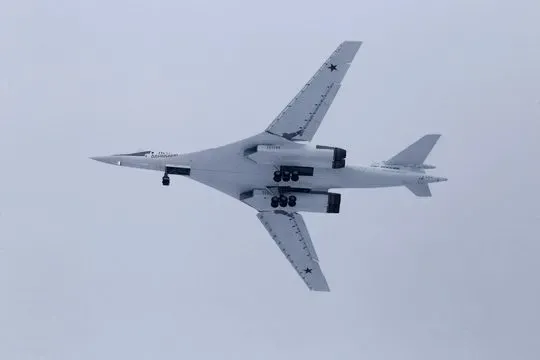
The Tu-160 is an intercontinental supersonic strategic bomber and missile carrier with variable-sweep wings.
Development of the aircraft began in the USSR around 1967. The Tu-160 made its maiden flight on 18 December 1981.
Following the collapse of the Soviet Union, Ukraine received 19 Tu-160 aircraft, which were based in Pryluky, as well as 21 Tu-95MS aircraft at the Uzyn airbase.
On 23 February 2000, Ukraine completed the transfer of strategic bombers and around 600 cruise missiles to Russia. The equipment was subsequently redeployed to Engels.
The handover took place in exchange for the repayment of approximately $285 million in gas debt and the provision of airfield equipment. The relevant agreement was signed in Yalta in the autumn of 1999 by Presidents Leonid Kuchma and Boris Yeltsin, as well as Prime Ministers Valery Pustovoytenko and Vladimir Putin.
According to the ‘Schemes’ project, Ukraine transferred eight Tu-160 bombers to Russia. Six of them remain in service with the Russian army today.
Commenting on the journalists’ investigation, Leonid Kuchma stated that at the time the weapons were not handed over to an enemy, but to a state recognised as an ally. He also noted that following the conflict over Tuzla, such a decision would no longer have been made.
According to Ukraine’s second president, strategic aviation would hardly have helped the state during a full-scale invasion due to the capabilities of Russian air defences and the vulnerability of the aircraft themselves.
Why Ukraine did not keep the Tu-160
According to Defence Express, citing a 1995 issue of the magazine ‘Aviation and Time’, one of the main problems was a shortage of personnel.
Only 25% of the flight crew and 60% of the technical staff had sworn allegiance to Ukraine.
Further difficulties arose after the Tupolev Design Bureau refused to fulfil its obligations regarding the maintenance of the Tu-160 for the Ukrainian Air Force.
Furthermore, the military and political leadership at the time believed that Ukraine lacked the necessary training grounds for training crews of such aircraft and for the missions for which they would be required.
What problems does Russia have with the Tu-160?
Despite the fact that the Tu-160 is capable of carrying up to 12 cruise missiles, the Russian military more often uses the Tu-95MS, which carries between six and eight missiles.
According to Defence Express, it previously took 64 man-hours of work and between 15 and 20 specialised vehicles to prepare a single Tu-160 for take-off.
Among the problems encountered in the early years of operation were the difficult start-up of the NK-32 engines and failures of the ‘Baikal’ defence system, which included electronic warfare equipment.
Defence Express suggests that the reduction in the use of the Tu-160 may be linked to a desire to preserve the service life of these aircraft.
How many Tu-160s does Russia have, and how have the airfield strikes affected this?
According to Defence Express estimates, Russia has around 16 Tu-160 aircraft in various states of operational readiness.
Following the strikes on Engels airbase in December 2022, the number of aircraft at this airfield decreased.
As of July 2023, 11 Tu-160s were based there, and by October of that year, there were four.
Following further attacks on Russian airfields, part of the strategic aviation fleet was relocated to other bases, notably the Olenya airbase in the Murmansk region.
Some aircraft are also stationed at the Gorbunov Kazan Aviation Plant, where strategic aircraft are manufactured and repaired.
Russia is attempting to resume production of the Tu-160
The Tu-160 was last modernised in 2022.
On 12 January 2022, the modernised Tu-160M2, manufactured at the Kazan Aviation Plant, made its maiden flight.
Under a contract worth 160 billion roubles, the Tupolev Corporation is to deliver ten new Tu-160M2s to the Russian long-range aviation force by 2027.
Russia’s Centre for Analysis of Strategies and Technologies reported that Soviet-era components were used in the production process.
At the same time, Defence Express notes that for the serial production of such aircraft, Russia has to rebuild the production chain practically from scratch.
What weapons does the Tu-160 carry?
The Tu-160 was originally designed as a carrier for long-range cruise missiles with nuclear warheads.
Today, the aircraft can deploy X-555 missiles to strike various types of land and sea targets. It was these missiles that Russia used during its attacks on Ukraine, particularly in late April and early May 2023.
The Tu-160’s maximum speed is 2,200 kilometres per hour, with a cruising speed of 850 kilometres per hour.
Its maximum range without refuelling is 13,950 kilometres, and its practical range is up to 12,300 kilometres. The flight duration can be up to 25 hours.
The aircraft is also capable of carrying up to 24 Kh-15S aeroballistic missiles.
Following special conversion, the Tu-160 can be equipped with bombs weighing up to 40,000 kilograms in total, single-use bomb cassettes, sea mines and other types of weaponry.