What Donald Trump's goals for Iran might be

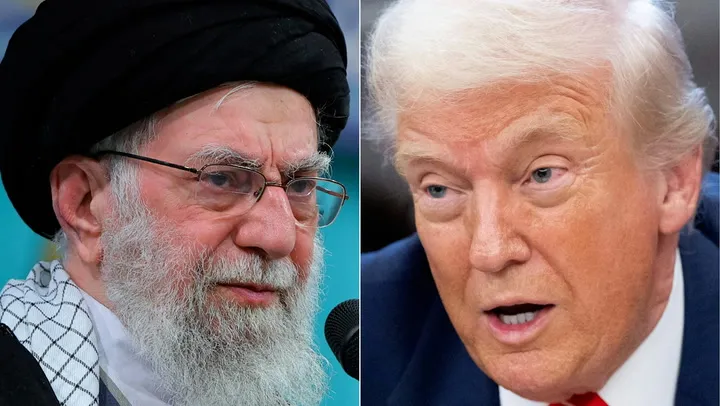
Donald Trump sent warships and dozens of fighter jets to the Middle East and said he would make a decision within 10 or 15 days on possible strikes against Iran if no nuclear deal was reached.
Axios reported that Trump was presented with a number of military options, including a direct strike on Iran's supreme leader Ali Khamenei. Other possible scenarios include strikes on the Islamic Revolutionary Guard Corps or Iran's missile programme.
Trump has repeatedly stated that he prefers the diplomatic route. According to him, the agreement should cover not only the nuclear programme, but also ballistic missiles and support for Hezbollah and Hamas. Iran refuses to make such concessions.
The US and Iran have held two rounds of indirect talks in Oman and Switzerland. They have not brought the parties' positions closer together, and a new meeting is planned in Switzerland.
Trump's special envoy Steve Witkoff said the president is surprised that Iran has not capitulated amid a massive build-up of American military presence.
Middle East Institute analyst Alex Vatanka believes that the Trump administration may seek a limited conflict that would shift the balance of power without dragging the US into a protracted war. According to him, Iran expects a short military campaign with a powerful effect, aimed at undermining the country's missile infrastructure and deterrence capabilities.
Trump insists that US forces have destroyed Iran's nuclear programme by striking uranium enrichment facilities. He has also repeatedly threatened to intervene to support the Iranian people after protests in January were brutally suppressed.
The US president says regime change in Tehran could promote peace in the region. At the same time, Democrats in Congress are urging him to consult with lawmakers, as Congress has the power to declare war.
The US currently has 13 warships in the region, including the aircraft carrier USS Abraham Lincoln, nine destroyers and three frigates. The aircraft carrier USS Gerald Ford is heading for the Mediterranean Sea. In addition to the aircraft on board the carriers, the US has sent dozens of fighter jets to the region, and tens of thousands of American troops are stationed in the Middle East.
Former Council on Foreign Relations President Richard Haas noted that it is difficult to predict how a conflict of any scale would affect the Iranian government. According to him, it could either weaken or strengthen the regime, and it is unclear what might replace it.
US Secretary of State Marco Rubio said during Senate hearings that no one knows what will happen if Iran's supreme leader falls, except for hopes for a transition within the existing system.
The Persian Gulf monarchies that maintain relations with Iran have warned Washington about the risks of intervention, fearing retaliation and destabilisation of the region.
Mona Yakubian, a representative of the Centre for Strategic and International Studies, noted that Iran is a more complex state than Venezuela. According to her, a strike against the leadership could cause serious internal instability.