A new body, but the same old methods – lawyers complain about the unlawful seizure of property and the failure of the ESBU to comply with court orders

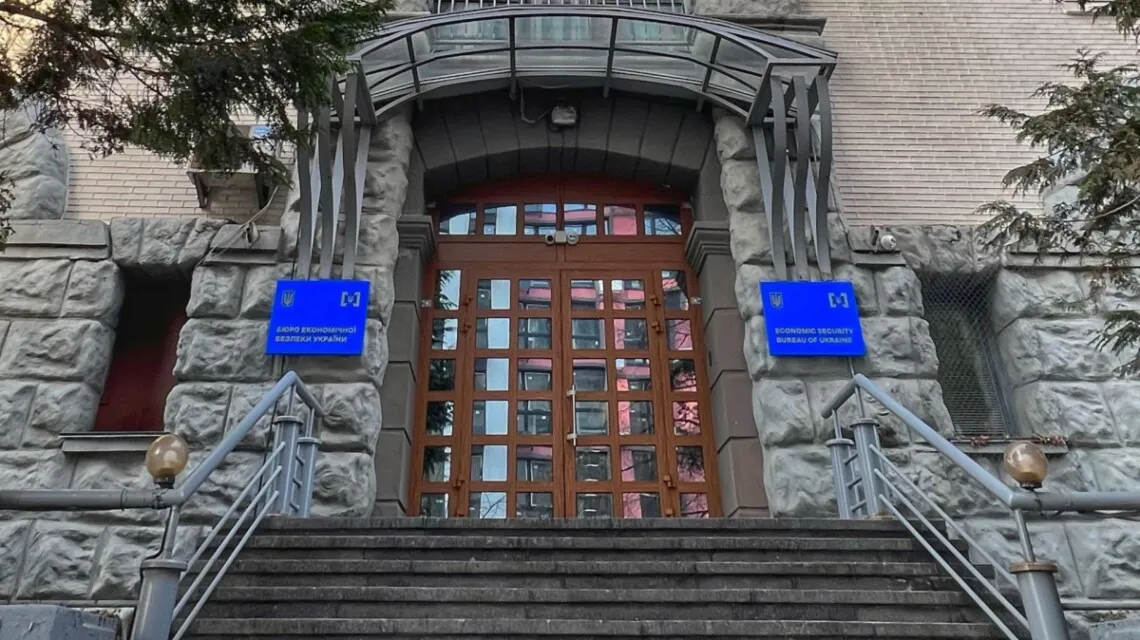
“It is not enough to win the court case against the Economic Security Bureau regarding the seizure of assets. We still need to convince the Economic Security Bureau of the ‘authenticity and reliability’ of the investigating judge’s ruling,” wrote the lawyer, adding that the Economic Security Bureau is a new body, but one that uses outdated language. The lawyer also added that, as the Economic Security Bureau positions itself as a progressive body, it would be good to see this put into practice.
In the comments on Tereshchenko’s post, other lawyers expressed their support, noting that this is a fairly common problem. Furthermore, as Volodymyr Mukhin emphasised, the failure by a law enforcement agency to return property constitutes an offence under several articles of the Criminal Code.
As another example of unlawful procedural actions by ESBU detectives, the lawyer cites the seizure of equipment from a company in contravention of a court order.
“The Shevchenkivskyi District Court of Kyiv is dispelling myths – today we received a ruling refusing the ESBU detectives’ request to seize the confiscated property – electronic equipment. The seizure took place in contravention of the ruling of the investigating judge, who had granted authorisation only in respect of specific documents. The reasoning deserves special attention: negative consequences for business operations, lack of connection to the subject of the investigation, and the National Security and Defence Council’s decision on a moratorium on unfounded inspections and interference…”, writes Denys Tereshchenko.
This concerns the seizure of electronics from Apple, Xiaomi, Sony and other well-known brands from warehouse premises, despite the court’s refusal to authorise such a procedural action.
“The court noted the lack of any connection between the seized property and the subject of the pre-trial investigation, the lack of any evidence linking the owner of the property to the alleged offences, as well as the disproportionate nature of the interference with property rights and the potential negative consequences for the entrepreneur’s business activities,” added Alertes Law Firm.
At the same time, LCF Law Group explains that the seizure of property often begins with a search: cash, equipment, telephones or documents are seized from the business, recognised as material evidence, and the court is then applied to for a seizure order. However, designating property as material evidence does not in itself prove that it is indeed such.
“Under the Code of Criminal Procedure, such property must be linked to a criminal offence: it must contain information relevant to the proceedings, preserve evidence of the offence, be an instrument of the crime, or be of unlawful origin. In cases involving the BEB, this distinction is often blurred. For a company, this can mean months without access to funds, accounts, equipment or documents even before the court has assessed the substance of the charges brought,” the lawyers emphasise.
Therefore, despite public statements by the Bureau’s director, Oleksandr Tsyvinskyi, regarding the introduction of new approaches and the priority given to protecting businesses, the same problems as those seen under his predecessors are increasingly being observed in the Bureau’s work: unjustified seizure of property, disregard for court rulings and delays in the return of assets. For entrepreneurs, this translates into very real losses – months of inactivity, frozen accounts and a lack of access to equipment and documents.
As previously reported by ThePublic, the Verkhovna Rada’s Temporary Investigative Commission concluded in its final report that the Economic Security Bureau of Ukraine has weak internal controls and is at risk of losing its institutional capacity.