What will the energy situation be like in the summer of 2026: what Ukrainians can expect

If Russia reduces the intensity of its attacks on the Ukrainian power grid this spring, the country will be able to get through the summer relatively smoothly without any large-scale blackouts. At the same time, there is a risk that the situation regarding power cuts in the summer of 2026 could become more complicated.
This was previously stated by the former chairman of the board of Ukrenergo, Volodymyr Kudrytskyi.
“If the Russians really lose their appetite for shelling, then I think we will be able to get through the summer without any major problems. I mean that there won’t be any catastrophic levels of power cuts. They may happen, but they won’t be as severe as, for example, in the summer of 2024,” said Kudritskyi.
Power cuts in the summer of 2026: forecast
At the same time, he said, another scenario is possible — a continuation of massive attacks on the energy infrastructure.
“In such a situation, we could face quite unpleasant power cuts during the summer heatwave. Once the flood season ends and, consequently, the water levels of the Dnipro and Dniester rivers drop, electricity generation at hydroelectric power stations (HPPs) will decrease. This usually happens after May. And so, when the summer heat sets in, HPPs have fewer resources to generate electricity because there is less water,” noted Kudritsky.
He also pointed out that nuclear power stations are currently in the phase of refuelling and maintenance. It is precisely then, in the event of intense attacks, that the Russians could create certain problems similar to those experienced in the summer of 2024.
There is little time to prepare for next winter
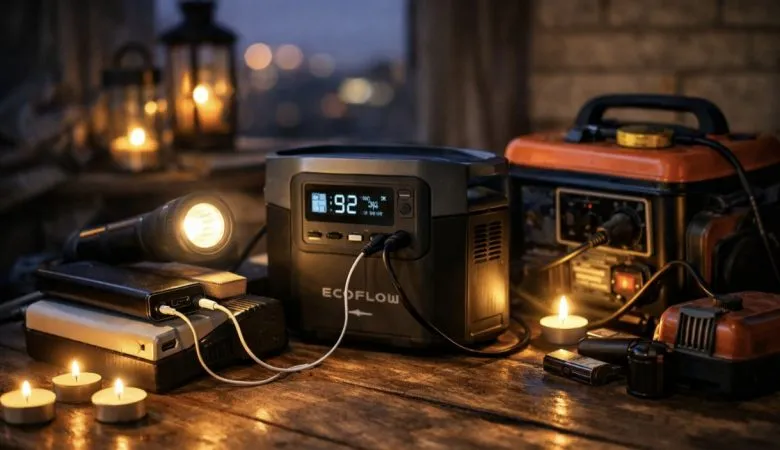
The former head of Ukrenergo emphasised that he does not share the view that there is a significant amount of time left before next winter. He noted that such a statement only makes sense from the perspective of domestic consumers, as they still have enough time to purchase a petrol generator for a private home or to arrange for charging stations such as EcoFlow and other means of self-sufficiency. In the expert’s view, only from this perspective is there truly time.
“But from the perspective of the power grid, the eight to nine months remaining are very little. And in fact, if we look at the timeframes required to roll out decentralised generation (which is six to ten months) and add them to today’s date, we realise that we are already running late to prepare as fully as possible for next winter. “As for the actual roll-out of this decentralised generation,” explained Kudritskyi.
What the government needs to do before the next heating season
According to him, one of the government’s key tasks should be the rapid deployment of new capacity throughout spring, summer and autumn, so that by the next heating season the country is better equipped with decentralised generation.
The expert also emphasised the importance of further deregulation, in particular simplifying connection to the regional power distribution companies’ and Ukrenergo’s networks.
“This will make life easier for investors, speed up the roll-out of new capacity and encourage new investment in the sector. It will cost the state nothing, yet it could really make a difference,” noted Kudritskyi.
Power cut schedules in Ukraine: expert forecasts
Expert Yuriy Korolchuk noted that Russia’s constant attacks on the power grid and the complexity of repairs are jeopardising the stability of supply in Ukraine.
The expert predicts that no significant improvement in the power situation should be expected even by the next heating season. Despite seasonal relief in spring and summer, the shortage will persist, and preparations for winter will depend entirely on the restoration of existing facilities. Alternative sources will only be able to power critical infrastructure, as the development of a new grid will continue until at least 2028.
According to expert Oleksandr Kharchenko, Ukraine’s power system remains stable, and as early as April–June, thanks to warm weather and low consumption, power cut schedules may be completely cancelled.
However, in July and August, the shortage will return due to the heat, the use of air conditioning, and scheduled maintenance of nuclear power plant units.
Kharchenko noted that, in the long term, a complete lifting of restrictions is possible only in three years under an optimistic scenario, and in 4–5 years under a realistic one, closer to 2030.