Ukraine is developing laser weapons to combat ‘suicide bombers’: a timeline has been announced

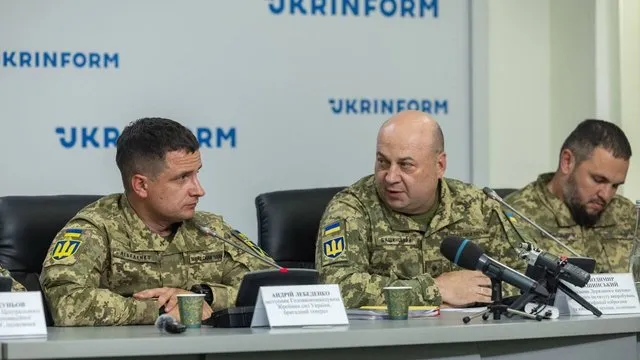
This was stated by Brigadier General Andriy Lebedenko, Deputy Commander-in-Chief of the Armed Forces of Ukraine, during a briefing, according to ‘Interfax-Ukraine’.
According to the general, teams within the Armed Forces and private Ukrainian companies are working simultaneously on laser weapons. Some prototypes are already capable of shooting down small FPV drones, and developers are now adapting the technology to combat larger strike drones.
Lebedenko expects that within two to three months, Ukraine will have systems capable of engaging aerial targets more effectively than machine guns.
However, he did not name the developers, specify the number of future systems, their power, range or potential areas of deployment. Nor does the statement imply that the laser systems will be rolled out on a large scale to all air defence units within two to three months. It is likely that this refers to the completion of the development of individual prototypes or their deployment for combat trials.
How a laser can shoot down a drone
The laser system directs a narrow, high-power beam at the target and maintains it on a specific area. The accumulated heat can damage the drone’s fuselage, engine, wing, camera, control system or other vital components.
The beam reaches the target almost instantly, but this does not mean that the drone is destroyed immediately. The system must accurately track the moving object and hold the beam on a single point for a certain period of time.
To do this, the laser system requires target detection capabilities, a precise guidance system, a powerful power source and a cooling system.
Why a laser is better than a machine gun
A mobile machine-gun fire team must take into account the drone’s speed and direction of movement, the distance to it, and the trajectory of the bullets. Some of the ammunition will inevitably miss the target.
A laser does not use bullets or missiles. As long as the system has sufficient power and does not overheat, it can deliver repeated strikes without the need to replenish conventional ammunition.
The main advantage is the potentially low cost per engagement. For example, the UK Ministry of Defence estimated the cost of using its DragonFire laser system at approximately £10 per engagement. By comparison, the cost of an anti-aircraft missile can run into hundreds of thousands of dollars.
This is precisely why laser systems are primarily seen as a means of combating large numbers of relatively cheap drones, against which it is not cost-effective to use expensive missiles.
Can lasers replace air defence systems?
Laser weapons will not be able to completely replace machine guns, anti-aircraft guns, missiles and electronic warfare systems.
According to the US Government Accountability Office, the effectiveness of lasers decreases with distance. Fog, rain, smoke, dust and cloud cover can weaken the beam and make it difficult to aim accurately.
Such systems require a direct line of sight to the target. They are also dependent on available electrical power and cooling capabilities. During a massive attack, a single laser can usually only engage individual targets in succession, whilst drones can approach simultaneously from different directions.
Therefore, laser systems should form an additional layer of Ukraine’s air defence, rather than serving as a universal replacement for all existing capabilities.
What is known about Ukraine’s ‘Trident’
The first official announcement regarding Ukrainian laser weapons was made back in December 2024. Vadym Sukharevskyi, then commander of the Unmanned Systems Forces, announced the ‘Trizub’ system, capable of engaging aerial targets at altitudes of over two kilometres. At the time, there was no independent confirmation of the claimed specifications, Reuters noted.
In the spring of 2026, the Ukrainian company Celebra Tech announced that the final stage of testing for the upgraded system was underway. According to the developers, the system can shoot down FPV drones at a range of around 800–900 metres, and reconnaissance drones at up to 1.5 kilometres.
To counter larger targets, such as ‘suicide drones’, the claimed range is said to reach five kilometres. The system also features automated target detection and tracking. These specifications were released by the manufacturer, but the results of the system’s full-scale combat deployment have not been publicly disclosed.
Lebedenko did not specify whether his latest statement referred specifically to the ‘Trident’. The general spoke of several projects and teams working both within the Armed Forces of Ukraine and in the private sector.
What this will mean for Ukraine
The introduction of effective laser systems will help to partially reduce the consumption of machine-gun ammunition and expensive anti-aircraft missiles. Such systems can strengthen the defence of military positions, energy facilities, depots and other critical infrastructure.
The most important test will be countering ‘shahids’. These are larger and more robust than FPV drones, fly over much greater distances and can vary their altitude. To destroy them, a more powerful beam, more precise tracking and a longer duration of laser engagement with the target are required.
Therefore, the two to three months mentioned should be viewed as the timeframe for the deployment or expansion of capabilities of individual systems, rather than as a promise to immediately cover the entire territory of Ukraine with laser weapons.
Follow us on Telegram.