The EU discussed energy measures following losses of €22 billion

This was reported by Ukrinform, citing a briefing in Brussels.
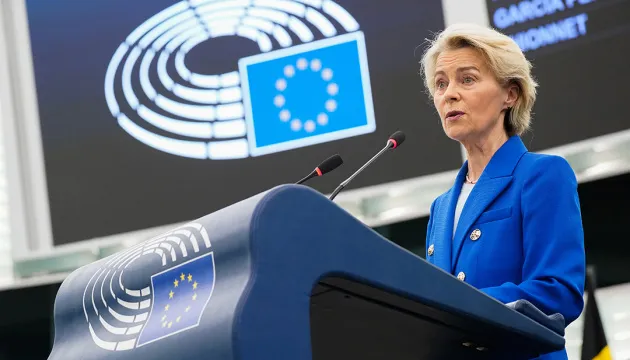
“Since the start of the conflict 44 days ago, our expenditure on fossil fuel imports has increased by over €22 billion,” said Ursula von der Leyen, highlighting the significant impact of the war on the EU economy.
According to her, even if hostilities were to end quickly, disruptions to energy supplies from the Persian Gulf would continue for some time. That is why the College of EU Commissioners discussed a package of crisis measures, which will be presented to the leaders of member states next week at an informal meeting of the European Council in Cyprus.
Among the priority measures, the European Commission highlights closer coordination between EU countries on gas procurement and the filling of storage facilities, as well as a coordinated emergency release of oil reserves. In Brussels, it is believed that this is necessary to ensure that individual anti-crisis measures taken by member states do not harm the single market.
The second area of focus was on approaches to protecting vulnerable groups and sectors of the economy from rising energy prices. The European Commission emphasises that such measures must be targeted and temporary. von der Leyen announced that the European Commission would share best practices on various support schemes with member states.
The third element of the discussion focused on ways to reduce demand for energy resources while respecting consumers’ freedom of choice.
At the same time, the European Commission is calling for structural solutions to reduce energy prices. This involves moving away from dependence on fossil fuels by shifting electricity generation to renewable sources and nuclear energy, as well as the rapid electrification of the economy.
According to von der Leyen, the electrification strategy will be presented by this summer.
She also noted that, as of today, over 70% of electricity in the EU is generated from renewable sources and nuclear energy. At the same time, the European Commission believes this figure can be improved, as “huge amounts of clean energy remain untapped”.
Separately, the European Commission President called on member states to make more active use of EU funds for investment in power grids, storage facilities and batteries, as well as to boost private investment in this sector.
As reported by ThePublic, the EU expects to return swiftly to the issue of €90 billion in aid for Ukraine following Viktor Orbán’s defeat in the Hungarian elections. Berlin has already stated that it hopes for a “very swift” unblocking of the package, which Budapest had previously blocked due to a dispute over the oil pipeline.
Follow us on Telegram