June was a record month in terms of the number of long-range drone strikes on Russia

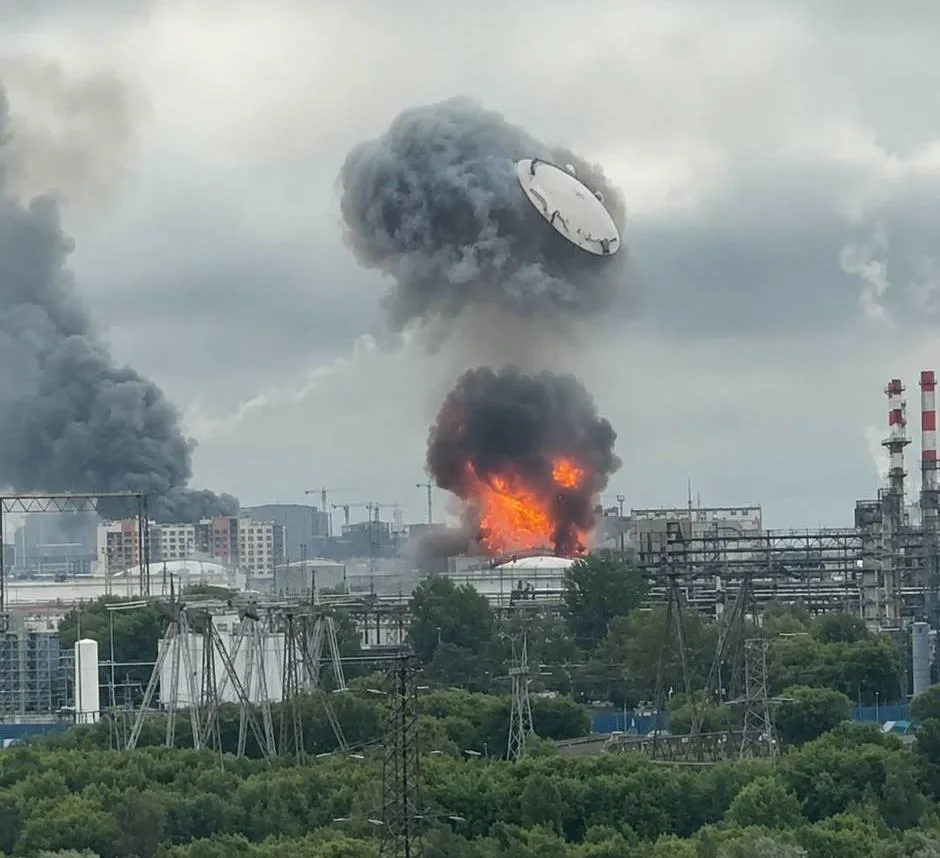
June was a record month in terms of the number of long-range drone strikes on Russian territory. Against this backdrop, the Russian Ministry of Defence reports an increasing number of Ukrainian drones allegedly shot down, whilst the consequences of the attacks in Russia are predominantly described as technical malfunctions or damage to infrastructure.
According to estimates by The Wall Street Journal and the Ukrainian foundation Come Back Alive, in May the Russian Ministry of Defence claimed to have intercepted 8,849 drones over Russian territory and occupied Crimea. By way of comparison, the figure stood at 3,676 in January and 2,504 in May 2025.
An analysis by Jane’s indicates that in June, the number of confirmed long-range strikes almost tripled compared with May — from 12 to 32.
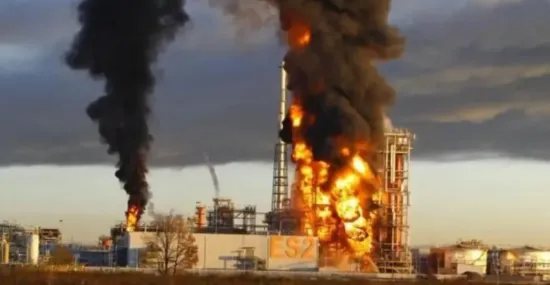
On the night of 26 June, the Russian Ministry of Defence claimed to have intercepted and destroyed 660 Ukrainian drones. This was the largest attack on Russian territory since the start of the full-scale war. Earlier, on the night of 18 June, the Russian ministry reported that 555 drones had been shot down during an attack that struck the Moscow oil refinery in Kapotnya.
According to Jane’s, the effectiveness of Ukrainian strikes has also increased. June accounted for around 35 per cent of all successful attacks on Russian territory this year.
Denis Shtilerman, co-founder and chief designer of the Ukrainian company Fire Point, noted that the large number of drones allows them to overwhelm the Russian air defence system.
“We simply deployed a large group of drones, and they overloaded the Russian air defence systems,” he said.
Michael Kofman, a military analyst at the Carnegie Endowment for International Peace, believes that the effectiveness of the attacks has increased thanks to technological advances and Ukraine’s growing capacity to launch massive strikes.
According to him, Russia’s vast territory has also become a factor complicating the work of its air defence forces. Air defence systems have to cover not only a 1,200-kilometre-long front line, but also large areas containing critical infrastructure.
Valery Romanenko, a former air defence officer and research fellow at the National Aviation University, noted that a large number of drones are being used to overwhelm the defence systems. According to him, the ‘Pantsir’ air defence system can engage no more than four targets at a time.
The initial waves of attacks allow the locations of Russian air defence systems to be identified, after which the routes for other drones to break through can be calculated.
Douglas Barry, a military and aerospace expert at the International Institute for Strategic Studies, noted that the Russian air defence system was primarily designed to counter aircraft, cruise missiles and ballistic missiles, whereas single-use drones have become a new and complex challenge for it.