What is electronic warfare (EW) and how does it protect against drones during wartime?

Зміст
- What is electronic warfare?
- What does the abbreviation REB stand for?
- How electronic warfare works
- What tasks does the Electronic Warfare (EW) unit carry out?
- How electronic warfare affects drones
- Can electronic warfare stop an FPV drone?
- Does electronic warfare help against the ‘Shaheeds’?
- Why electronic warfare does not guarantee complete protection
- Why electronic warfare is important in modern warfare
- What else is worth knowing about electronic warfare?
What is EW?
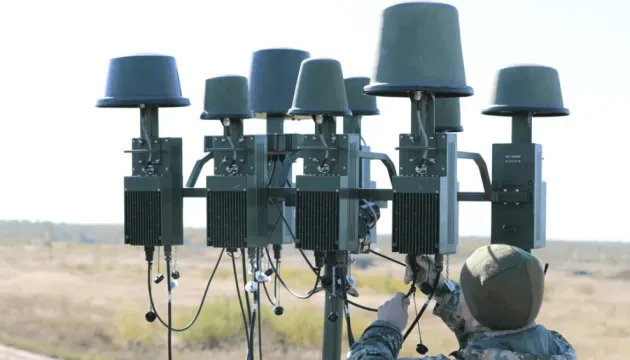
ELEC is electronic warfare. This term refers to a set of technologies, equipment and measures that use electromagnetic signals to protect one’s own systems and disrupt the enemy’s systems.
REB makes it possible to detect, analyse and disrupt the operation of the enemy’s communications, navigation and control systems.
A modern army relies heavily on these systems. Without communications, navigation and data transmission, the effectiveness of many types of weaponry is significantly reduced. This is precisely why the battle for control of the airwaves has become one of the key elements of modern warfare.
What does the abbreviation REB stand for?
The abbreviation REB stands for ‘radio-electronic warfare’.
Its main components include:
- electronic intelligence;
- electronic suppression;
- electronic defence.
Together, these enable not only the detection of enemy signals, but also the ability to interfere with them or protect one’s own systems from such interference.
How Electronic Warfare Works
Any drone, walkie-talkie, navigation system or other means of communication uses radio signals. Electronic warfare (EW) equipment can detect these signals and interfere with them.
The basic principles of electronic warfare are:
- creating radio jamming;
- detecting and analysing signals;
- disrupting navigation systems;
- protecting one’s own communications;
- disorienting the enemy’s electronic systems.
To put it simply, imagine a telephone conversation taking place in a very noisy room. If the noise becomes too loud, the people on the call can no longer hear one another. Some electronic countermeasures work in a similar way.
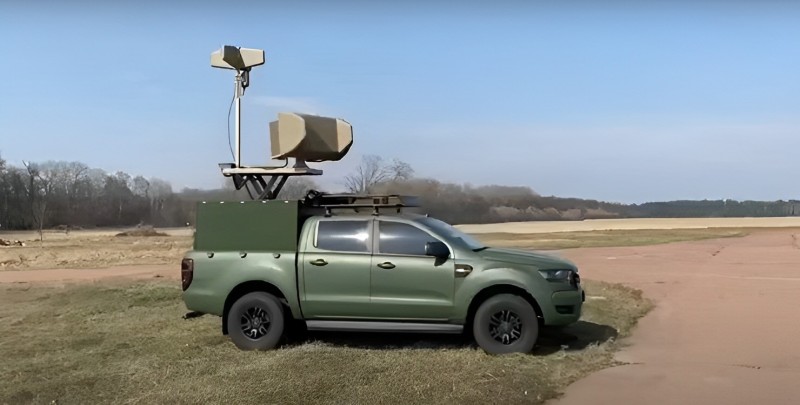
What tasks does electronic warfare (EW) perform?
Modern electronic warfare systems are used to:
- jamming enemy communications;
- countering unmanned aerial vehicles;
- protecting military units;
- disrupting navigation systems;
- providing cover for key facilities;
- gathering intelligence on enemy electronic systems.
Electronic warfare has taken on particular significance following the widespread use of drones on the battlefield.
How electronic warfare affects drones
Most drones, or unmanned aerial vehicles (UAVs), use communication channels to receive commands from the operator and transmit video signals.
Many models also rely on satellite navigation.
If an electronic warfare (EW) system successfully interferes with these channels, the drone may:
- lose contact with the operator;
- lose its navigation signal;
- enter emergency mode;
- return to its launch point;
- make an emergency landing.
The specific outcome depends on the type of drone and its software.
Can electronic warfare stop an FPV drone?
FPV drones have become one of the most serious threats on the modern battlefield.
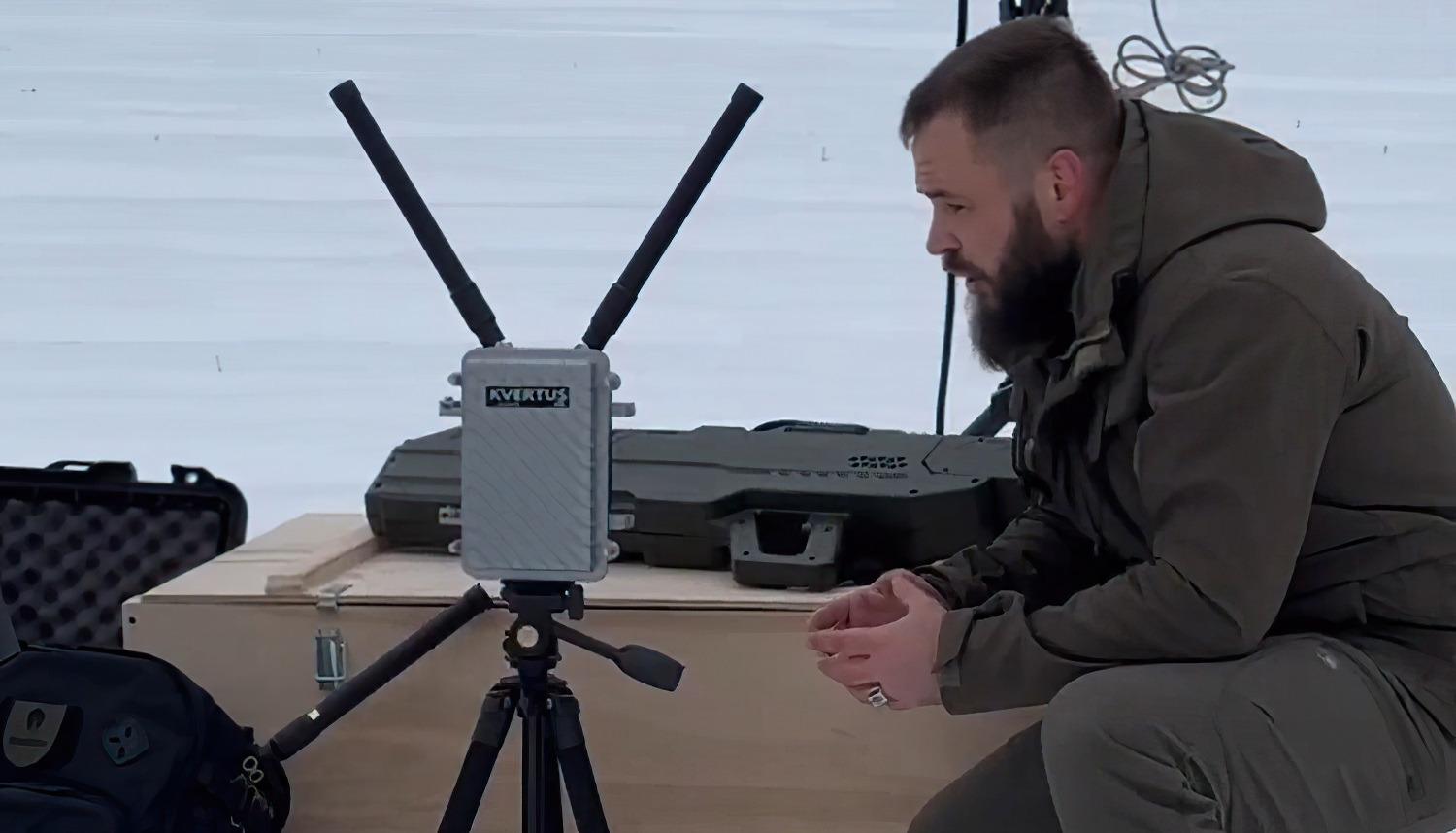
Electronic warfare (EW) systems can interfere with some of these drones by jamming their communication channels. However, their effectiveness depends on many factors: the drone’s operating frequency, distance, the power of the EW system, and the specific conditions of use.
This is precisely why the battle between drone manufacturers and developers of electronic warfare systems continues unabated.
Does electronic warfare help against ‘Shaheeds’?
Electronic warfare is one element of a multi-layered system for countering aerial threats.
Such systems can be used to interfere with the navigation and other electronic components of drones. At the same time, protection against attack drones is provided not only by electronic warfare systems, but also by other defence components, in particular air defence systems.
Why electronic warfare does not guarantee complete protection
Despite the important role of electronic warfare, no system can provide absolute protection against all threats.
‘There is currently a constant technological arms race on the front line: drones versus electronic warfare. It is a never-ending battle. Have they developed a secure drone? In no time at all, a new jammer is being designed to counter it. That is precisely why hardware alone solves nothing — the system that wins is the one capable of adapting to new threats literally on the fly,” explains a specialist from the electronic warfare unit with the call sign “Luki”.
That is precisely why modern warfare is a constant technological standoff between offensive and defensive capabilities.
Why Electronic Warfare is Important in Modern Warfare
Modern warfare relies heavily on technology. Drones, satellite navigation, digital communications and automated control systems have become commonplace on the battlefield.
Alongside unmanned aerial vehicles and guided bombs, electronic systems have become one of the key tools of modern warfare.
That is precisely why control over the electromagnetic spectrum often determines the success of individual operations and the effectiveness of units today.
Electronic warfare (EW) capabilities help to reduce the effectiveness of enemy drones, disrupt communications systems and enhance the security of our own forces.
What else is worth knowing about electronic warfare
What is electronic warfare in simple terms?
ELT stands for electronic warfare, which is a set of technologies and tools designed to interfere with communications, navigation and control systems.
How does electronic warfare work?
Electronic warfare systems detect, analyse and can jam the operation of the enemy’s electronic systems.
How does electronic warfare affect a drone?
Electronic warfare can disrupt a drone’s communication and navigation channels, causing it to lose control or change its operating mode.
How does electronic warfare differ from electronic intelligence?
Signal Intelligence (SIGINT) involves the search for and analysis of signals, whilst Electronic Warfare (EW) uses this information for active interference and defence.
Why is electronic warfare often discussed during wartime?
Because modern military operations rely heavily on drones, communications and electronic systems, the operation of which can be affected by electronic warfare measures.