The Cabinet of Ministers has postponed the road programme until the end of martial law

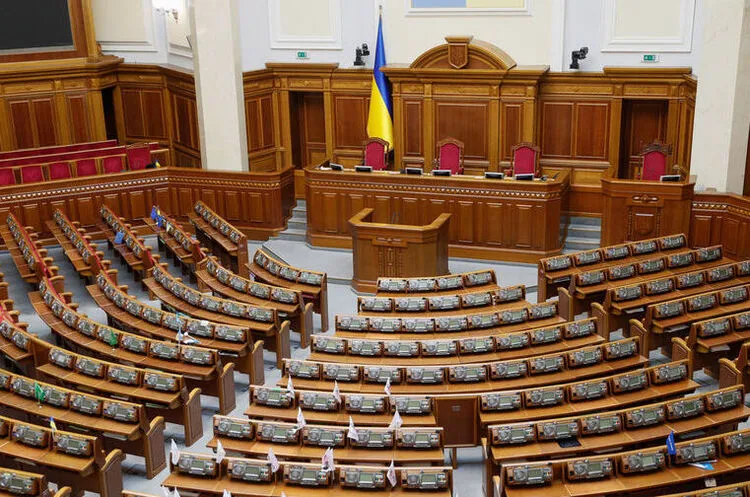
This was announced by Taras Melnychuk, the government’s representative in the Verkhovna Rada.
The Cabinet of Ministers has amended the operational plan for implementing Ukraine’s National Transport Strategy for 2025–2027.
This strategy covers the period up to 2030. It sets out the general directions for the development of the transport sector, in particular the road sector.
The amendments relate to Measure No. 38. It provides for the definition of the main objectives and measures of state policy in the road sector.
The outcome of this measure is to be the approval of the State Targeted Economic Programme for the Development of Public Roads.
The new deadline for implementation is within one year of the termination or lifting of martial law.
In other words, the government has tied the preparation of the major road programme not to a specific calendar date, but to the end of martial law in Ukraine.
What this means for the roads
This decision does not mean that road repairs in Ukraine will cease altogether.
It specifically concerns the approval of a separate state-funded programme for the development of public roads. Such a document is intended to define long-term priorities, a list of tasks, approaches to funding, and the development of the road network.
Routine road maintenance, emergency works, keeping roads passable, repairing critical sections, or works carried out under specific decisions may be carried out within the framework of other programmes, budgets and decisions.
In simple terms, the Cabinet of Ministers has not postponed all road works, but rather a major strategic plan for road development. This is to be prepared once martial law has been lifted or repealed, when the state will be able to plan road infrastructure for the longer term, taking post-war needs into account.
Why this matters
For communities, drivers and businesses, this means that a comprehensive state road development programme will not be introduced now, but after the end of martial law.
It is precisely such a programme that must answer the questions of which roads will be prioritised, which sections require development, where reconstruction is needed, how much money is required for this, and within what timeframe the work can be carried out.
While martial law remains in force, road policy effectively remains tied to wartime conditions: security, critical logistics, limited resources and priority needs.
Therefore, this decision is more about postponing strategic planning than about a complete halt to repairs.
As reported by ThePublic, the development of ‘Made in Ukraine’ manufacturing: the government is funding two industrial parks
Follow us on Telegram