The Cabinet of Ministers did not table a major tax package: what it approved instead

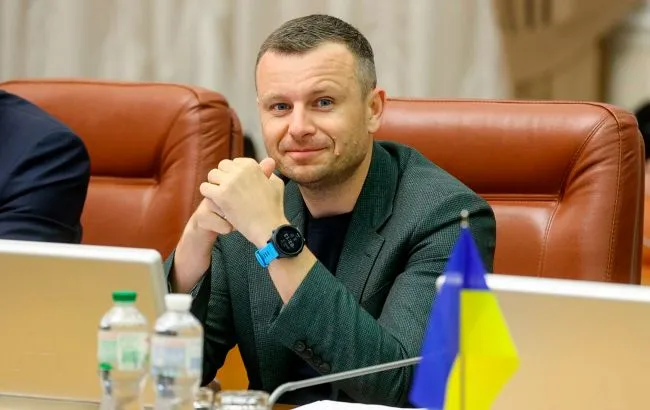
This was announced on Facebook by Ukraine’s Minister of Finance, Serhiy Marchenko.
Serhiy Marchenko stated that on 30 March, the government approved three draft laws developed by the Ministry of Finance.
According to him, these concern the regulation of taxation on income received via digital platforms and the introduction of international information exchange under the DAC7 standard, the taxation of international parcels starting from €0, as well as the extension of the military levy following the end of martial law.
The minister noted that this is part of the government’s systematic efforts to de-shadow the economy, ensure equal and fair competitive conditions, and finance the state’s key needs in the post-war period.
Marchenko also reported that the issues of taxing digital platforms and international parcels were developed in close dialogue with the business community, relevant associations and experts. According to him, dozens of consultations were held, the results of which took into account a number of proposals and formed a consolidated position on the introduction of transparent and predictable rules.
He emphasised separately that these changes form part of Ukraine’s fulfilment of its obligations within the framework of its European integration course.
What the draft laws on platforms, parcels and the military levy entail
The draft laws on digital platforms provide for the introduction in Ukraine of an international automatic exchange of information on income received through digital platforms, in accordance with OECD standards and the EU’s DAC7 Directive.
It is also proposed to introduce a taxation mechanism for individuals who receive income via digital platforms. The personal income tax rate will be 5% instead of the current 18%.
In this case, the platform itself is to act as the tax agent. The article notes that this simplifies administration for citizens. One-off non-commercial sales of personal items will not be subject to taxation if the annual income from such transactions does not exceed 2,000 euros.
According to the government’s assessment, this approach reduces the tax burden on the self-employed, encourages voluntary income declaration and helps to combat the shadow economy. The proposed changes are set to come into force on 1 January 2027.
As for international shipments, the proposed changes provide for the application of VAT to international parcels regardless of their value, following the model already in place in European Union countries.
VAT will be calculated automatically and included in the cost of the goods at the point of purchase on the e-commerce platform. At the same time, the tax exemption for non-commercial consignments worth up to €45 will remain in place.
It is noted that the implementation of these changes is intended to level the playing field and reduce the volume of ‘grey’ imports.
Regarding the military levy, Marchenko stated that its extension following the end of martial law is a necessary step dictated by the war. According to him, this decision is explained by the fact that the needs of the security and defence sector will remain significant, as well as the need to finance the country’s reconstruction.
The minister cited an estimate according to which the cost of rebuilding Ukraine amounts to approximately $588 billion.
What is known about VAT for some sole traders
Among the documents approved by the government, there is as yet no separate draft law on the introduction of VAT for some sole traders.
According to RBC-Ukraine, citing government sources, the Cabinet of Ministers plans to approve it separately and submit it to the Verkhovna Rada a little later.
Serhiy Marchenko himself confirmed this information. He stated that the draft law on VAT for certain sole traders is currently being coordinated and finalised with central executive authorities and will be submitted for approval in the near future.
The article also notes that in February, the International Monetary Fund lifted the preconditions for Ukraine’s new $8.1 billion loan programme. These concerned requirements regarding VAT for sole traders, customs duties on parcels, tax on digital platforms and the military levy.
Regarding VAT for sole traders, it is noted that an agreement has been reached to raise the threshold for its application from 1 million to 4 million hryvnias. Consequently, this will affect not 660,000 small business owners, but 257,000.
As a reminder, the Ministry of Finance of Ukraine has introduced new taxation rules under which tax authorities will be able to impose a 30% tax on suspicious financial transactions. This decision applies to legal entities, sole traders and even individuals. Read the article to find out how the new rules will affect business and who will be affected by the changes.