China helps Russia ramp up production of hypersonic missiles despite sanctions

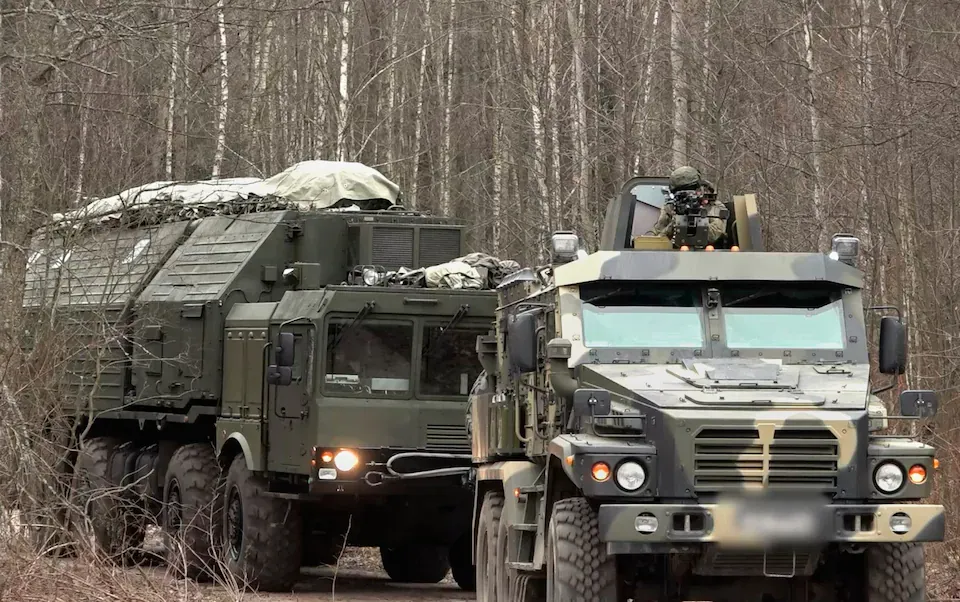
China is providing Russia with critical industrial equipment for the production of the latest types of weapons, including hypersonic missiles, which Vladimir Putin is using to intimidate the West. This includes machine tools, electronic components and measuring instruments that allow Russia to circumvent Western sanctions and accelerate military production, according to The Telegraph.
Earlier this month, Russian troops used an Oreshnik missile in a strike on Lviv, 65 kilometres from the Polish border. This hypersonic ballistic missile can reach speeds of around 8,000 miles per hour and carry up to six warheads that can strike different targets. Analysts estimate that it can reach targets in Europe in less than 20 minutes.
Journalistic investigations show that Russia uses specialised Chinese numerically controlled metalworking machines to manufacture Oreshnik warheads. One such carousel lathe was identified at a state-owned factory in Votkinsk, the Russian Federation's main rocket manufacturing enterprise, which is under sanctions from the United Kingdom, the United States, the EU and Japan. This is also where Iskander-M missiles and Topol-M intercontinental missiles are manufactured.
Overall, according to trade analysis, China has transferred at least $10.3 billion worth of technology and equipment to Russia. This includes microchips and memory boards worth at least $4.9 billion, which are used in high-precision weapons and Su-type fighter jets. Bearings worth $130 million, piezoelectric crystals for radars and electronic warfare systems worth nearly $97 million, and optical sights worth over $40 million were also supplied.
In the first three years of Russia's full-scale war against Ukraine, China exported at least $3.1 billion worth of machine tools to Russia. According to experts, it was access to the Chinese manufacturing market that became the key factor that allowed Moscow to maintain the pace of the war and increase the production of missiles and drones, in particular at sites in the Alabuga special economic zone, where analogues of Iranian Shahed drones are manufactured.
Analysts note that the Russian defence industry is most dependent on imports of high-precision machine tools and test equipment, including multimeters and oscilloscopes, which are necessary for testing electronics and guidance systems. Without access to Chinese supplies, experts believe that Russia would not be able to maintain its current level of military production.
At the same time, at a briefing on 29 January, Chinese Foreign Ministry spokesman Gao Jiaqun, commenting on The Daily Telegraph's publication about the alleged involvement of Chinese companies in strengthening Russia's missile capabilities, said that China is not using the Russian-Ukrainian conflict to its advantage and does not support the production of Russian missiles, including the Oreshnik.
According to the diplomat, Beijing's position on the war remains consistent and clear. China is not adding fuel to the fire and is not providing direct military assistance to either side. He stressed that accusations against China of actually supporting Russian aggression are an attempt to shift responsibility for the war onto China, which Beijing categorically rejects.
The Chinese Foreign Ministry also stressed that China remains neutral and is not joining Western sanctions against Russia, as it does not consider itself obliged to comply with them. At the same time, Beijing insists that its actions do not violate international law and are not intended to support the war.
Source and photo: The Telegraph.
China, Russia, Oreshnik, Putin, Beijing, Chinese Foreign Ministry