Chinese companies continue to supply drone components to Iran and Russia despite US sanctions

Stanislav Sereda
Stanislav Sereda Journalist
Chinese companies continue to supply drone components to Iran and Russia despite US sanctions
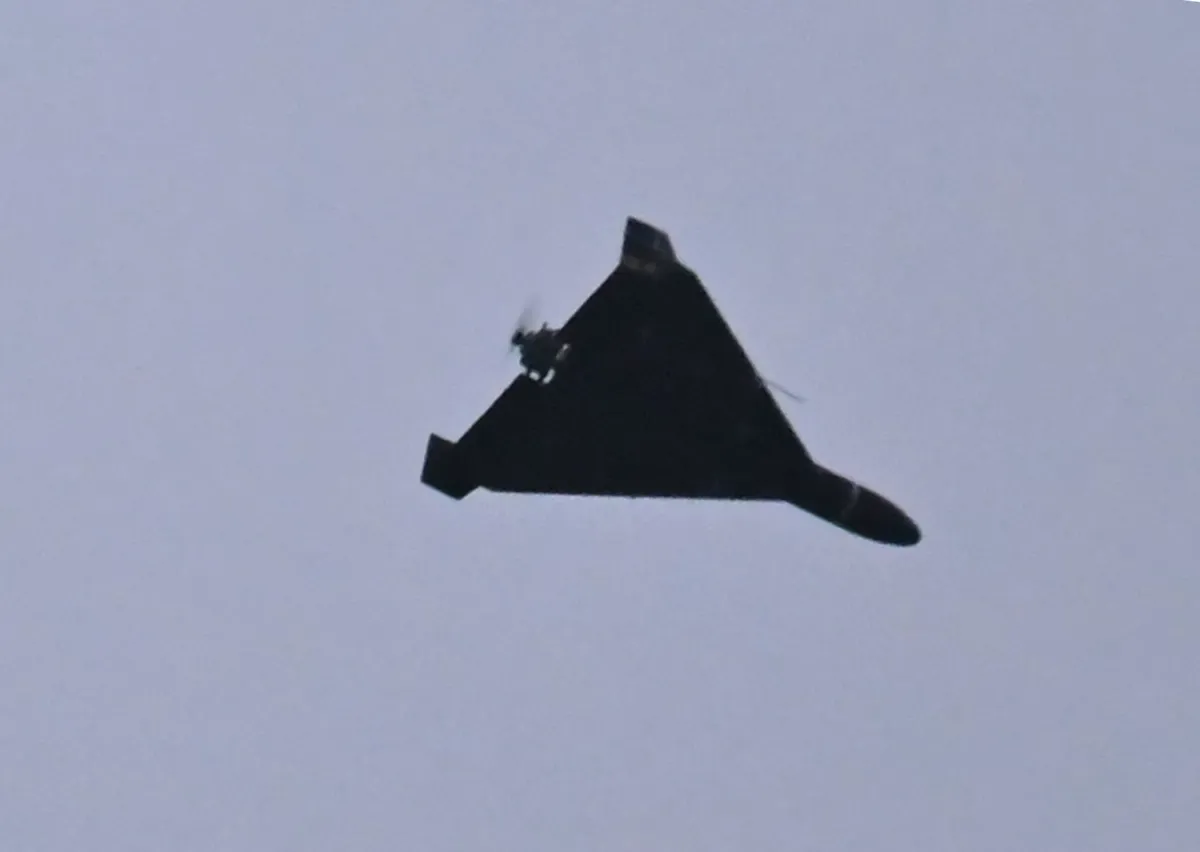
An Iranian-designed Shahed-136 over Kyiv during a Russian attack. Sergei Supinsky AFP Getty Images
The supply of dual-use goods from China to Iran and Russia continues, despite US restrictions. These include components that can be used in the manufacture of drones.

Chinese companies continue to supply Iran and Russia with dual-use goods that can be used in the manufacture of drones, despite US sanctions, reports The Wall Street Journal.

These goods include engines, batteries, microchips, fibre-optic cables and gyroscopes. According to Chinese customs data, the shipments consist of hundreds of containers.

Some companies are offering their products openly. In particular, Xiamen Victory Technology sent out letters offering to sell Limbach L550 engines, which are used in Shahed-type drones. These engines are banned from export to Iran and Russia.

Previously, investigations revealed that some components were supplied via intermediaries in China and Hong Kong. They used front companies to conceal the final recipient.

Over time, the production of such components has increasingly taken place directly in China. This makes it more difficult to control their distribution.

Analysts note that drones are made up of readily available parts that easily enter global supply chains. This makes them harder to trace compared to more complex types of weaponry.

According to researchers, the proportion of Chinese-made components in drones used by Iran and Russia is increasing. This is also confirmed by analyses of drone wreckage.

There has also been a rise in exports from China to Russia of fibre-optic cables and lithium-ion batteries.

Beijing officially states that it adheres to its own rules on the control of dual-use goods exports.

The US notes that it is difficult to completely halt such supplies, so it is focusing on restricting the financial resources of Iran and Russia. 
ThePublic on Telegram

Share tittle
Economy
"Ukrnafta" is to build a new gas-fired combined heat and power plant with the support of the EBRD
Economy

"Ukrnafta" is to build a new gas-fired combined heat and power plant with the support of the EBRD

"Ukrnafta", in partnership with the European Bank for Reconstruction and Development, is preparing to build a modern combined-cycle gas-fired combined heat and power plant with a capacity of around 250 MW.

21.07.2026
The IMF has approved a $690 million tranche for Ukraine: the conditions
Economy

The IMF has approved a $690 million tranche for Ukraine: the conditions

The Executive Board of the International Monetary Fund has completed the first review of the four-year Extended Fund Facility programme for Ukraine. The decision paves the way for the immediate release of approximately $690 million.

21.07.2026
The cost of living in Ukraine: Getmantsev reveals the actual figure
Economy

The cost of living in Ukraine: Getmantsev reveals the actual figure

The real cost of living in Ukraine should be at least 11,000–12,000 hryvnias per month. However, there are currently no plans to raise it to this level in the near future due to the constraints on the state budget.

20.07.2026
Electricity tariffs from 1 August: how much will a kWh cost?
Economy

Electricity tariffs from 1 August: how much will a kWh cost?

From 1 August 2026, the electricity tariff for households will remain unchanged. Household consumers will continue to pay 4.32 hryvnias per kilowatt-hour, regardless of their monthly consumption.

20.07.2026
The National Bank has increased its foreign currency sales to over a billion dollars
Economy

The National Bank has increased its foreign currency sales to over a billion dollars

Between 13 and 17 July, the National Bank sold 1.074 billion dollars on the interbank foreign exchange market. This is 203.09 million dollars, or almost a quarter, more than the previous week.

20.07.2026